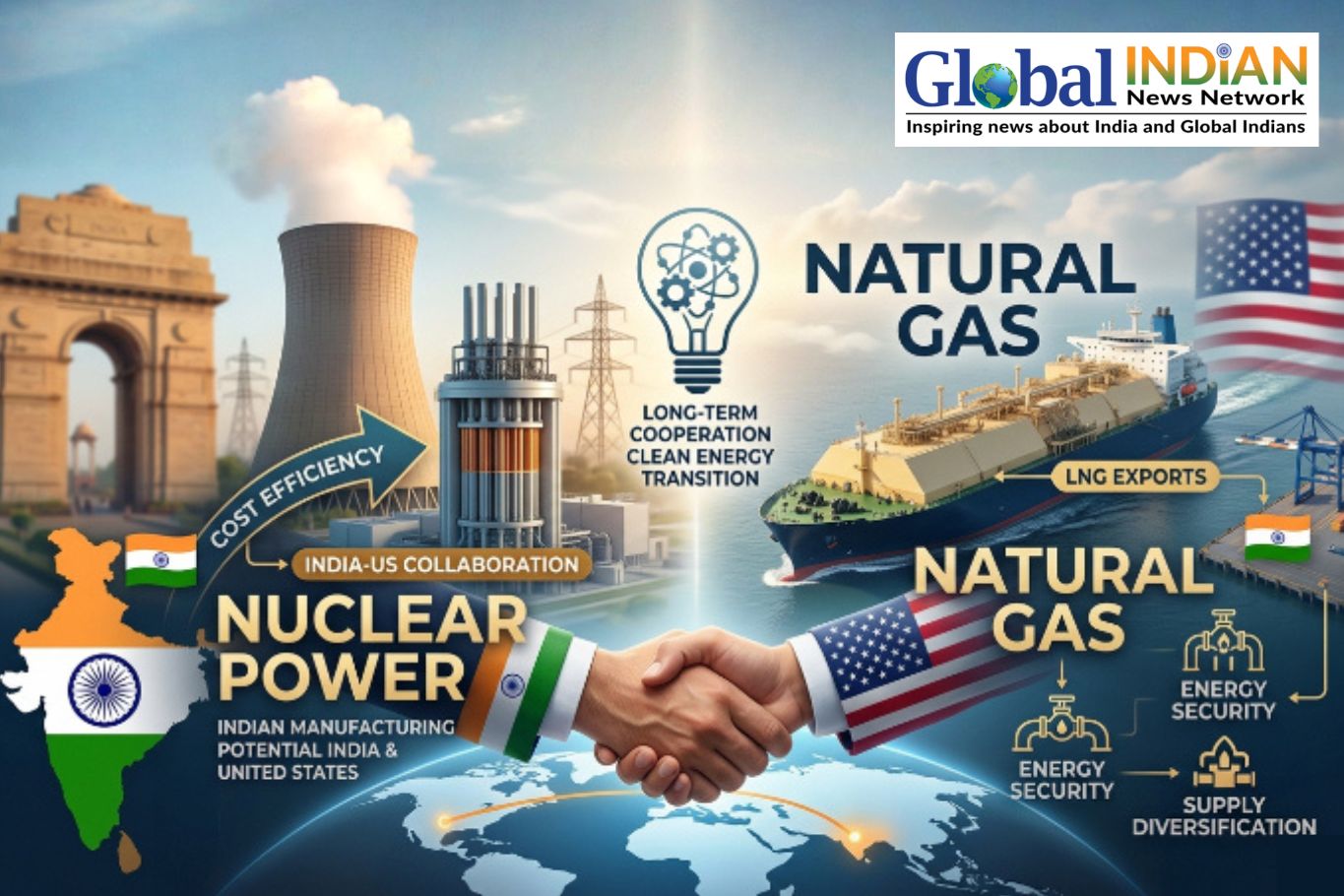
 Nuclear energy and natural gas are emerging as key pillars for the next phase of India US energy cooperation, with experts suggesting that both countries are seeking to reduce costs, diversify supply chains, and strengthen long-term energy security.
According to Dinsha Mistree of the Hoover Institution at Stanford University, there are significant opportunities for deeper collaboration, particularly in nuclear energy. He described nuclear power as a “very critical” area for future India US engagement, highlighting its strategic importance in global energy transition efforts.
Mistree pointed to the 2008 civil nuclear agreement between the two nations as a foundational step that created the framework for cooperation. However, he noted that progress was limited due to liability-related legislation in India that slowed implementation. With recent legal and policy changes, he said there is now renewed potential for closer collaboration in the nuclear sector.
He also observed that the United States has been reassessing its own energy strategy, with growing bipartisan support for nuclear power. At the same time, rising project costs remain a major challenge. He suggested that India’s manufacturing capabilities in nuclear components could help lower production costs significantly compared to building entirely within the US or sourcing from other countries.
However, he cautioned that industry engagement is still in early stages, with many companies observing developments before committing. According to him, Indian firms have not yet fully positioned themselves as reliable suppliers for the US nuclear market.
On natural gas, Mistree projected strong growth in bilateral trade, noting that the United States is one of the world’s largest producers. He said increased cooperation in this area could support both energy affordability and supply stability.
He also highlighted structural challenges in India, including taxation and distribution inefficiencies, which may need policy reforms to improve affordability. Adjustments in tax systems could make natural gas more competitive and attractive for wider use in India’s energy mix.
Mistree stressed that energy diversification is now essential, especially for large economies like India. He emphasized that relying on limited sources increases vulnerability, making partnerships with multiple suppliers, including the US, a strategic necessity rather than an option.
He further noted that natural gas also supports cleaner energy goals by complementing renewable power sources due to its flexibility in supply management.
Overall, he described the current period as a turning point for India’s energy strategy, urging stronger planning around energy security and diversified partnerships. He added that US experience in managing energy transitions could offer valuable lessons, making the partnership between the two countries increasingly aligned for the future.