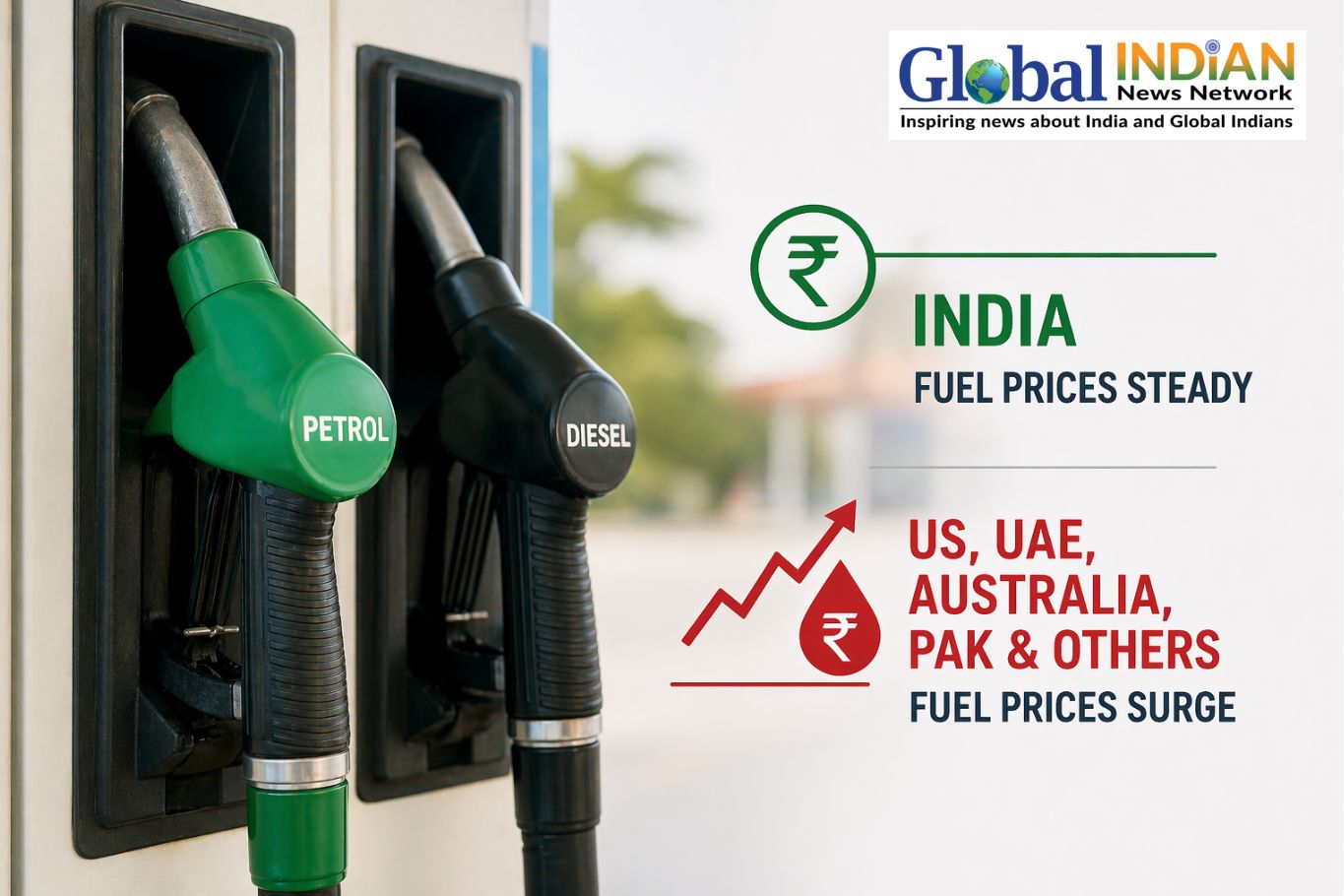
 Even as geopolitical tensions in West Asia escalate and Brent crude oil prices rise due to disruptions around the Strait of Hormuz, India has kept its fuel prices unchanged in dollar terms. Meanwhile, several countries worldwide have experienced sharp increases in petrol and diesel costs, reflecting the broader instability in global energy markets.
Data highlighted by Kotak and reported by NDTV Profit shows a clear gap between India and other economies when it comes to fuel price movements. While many advanced and emerging nations have passed on rising crude oil costs to consumers, India has largely insulated its domestic market from such fluctuations so far this year.
Diesel prices have surged significantly in multiple countries amid ongoing global tensions. The United Arab Emirates recorded the highest jump of around 85 per cent. Australia and the United States followed with increases exceeding 65 per cent and 62 per cent respectively. Other countries such as Canada, Pakistan, France, Sri Lanka, and the United Kingdom saw diesel price rises ranging from 35 per cent to 53 per cent.
In contrast, China and Brazil registered relatively moderate increases, while Russia remained largely unaffected with a marginal rise of just over 1 per cent. India, however, has kept diesel prices stable at approximately 1.05 dollars per litre (equivalent to Rs 87.6 per litre), showing no change compared to January levels despite global volatility.
Petrol prices show a similar global pattern. Pakistan recorded the steepest rise at about 44 per cent, followed by the United States at 42 per cent and the UAE at 36 per cent. Canada, Sri Lanka, and China also witnessed increases of up to 34 per cent, while countries like Australia, the United Kingdom, and France saw more moderate upward adjustments.
In India, petrol prices have remained steady at roughly 1.13 dollars per litre (around Rs 94.7 per litre), unchanged from the beginning of the year. Analysts attribute this stability to government intervention and pricing strategies adopted by state-run oil marketing companies, which have helped shield consumers from immediate global price shocks.
However, financial estimates suggest that this price stability comes at a cost. Oil marketing companies are reportedly purchasing fuel from refineries at discounted rates to manage mounting losses caused by frozen retail prices. Reports also indicate that rising crude oil prices significantly increase financial pressure on these companies, highlighting the economic challenges behind maintaining stable fuel prices in India despite global market turbulence.