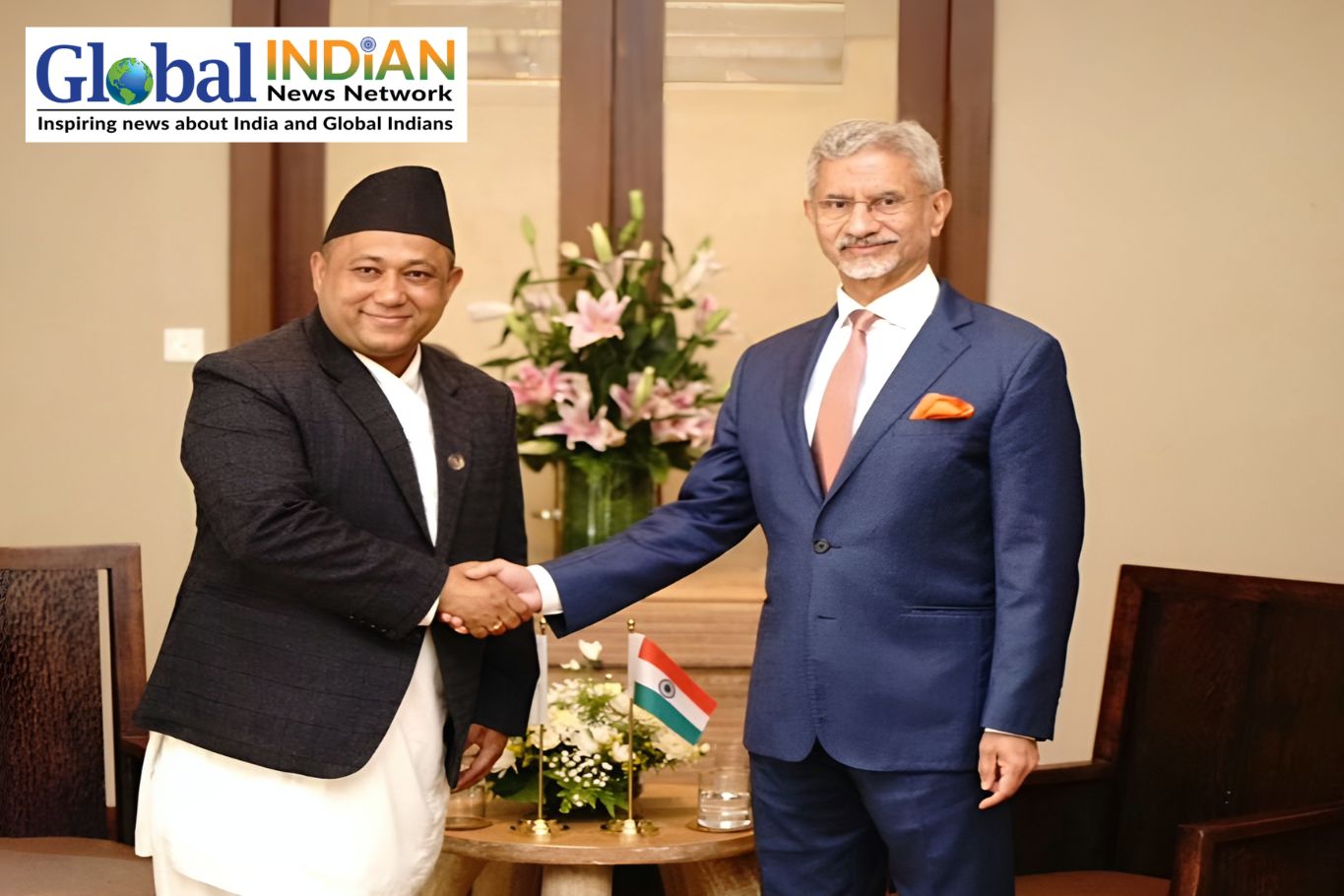
 Nepal’s Foreign Minister Shisir Khanal is set to undertake a three-day official visit to India, where discussions are expected to focus on strengthening cooperation in connectivity, trade, investment, energy, and people-to-people exchanges between the two neighboring countries.
The visit marks Khanal’s first official trip to India since the formation of Nepal’s current government and comes amid continued efforts by both nations to deepen their longstanding partnership. During his stay in New Delhi, Khanal is scheduled to hold formal talks with External Affairs Minister S. Jaishankar and engage with senior Indian officials on a range of bilateral and regional issues.
According to Nepal’s Ministry of Foreign Affairs, the discussions will center on enhancing collaboration across key sectors and advancing projects that contribute to economic integration and regional connectivity. The visit is part of the regular exchange of high-level engagements that have traditionally played a significant role in maintaining strong India-Nepal relations.
Connectivity is expected to be one of the principal themes of the talks. Both sides are likely to explore ways to improve railway, road, air, and digital connectivity while facilitating smoother movement of people and goods across the border. Recent exchanges between leaders of the two countries have emphasized the importance of seamless connectivity as a driver of economic growth and shared prosperity.
Among the projects expected to receive attention is the proposed Raxaul-Kathmandu Railway, for which India has already completed a detailed feasibility study. Discussions may also cover other infrastructure initiatives aimed at strengthening transport links and enhancing regional integration.
Air connectivity is another important issue on Nepal’s agenda. Kathmandu has long sought additional air routes and greater operational support for its newly developed international airports in Pokhara and Lumbini. Improved aviation links are viewed as essential for boosting tourism, trade, and investment opportunities between the two countries.
Energy cooperation is also expected to feature prominently in the discussions. The two nations have made significant progress in recent years, including a long-term agreement that enables India to purchase up to 10,000 megawatts of electricity from Nepal over a ten-year period. Officials are expected to review progress on existing arrangements and explore further opportunities for collaboration in the power sector.
The visit may also help lay the groundwork for the next meeting of the Nepal-India Joint Commission, a key bilateral mechanism led by the foreign ministers of both countries. The commission serves as an important platform for reviewing cooperation across multiple sectors and addressing pending issues through structured dialogue.
Several major development projects, including the Pancheshwar Multipurpose Project, the East-West Railway, and the proposed Janakpur-Ayodhya rail link, are also expected to be discussed as both governments seek to accelerate implementation and resolve outstanding challenges.
While recent remarks related to border issues have attracted political attention, officials indicated that boundary disputes are not expected to be a central focus of the current visit. Instead, discussions are likely to remain concentrated on development-oriented cooperation and initiatives that can generate tangible benefits for citizens on both sides of the border.
The visit underscores the importance both countries attach to maintaining close diplomatic engagement and expanding cooperation in areas that support economic growth, connectivity, and regional stability. As India and Nepal continue to strengthen their multifaceted relationship, the talks are expected to contribute to a more robust framework for future collaboration.