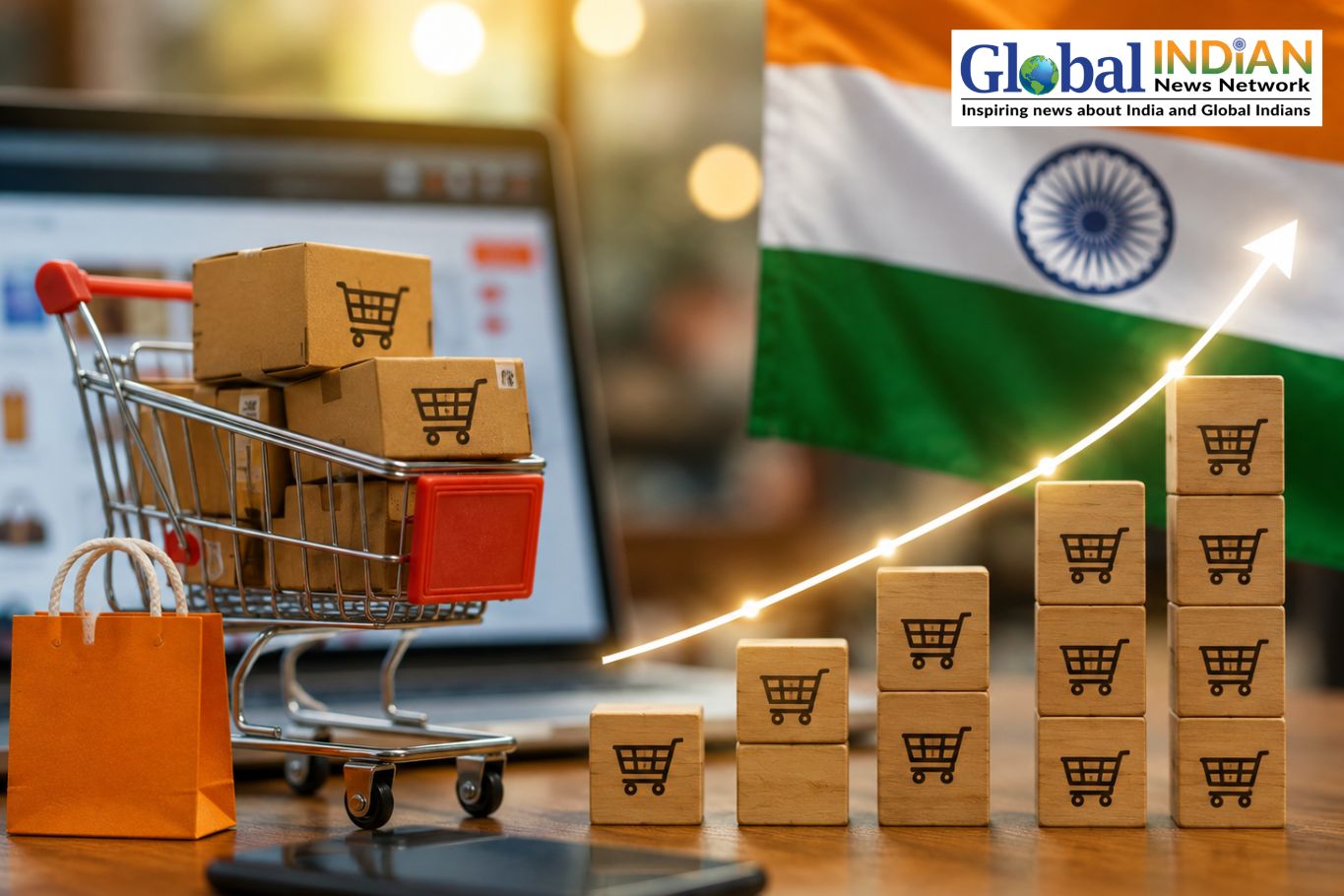
India’s e-commerce industry is expected to experience significant growth over the next several years, with the market projected to expand to approximately $345 billion by 2030. The growth will likely be fueled by the rapid rise of quick commerce, increasing use of artificial intelligence and changing shopping habits among India’s expanding digital consumer base.
According to Infisum’s Smart Growth in a Fast Market report, India’s online retail market could nearly triple in value from $125 billion in 2024. The sector is projected to grow at a compound annual growth rate of 18.4 percent through the end of the decade, highlighting the continued acceleration of digital commerce across the country.
Quick commerce, which focuses on delivering products within a short time, is expected to become the fastest-growing part of the e-commerce ecosystem. The segment could reach between $65 billion and $70 billion by 2030 and may account for nearly half of the additional growth generated by the e-retail market during the next five years.
The demand for faster deliveries is also expected to reshape India’s logistics and fulfillment infrastructure. The number of dark stores, which are dedicated facilities used to process online orders rather than serve walk-in customers, could increase from 2,525 locations in 2025 to around 7,500 by 2030.
currently holds the largest share of India’s quick commerce market, accounting for 44 percent of the segment and processing approximately 900 million orders during FY26. and follow with estimated market shares of 25 percent and 20 percent, respectively.
Consumer behavior is also contributing to the sector’s expansion. Generation Z already represents nearly one-third of India’s online shoppers and is expected to become the country’s largest digital spending group by 2030.
Growth is no longer limited to major metropolitan areas. About 66 percent of new direct-to-consumer orders are now coming from Tier II and Tier III cities, demonstrating the growing reach of online retail beyond India’s largest urban markets.
By 2030, e-commerce could represent between 10 percent and 12 percent of India’s overall retail spending and contribute roughly 2.5 percent to the country’s gross domestic product. The market could also serve between 420 million and 440 million online consumers.
Artificial intelligence and machine learning are expected to play an increasingly important role in this transformation. These technologies could improve retail productivity by up to 37 percent through AI-powered shopping assistants, conversational commerce and virtual product experiences.
Together, faster delivery networks, technology adoption and growing online consumption are expected to reinforce India’s position as one of the world’s fastest-expanding digital retail markets.