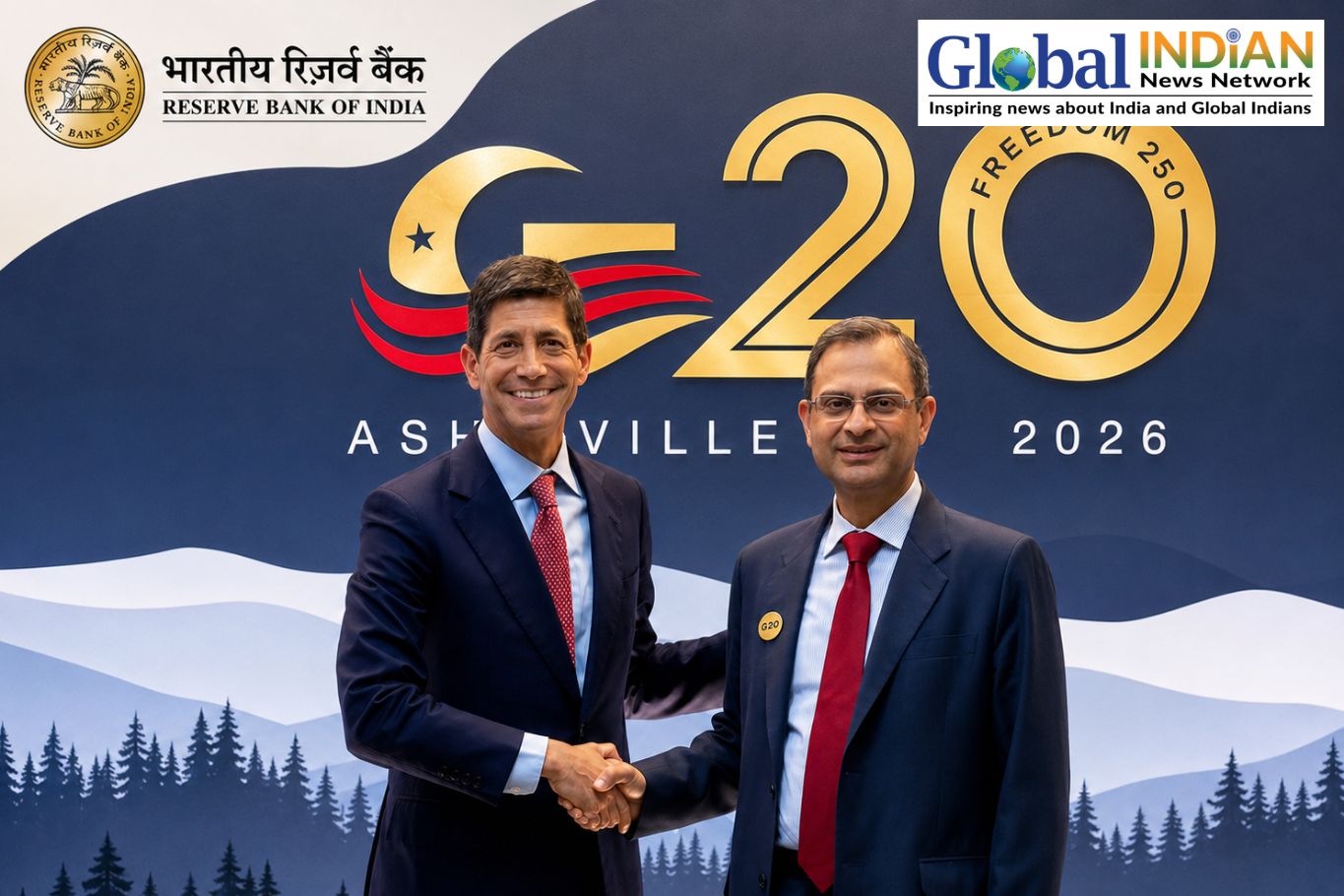
Reserve Bank of India Governor Sanjay Malhotra held separate meetings with senior global financial leaders during the G20 Finance Ministers and Central Bank Governors meeting in Asheville, North Carolina. The discussions included talks with US Federal Reserve Chairman Kevin Warsh and International Monetary Fund First Deputy Managing Director Dan Katz.
The RBI shared details of the meetings in a post on X, as Malhotra joined finance ministers and central bank governors from G20 nations for the two-day gathering. The meeting has brought together some of the world’s leading economic policymakers to discuss challenges affecting the global financial system.
Key topics on the agenda include economic expansion, financial stability, increasing levels of debt, international trade, investment and reforms to the global financial architecture. The discussions come at a time when many economies are navigating slower growth, geopolitical uncertainty and pressure on public finances.
Finance Minister Nirmala Sitharaman is leading India’s delegation at the meeting, which is being organized under the US presidency of the G20. India is using the platform to highlight issues affecting emerging and developing economies while advocating for policies that support sustainable and balanced global growth.
The Indian delegation is also seeking to deepen economic engagement with other G20 members. New Delhi continues to position India as an increasingly important destination for manufacturing, technology, innovation and investment.
During the meeting, Sitharaman held discussions with UK Chancellor of the Exchequer John Healey on expanding cooperation in trade and investment. She also met 3M CEO William Brown to discuss India’s growing manufacturing capabilities, technology ecosystem and skilled workforce.
Meanwhile, global debt has emerged as a significant concern during the G20 discussions. US Treasury Secretary Scott Bessent called for stronger economic growth, increased investment and improved productivity as important measures for addressing rising debt levels worldwide.
Trade imbalances also featured prominently in the talks, particularly China’s large trade surplus. The US pushed for stronger action to encourage more balanced international trade and greater domestic consumption within China.
According to the discussions, the US and 19 other G20 members supported language calling for steps against non-market policies and excessive external trade surpluses. China, however, declined to join the consensus.
The disagreement prevented the group from issuing its customary joint communique. Instead, the US, as the host nation, released a chair’s statement outlining the outcome of the meeting, reflecting continuing divisions among major economies over trade and broader global economic policies.