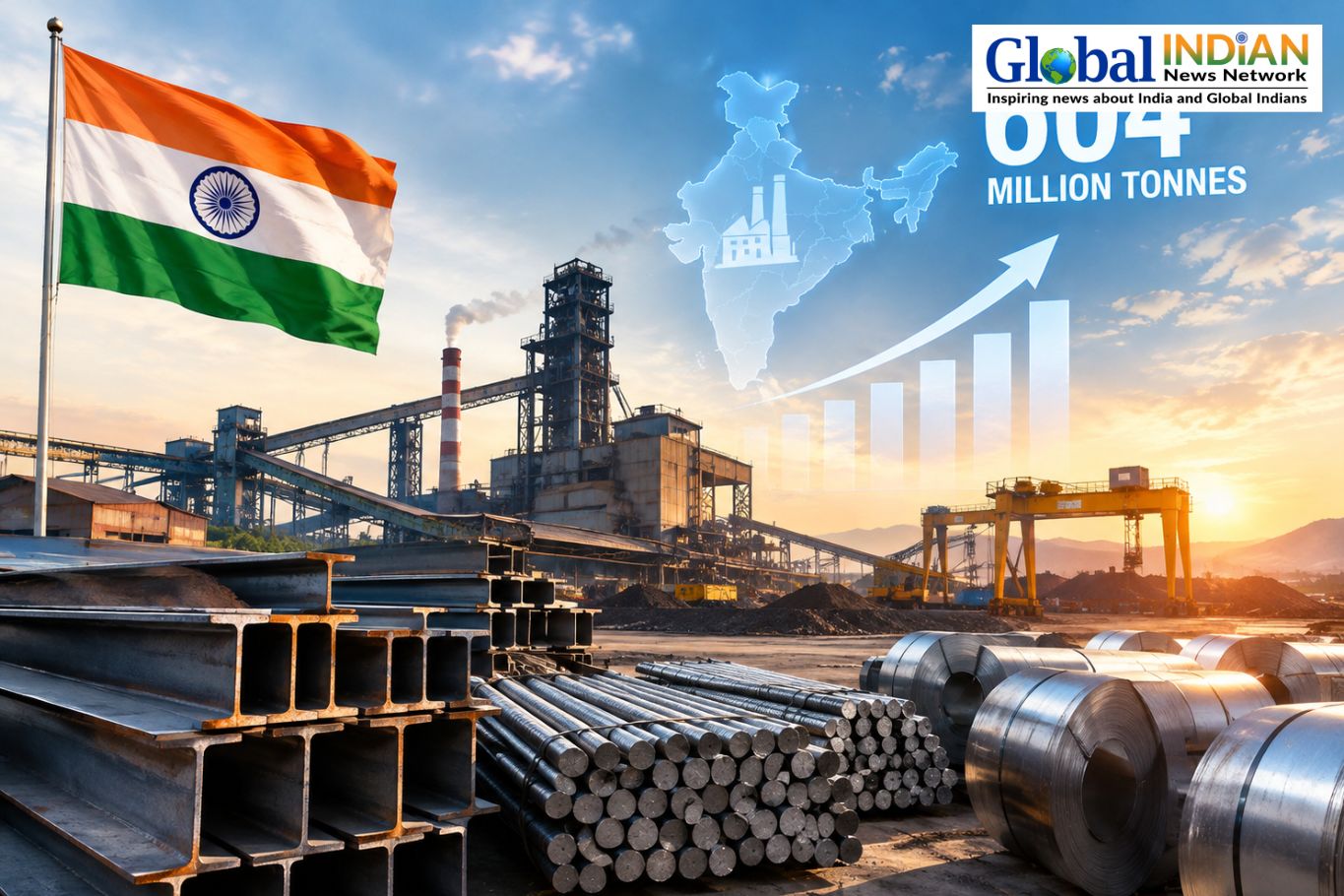
India has introduced a draft national steel policy that seeks to significantly expand the country’s steel industry by 2047. According to the India Brand Equity Foundation (IBEF), the proposal sets a target of 604 million tonnes of annual steel production capacity, compared with approximately 220 million tonnes currently. Per capita steel consumption is projected to increase from 116 kilograms to 302 kilograms, while exports are expected to reach 45 million tonnes over the next two decades.
The draft policy emphasizes that future growth must extend beyond expanding production capacity. It calls for greater value addition, technological innovation and stronger integration throughout the steel supply chain. Developing domestic technologies and manufacturing essential industrial equipment within India are also key priorities.
Environmental sustainability is another major focus. The government aims to lower the steel sector’s average carbon emission intensity from 2.54 tonnes of carbon dioxide per tonne of crude steel to around 1.54 tonnes. Proposed measures include greater scrap recycling, hydrogen-based direct reduced iron production, biochar, gasified coal substitution and carbon capture, utilization and storage. These initiatives are intended to support India’s broader net-zero emissions objective.
The policy also seeks to expand steel consumption across infrastructure, housing, transportation, renewable energy and emerging manufacturing industries. Under the PM Gati Shakti initiative, authorities plan to map raw material availability against major steel consumption centers to identify suitable locations for future plants.
Logistics improvements form another part of the proposal. Railways are projected to transport 49% of iron ore, up from 42%, and 62% of finished steel, compared with the current 40%. Meanwhile, slurry pipeline capacity is expected to exceed 299 million tonnes annually by 2047.
Additional measures aim to prevent imports of substandard steel, increase domestic production of high-value products, modernize secondary steel manufacturers and support micro, small and medium-sized enterprises. Artificial intelligence and automation are also expected to play a greater role in improving industrial efficiency.
India is pursuing international cooperation to strengthen its access to resources and technology. Existing memorandums of understanding with Russia, Japan, South Korea, Brazil and Indonesia could support long-term supply agreements, mining investments, mineral beneficiation facilities and strategic joint ventures.
Overall, the proposed policy outlines a long-term approach to expanding India’s steel industry while improving competitiveness, reducing emissions and strengthening domestic industrial capabilities.