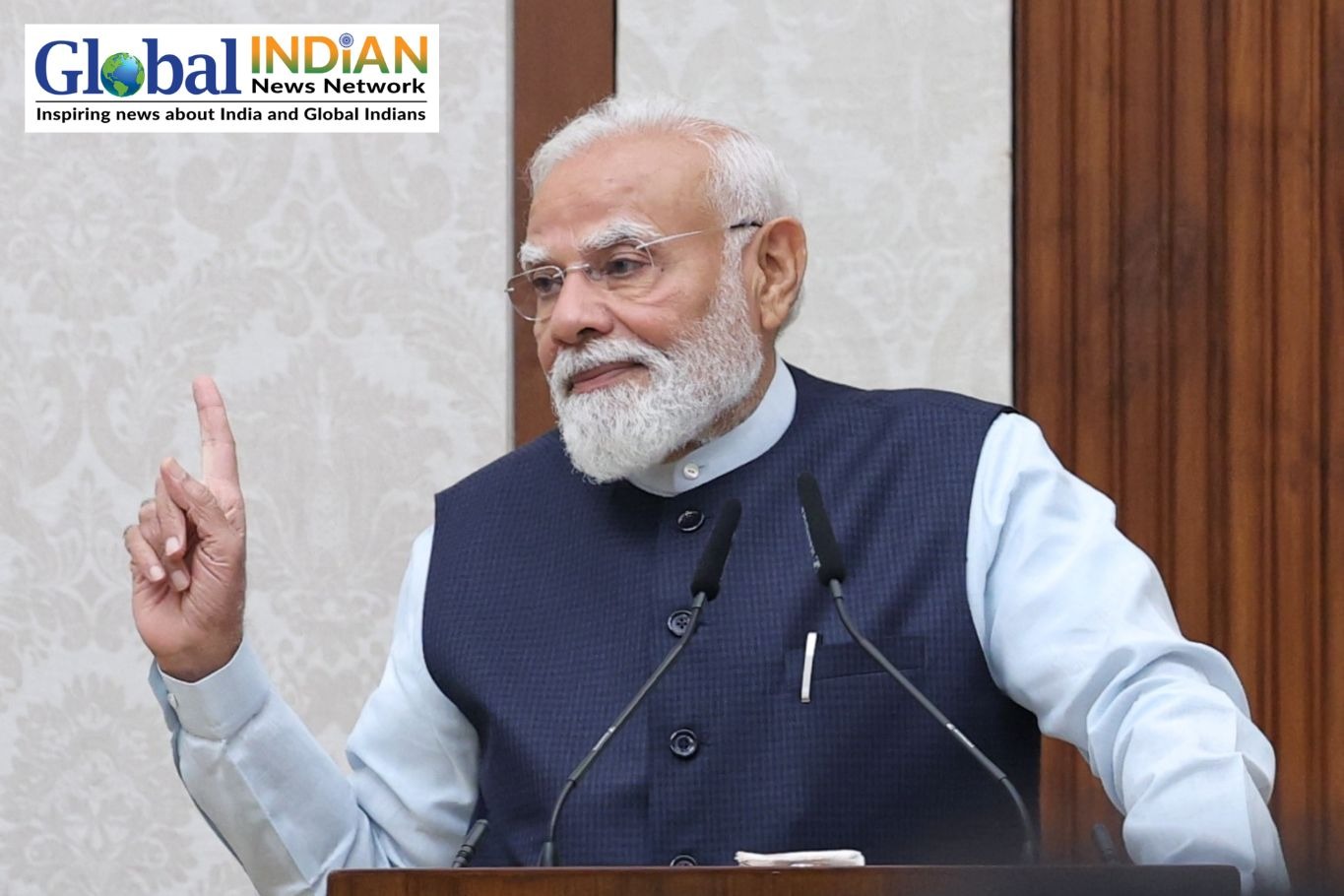
 Prime Minister Narendra Modi on Tuesday addressed 183 young IAS officer trainees from the 2024 batch, urging them to place citizens at the heart of every administrative decision and ensure that governance remains empathetic, inclusive, and outcome-driven. The officers, currently serving as assistant secretaries across various ministries, were encouraged to view public service as a responsibility deeply connected to the lives of millions of people.
The Prime Minister emphasized that every official file represents real human aspirations and challenges, reminding officers that behind every policy document are citizens expecting meaningful solutions. He stressed that effective governance requires compassion along with efficiency, and that administrative decisions must always reflect the needs of the public.
Modi highlighted the importance of breaking silos within government departments, stating that complex developmental issues cannot be addressed in isolation. He called for stronger inter-departmental coordination to ensure that policies produce tangible and long-lasting results. According to him, a unified approach is essential for achieving national priorities and delivering effective governance outcomes.
Reinforcing the guiding principle of “Nagrik Devo Bhava,” the Prime Minister urged officers to dedicate themselves to nation-building with integrity, innovation, and a strong sense of purpose. He advised them to measure their success not by positions or titles, but by the real impact they create in society.
He also pointed to the broader vision of , stating that all policies and administrative efforts over the coming decades must contribute toward building a developed India. He highlighted national priorities such as , manufacturing growth, energy security, and expanding opportunities for youth.
The Prime Minister noted the shift in governance over the past decade from a process-oriented system to a results-driven model. He emphasized the growing role of digital governance, artificial intelligence, and data-driven decision-making in improving transparency and service delivery across the country.
He further stated that data should not be viewed merely as numbers but as reflections of people’s lives, struggles, and aspirations. Officers, he said, must continuously assess whether government policies are effectively translating into real-world outcomes.
Modi also highlighted the increasing participation of women in the civil services, noting that more than 40% of the current batch of officers are women. He expressed confidence that their contributions would play a vital role in shaping India’s future development trajectory.
The session concluded with trainee officers sharing their field training experiences. Senior government officials, including Cabinet Secretary T.V. Somanathan and other top bureaucrats, were also present during the interaction.