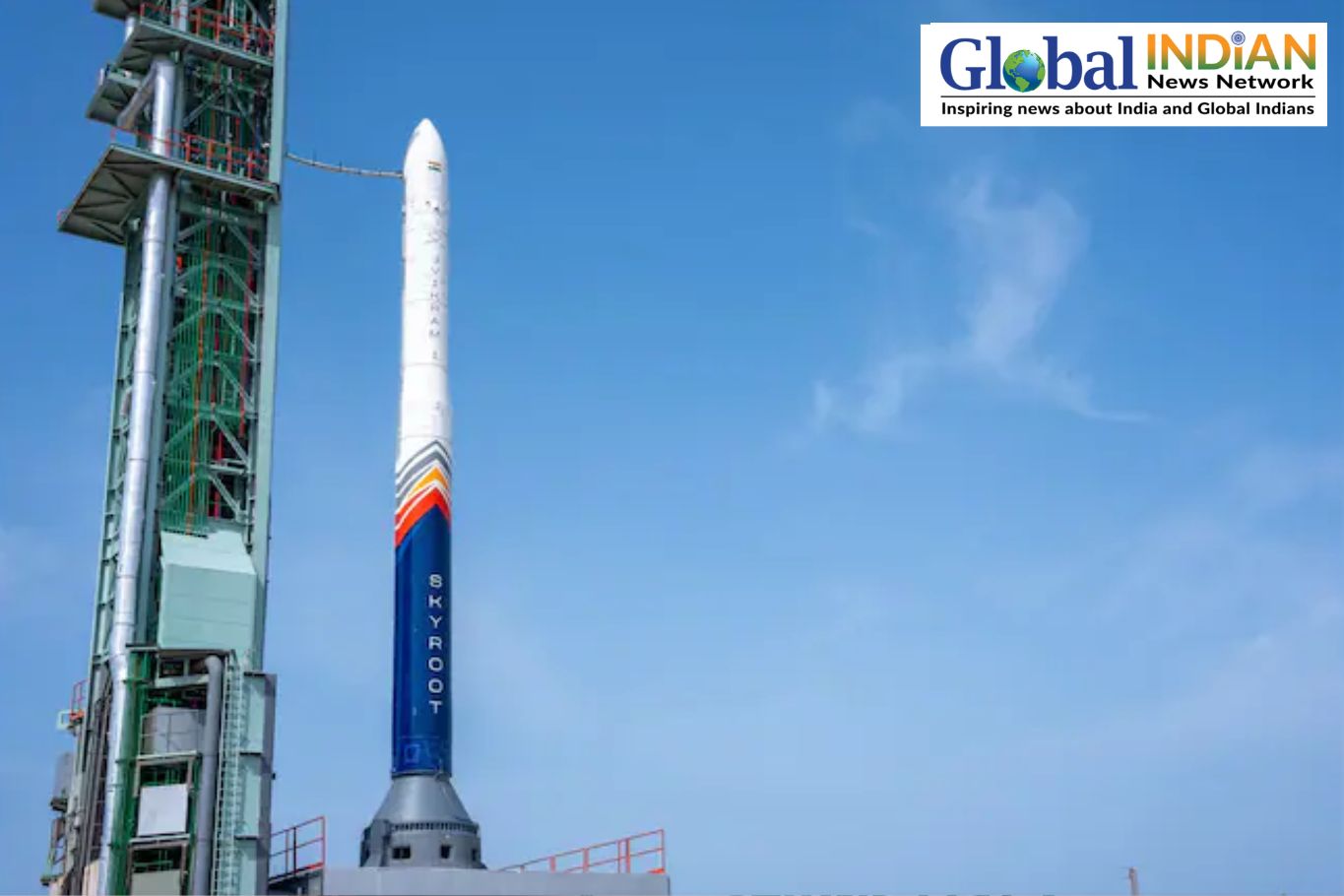
 India’s private space industry has reached a significant milestone after Skyroot Aerospace successfully launched Vikram-1, becoming the first privately developed Indian rocket to place payloads into orbit. The mission, which lifted off from Sriharikota on July 18, carried four payloads into a 450-kilometer orbit, marking a landmark achievement for the country’s growing commercial space sector.
The successful launch represents more than a technological breakthrough. It validates years of investment in India’s emerging spacetech ecosystem, demonstrating that private companies can move beyond concepts and prototypes to deliver complex space missions. The achievement has strengthened confidence among investors who have increasingly backed Indian startups developing advanced space technologies.
According to startup data platform Tracxn, India’s spacetech ecosystem now includes 285 companies that have collectively secured approximately $871 million in funding. Skyroot Aerospace leads the sector with around $150 million in investments, while companies such as Pixxel, Agnikul, and Digantara have also attracted substantial financial backing as they expand their capabilities.
Industry experts believe the sector has entered a new phase. While early-stage funding has traditionally supported research and prototype development, the successful orbital launch demonstrates that Indian startups are now capable of scaling operations and competing internationally. Investors are expected to view the milestone as evidence that the industry is ready for larger rounds of capital to support manufacturing, infrastructure, and commercial expansion.
The rapid growth of India’s private space industry has been driven by several key factors. A major turning point came in 2020 when the government opened the space sector to private participation. Through IN-SPACe, companies gained access to ISRO’s launch facilities, testing infrastructure, and decades of technical expertise, creating an environment that accelerated innovation.
India’s reputation for delivering cost-effective space missions has also strengthened the industry’s appeal. The country has consistently demonstrated its ability to develop advanced technologies at significantly lower costs than many global competitors, making Indian companies attractive partners for international customers and investors alike.
Commercial opportunities in space have expanded well beyond traditional satellite services. Today, private companies are exploring applications in defense, communications, manufacturing, Earth observation, and data-driven technologies, creating new revenue opportunities across multiple industries.
Investment trends reflect this growing momentum. Annual funding has increased significantly over the past several years, with fresh capital continuing to flow into the sector in 2026. Industry projections estimate that India’s space economy could grow from approximately $8 billion today to nearly $44 billion by 2033, positioning the country as an increasingly influential player in the global commercial space industry.