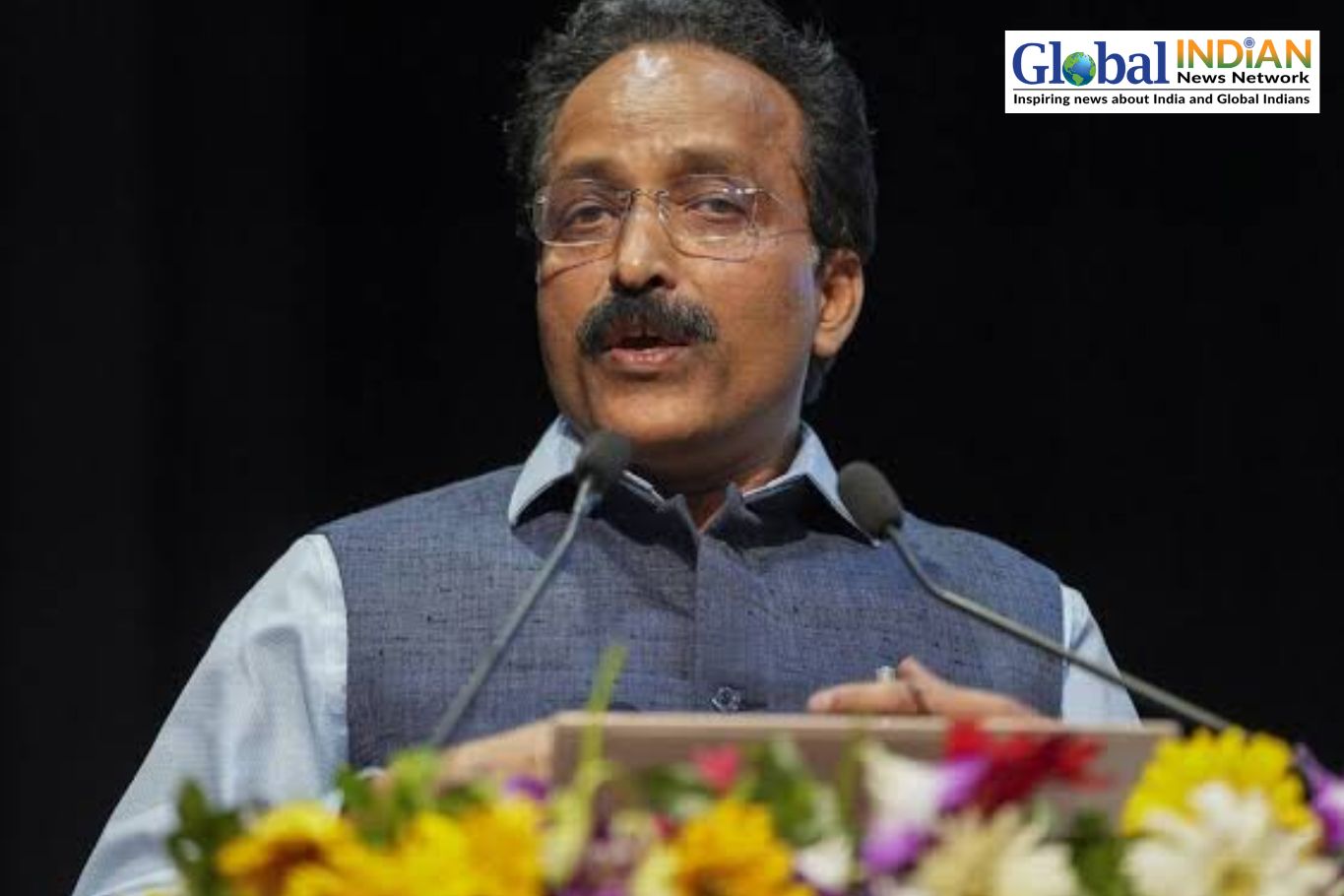
India is aiming to significantly expand its presence in the global space economy, with a target of securing an 8-9% share across different segments of the industry. Former Indian Space Research Organisation (ISRO) chairman S Somanath has highlighted the importance of stronger government-industry collaboration to achieve this ambition.
Speaking about India’s growing space ambitions, Somanath pointed out that the country’s contribution to the global space economy was approximately 2% in 2020. At that time, the worldwide space industry was valued at around $550 billion, while India’s contribution was estimated at approximately $8-9 billion.
He emphasised that achieving a larger share of the international market would require substantial investments, stronger business participation and greater access to global markets. According to him, the government and private enterprises must work together to build a commercially competitive space ecosystem.
The services and delivery segment offers significant growth opportunities, accounting for approximately 60% of the global space economy. While India has established capabilities in satellite development, launch technology and space exploration, expanding commercial services could create additional opportunities for the country’s space industry.
Greater participation in satellite-based applications, communication services and other commercial space activities would help Indian companies strengthen their international presence and develop sustainable revenue streams.
India’s space sector has undergone important structural changes following the reforms introduced in 2020, which opened greater opportunities for private companies to participate in space-related activities. These reforms have encouraged private investment, entrepreneurship and technological innovation, creating opportunities for a broader range of businesses to enter the industry.
Somanath also highlighted the interconnected nature of the global space ecosystem, where technological advancements and commercial developments in one country influence activities across international markets. India’s expanding participation is contributing to the changing landscape of the global space industry.
India’s ambition to capture 8-9% of the global space economy represents a significant opportunity for its technology and industrial sectors. However, achieving this target will require more than technological achievements and successful space missions.
The country will need to strengthen commercial capabilities, attract investment, develop competitive space services and establish stronger international business partnerships.
A closer partnership between government institutions and private enterprises could play a decisive role in this transformation. With the right investment environment and sustained industry participation, India has an opportunity to move beyond its traditional strengths in space research and become a more influential player in the global commercial space market.