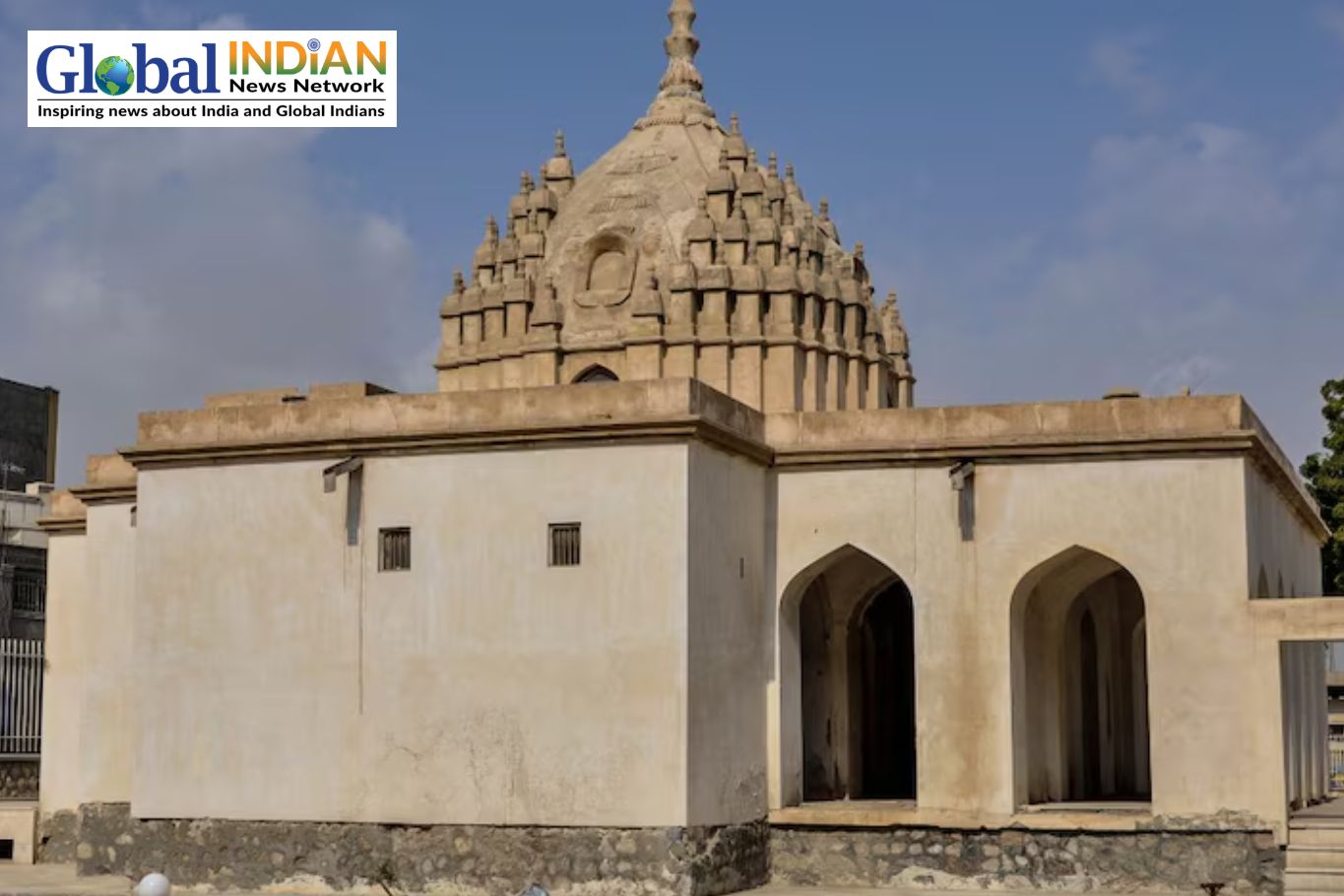
 A centuries old Vishnu Temple located in Bandar Abbas, Iran, has recently captured widespread public attention after veteran actor Amitabh Bachchan shared a video highlighting the historic site on social media. The temple, originally built in 1892, stands as a remarkable symbol of cultural and historical ties between India and Iran.
The video shared online quickly gained massive popularity, collecting hundreds of thousands of views within a single day. The clip showcased the temple’s unusual architectural style and spiritual atmosphere, while Persian devotional music dedicated to Lord Vishnu, Lord Rama, and Lord Krishna played in the background.
Historical records suggest the temple was constructed during the Qajar era in southern Iran’s Hormozgan Province. Bandar Abbas, positioned along the strategically important Strait of Hormuz, was historically a major trade hub where Indian merchants and communities were actively involved in commerce.
According to accounts from Iranian historians, Hindu traders associated with the British Indian trading network received permission to build the temple in the late nineteenth century. Construction reportedly took four years to complete, eventually providing the local Hindu population with a dedicated place of worship and reflecting the peaceful coexistence between Indian and Iranian communities at the time.
Today, the Vishnu Temple remains one of the most distinctive examples of Indo Iranian architecture. Unlike traditional Hindu temples commonly seen across India, the structure features a large onion shaped dome decorated with lotus engravings. The design combines Persian architectural influences with Hindu spiritual symbolism, making the building historically unique.
The temple was constructed using coral stone, mud, mortar, and lime chalk. Inside the complex, narrow corridors connect the central sanctum to smaller chambers that were once used by Hindu priests and monks. A spiral staircase leads visitors to the rooftop, while the structure’s layout allows natural sunlight to illuminate the interior throughout the day.
Although many original artworks inside the temple have deteriorated over time, several important religious symbols still remain. Visitors can still find statues of Lord Vishnu and Buddha, along with paintings of Lord Krishna playing the flute beside Radha. An adjoining room has also been converted into a small museum displaying historical artifacts, including an old statue of Lord Shiva in the Nataraja form.
Following the 1979 Islamic Revolution, a large number of Indian residents left Iran, causing the temple to lose much of its original community presence. Despite this, the building remains a nationally recognized historical monument and continues to symbolize the deep cultural exchanges that once flourished between India and Iran.
The Vishnu Temple in Bandar Abbas is not the only Hindu religious site in Iran. Another Hindu temple associated with the Arya Samaj movement is located in Zahedan, reflecting the broader historical presence of Indian communities in the country.