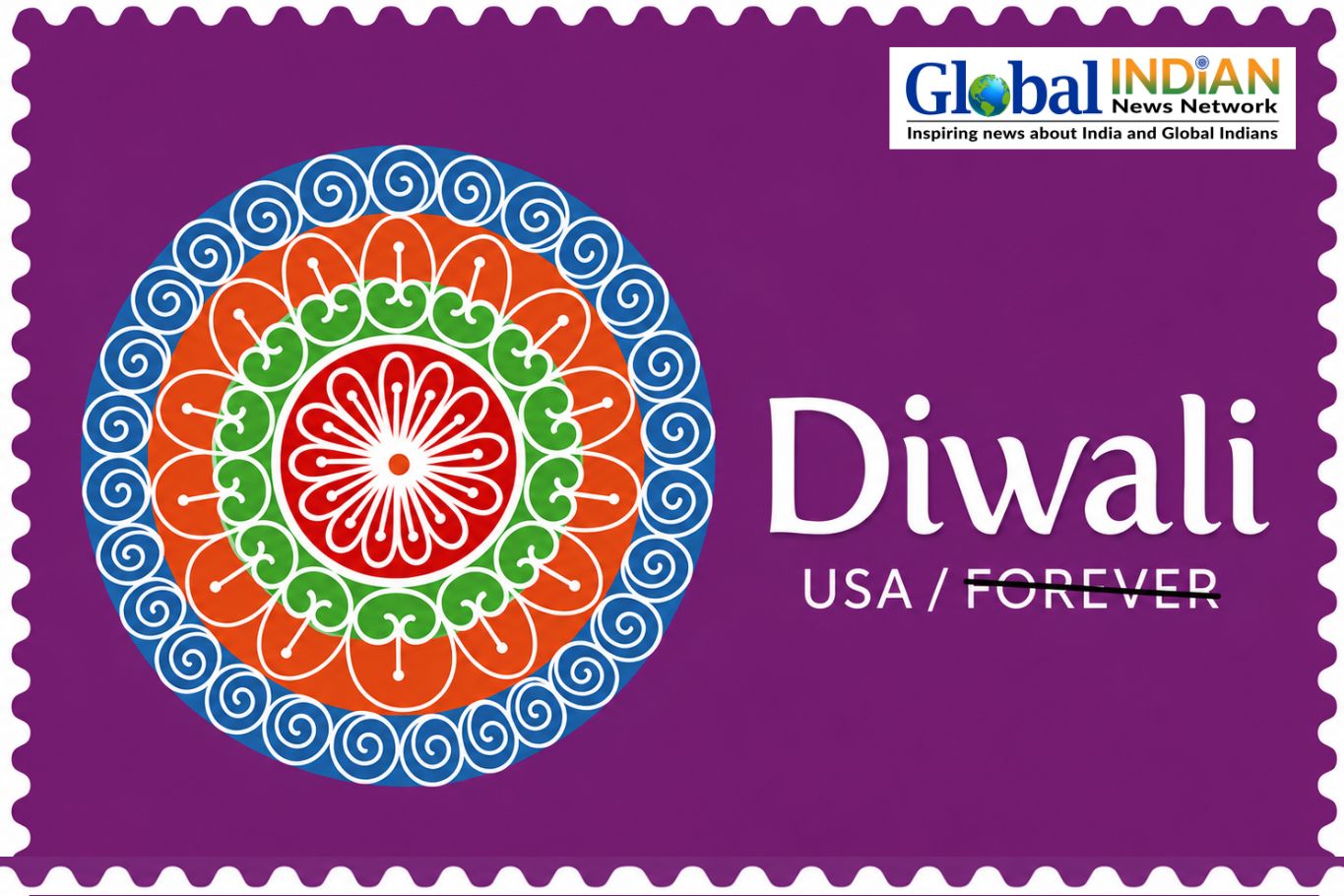
 The United States Postal Service (USPS) has announced that it will introduce a new Diwali Forever stamp in October, celebrating one of the most significant festivals observed by the Indian community. Scheduled for release ahead of Diwali on November 8, the commemorative stamp highlights the growing recognition of Indian culture and traditions across the United States.
The 2026 Forever stamp features an intricate rangoli, a traditional decorative artwork created using colored powders, flower petals, or rice. Rangolis are commonly displayed during Diwali to symbolize prosperity, positivity, and the victory of light over darkness. The featured design was created by Indian-born artist Sangita Bhutada, who has been practicing the centuries-old art form for nearly three decades after settling in the Houston area. The artwork was photographed by Bijay Dixit, while Jennifer Arnold designed the stamp under the artistic direction of William J. Gicker.
USPS said additional information about the official first-day-of-issue ceremony will be released closer to the stamp’s launch. The Diwali stamp is part of the Postal Service’s broader 2026 commemorative collection, which recognizes cultural celebrations, historic milestones, and public awareness initiatives throughout the year.
Alongside the Diwali release, USPS also unveiled plans for several other commemorative stamps honoring occasions such as Christmas, Hanukkah, Kwanzaa, and the 150th anniversary of the US Coast Guard Academy. Another special semipostal stamp, titled Know the Facts About Fentanyl, will help raise funds for research and public education through the National Institute on Drug Abuse.
The Postal Service also shared release schedules for several of these stamps, while confirming that the exact launch date and ceremony for the Diwali stamp will be announced later.
This is not the first time USPS has honored the Festival of Lights. The original Diwali Forever stamp debuted in October 2016 following years of advocacy by Indian American community leaders, including New York-based community leader Ranju Batra. Since then, the stamp has become one of the Postal Service’s most recognized cultural commemoratives, reflecting the increasing visibility and influence of the Indian American community.
Today, Diwali is celebrated by millions of Hindus, Sikhs, Jains, and some Buddhists worldwide. Across the United States, the festival is observed not only within local communities but also at prominent institutions such as the White House, Congress, state legislatures, and city governments, highlighting the continued growth and cultural significance of the Indian diaspora.