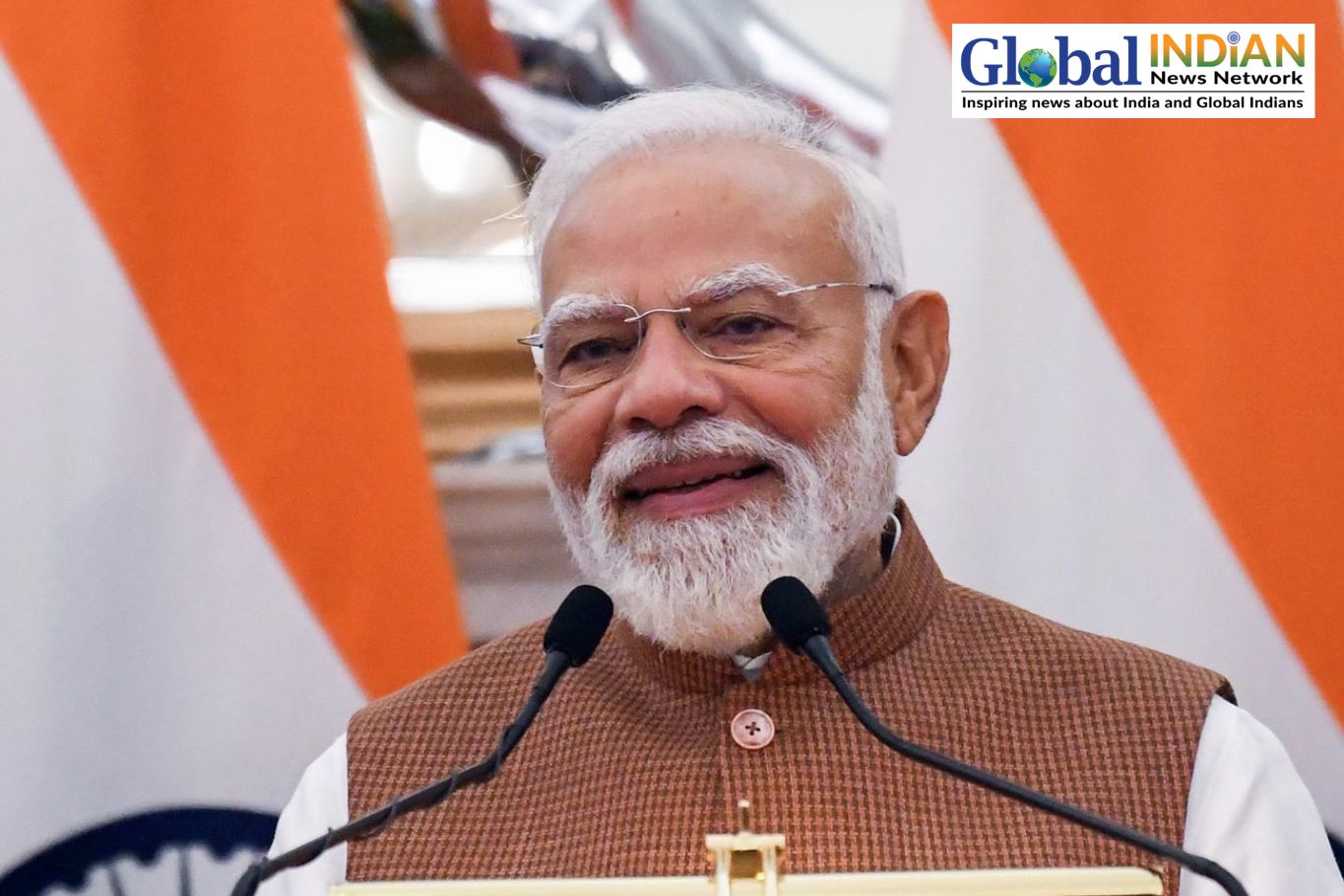
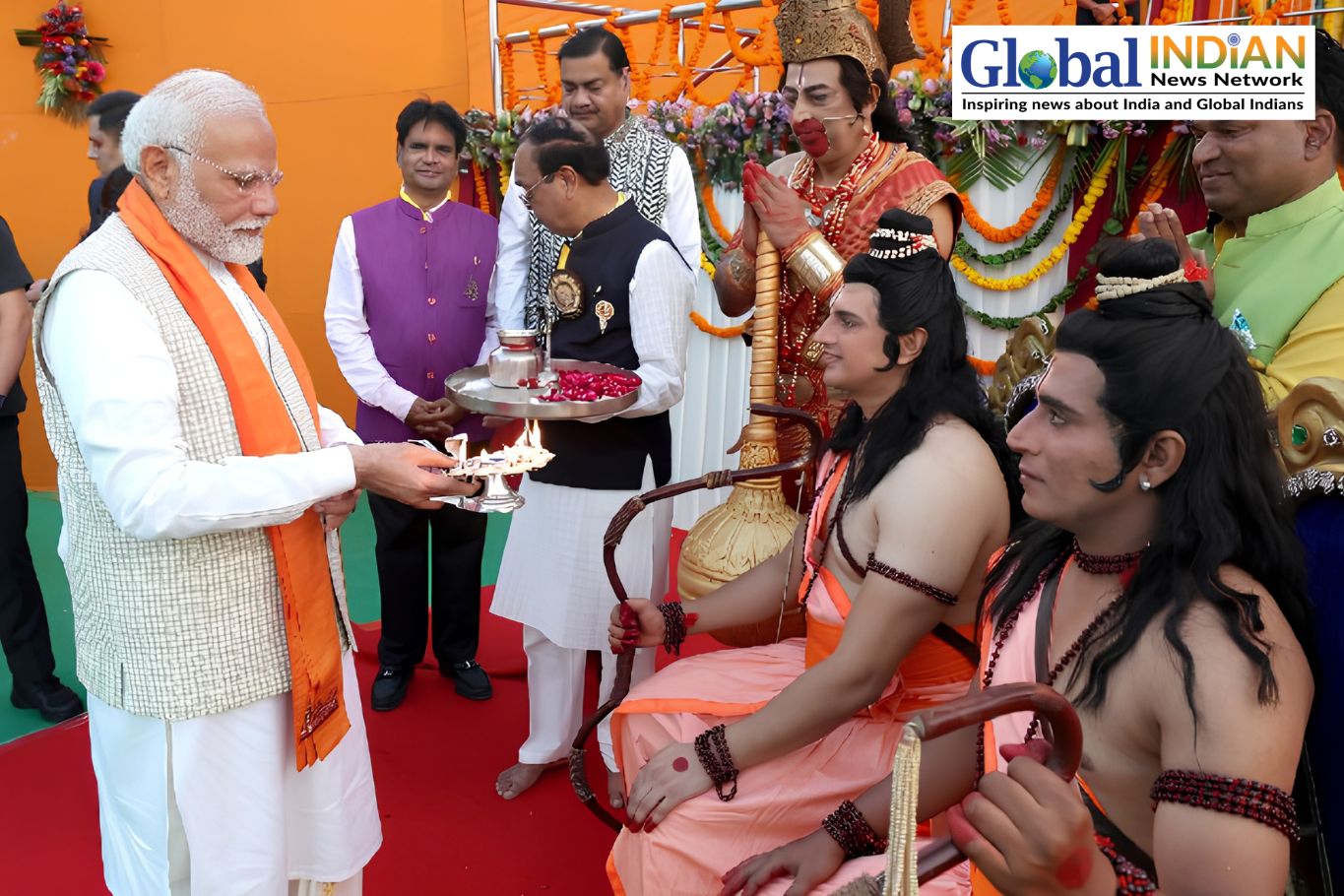
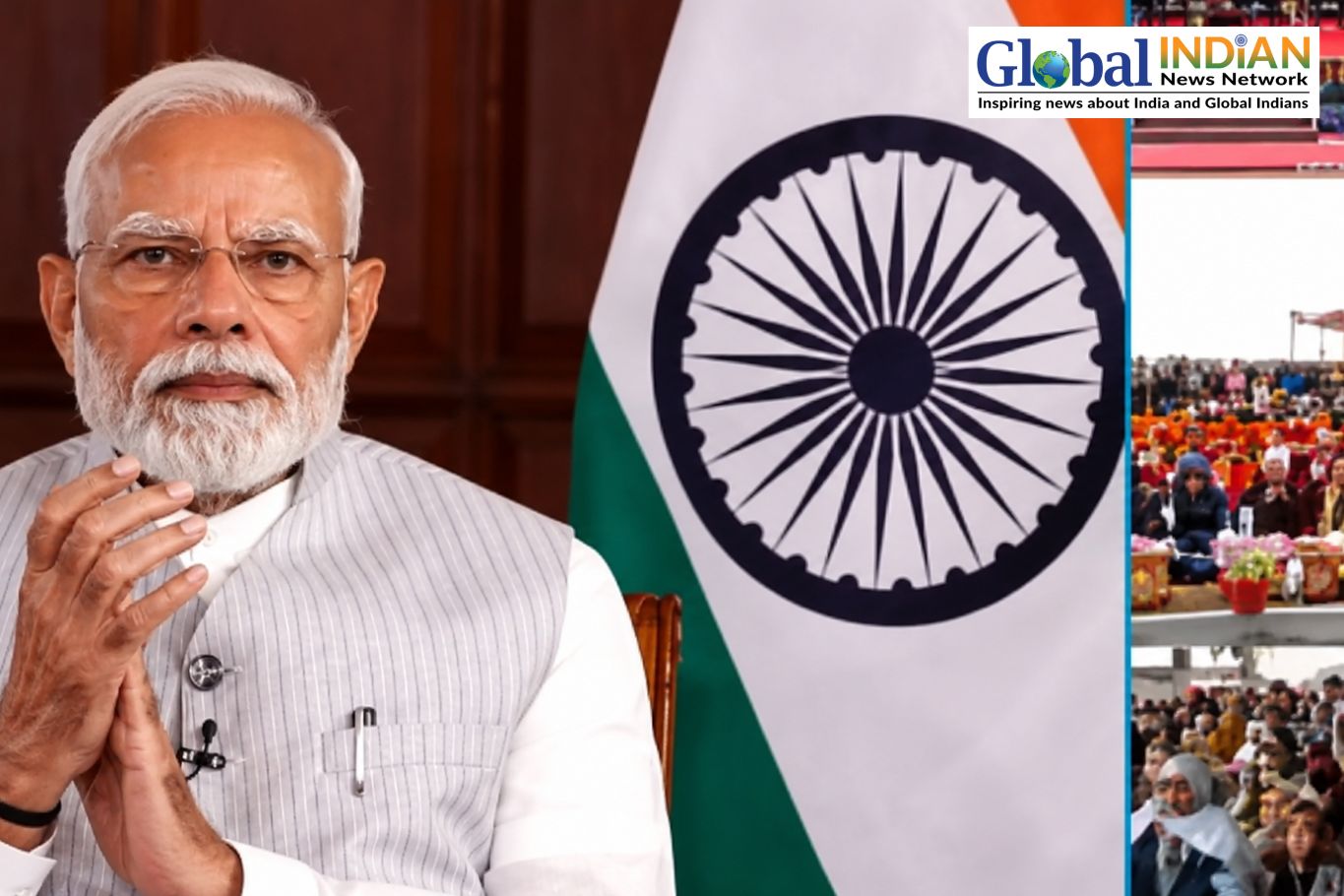
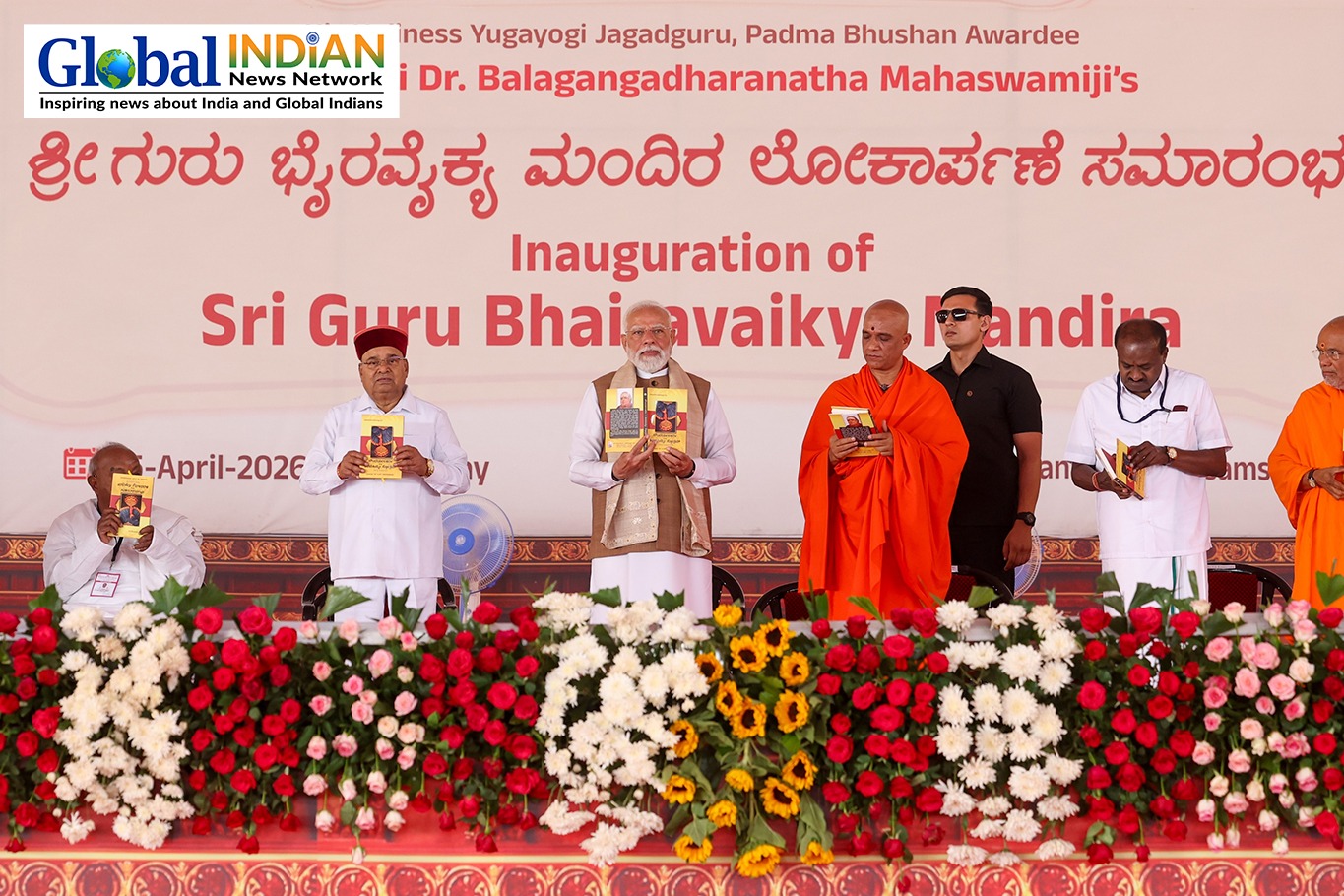
 Prime Minister Narendra Modi on Wednesday inaugurated the Guru Bhairavaikya Mandira at Sri Kshetra Adichunchanagiri in Karnataka’s Mandya district, where he also offered prayers. The visit marked an important cultural and spiritual event, drawing attention to the significance of the newly constructed memorial.
The Guru Bhairavaikya Mandira has been dedicated to the revered spiritual leader Sri Sri Sri Dr Balagangadharanatha Mahaswamiji, who served as the 71st pontiff of Sri Adichunchanagiri Mahasamsthana Math. The structure stands as a tribute to his life, teachings, and lasting influence on the spiritual and social fabric of the region.
According to official statements, the memorial has been built in the traditional Dravidian architectural style, reflecting India’s rich heritage of temple design. The Mandira is envisioned not only as a sacred place of worship but also as a center of inspiration for future generations, encouraging reflection on values and teachings associated with the seer.
During the visit, the Prime Minister also released a book titled “Saundarya Lahari and Shiva Mahimna Stotram,” alongside former Prime Minister and JD(S) leader H.D. Deve Gowda. The release added a literary and spiritual dimension to the ceremony, highlighting ancient devotional texts and their cultural relevance.
Ahead of the inauguration, PM Modi visited several sacred sites within the complex. He offered prayers at Jwala Peeta, a location associated with Lord Shiva’s penance in local tradition, and also visited the Sri Kalabhairaveshwara Swamy temple. These visits underscored the spiritual importance of the site and the rituals associated with the event.
The ceremony was attended by several prominent dignitaries, including Karnataka Governor Thaawarchand Gehlot, the current pontiff of Adichunchanagiri Mahasamsthana Math Nirmalanandanatha Mahaswami, and Union Ministers H.D. Kumaraswamy and Shobha Karandlaje.
Overall, the inauguration of the Guru Bhairavaikya Mandira highlighted both cultural heritage and spiritual continuity, honoring a respected religious figure while reinforcing the importance of traditional values and architectural legacy in modern India.