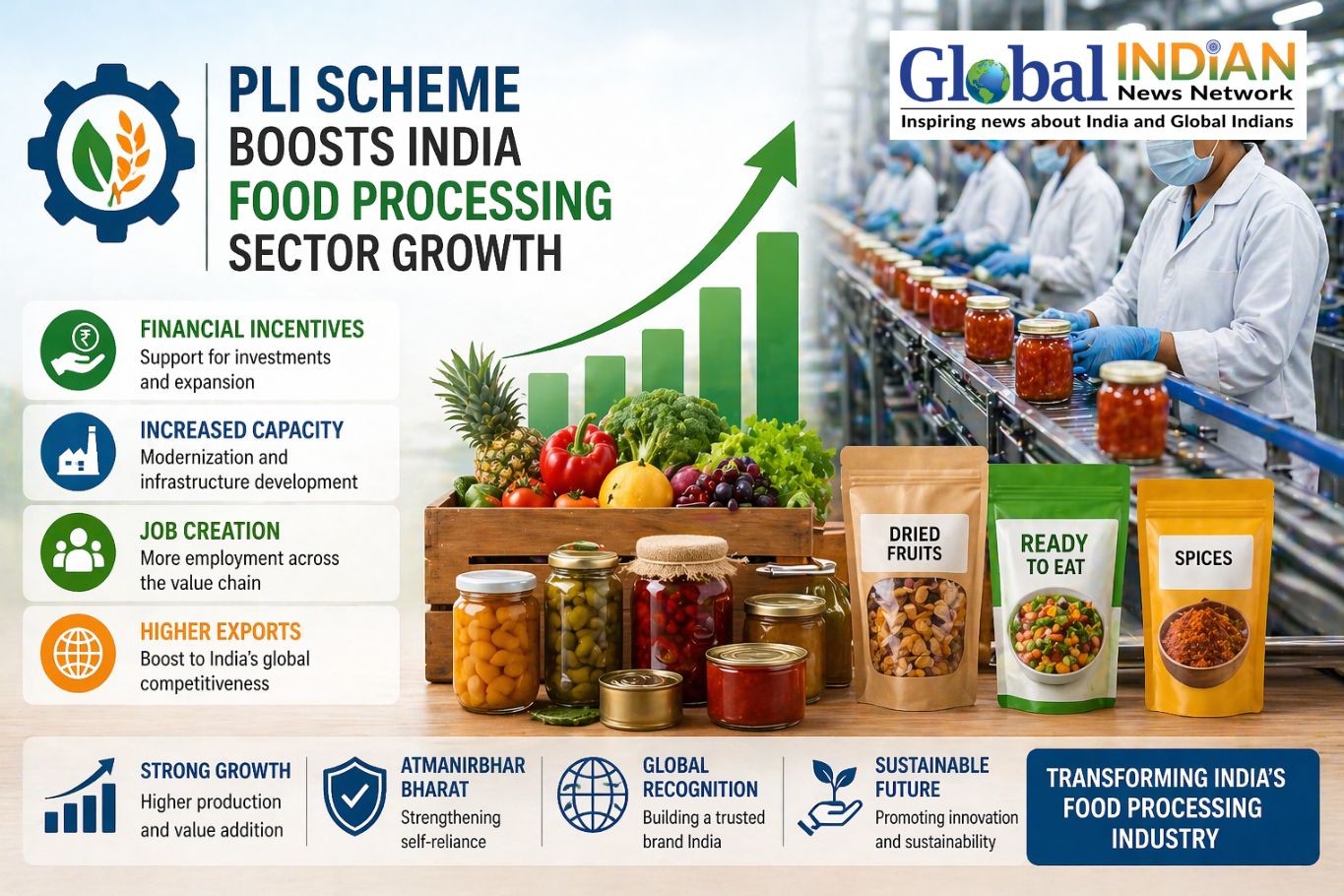
 India’s Production-Linked Incentive scheme for the food processing industry is playing a major role in accelerating the sector’s expansion by encouraging investments, increasing production capacity, and enhancing the global competitiveness of Indian food products. By linking financial incentives to incremental sales, the initiative motivates companies to scale operations and improve value addition throughout the supply chain.
The scheme has also contributed to strengthening smaller businesses, particularly Micro, Small and Medium Enterprises, while encouraging innovation in emerging categories such as millet-based products. This approach has helped create a more inclusive and diversified growth environment within the industry.
Introduced in April 2020 with a financial outlay of around $1.17 billion, the scheme is being implemented over a six-year period from 2021 to 2027. It is designed to generate processed food output worth approximately $3.58 billion and create close to 0.25 million jobs by the end of the program.
Recent data highlights strong progress in achieving these goals. By February 2026, authorities had approved 165 applications across 274 project locations. Investments under the scheme have crossed nearly $0.10 billion, while incentives totaling about $0.21 million have already been distributed to participating companies.
One of the most notable outcomes has been its impact on employment. The scheme has exceeded its initial target, generating nearly 0.34 million direct and indirect jobs, reflecting robust participation from industry players and effective execution on the ground.
Overall, the PLI initiative has strengthened India’s food processing ecosystem by driving capital inflow, supporting innovation, and expanding production capabilities. With continued momentum, it is expected to further enhance the country’s position in the global food market while ensuring sustainable and inclusive sectoral growth.