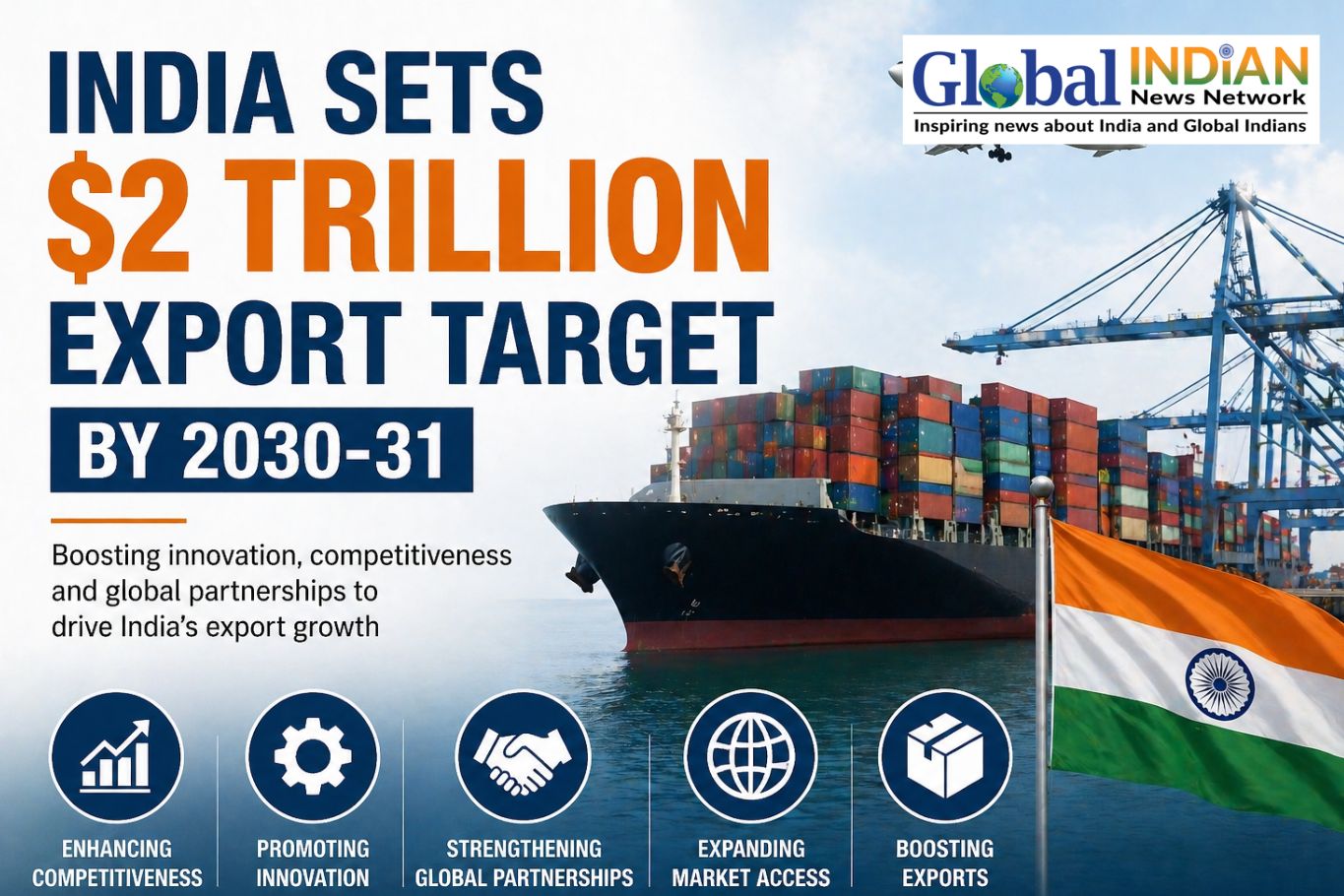
 India has intensified its efforts to achieve an ambitious export target of $2 trillion, or approximately Rs. 188.72 lakh crore, by the financial year 2030–31. Union Minister of Commerce and Industry Piyush Goyal recently chaired a high-level review meeting to assess progress and strengthen the implementation strategy under the Export Promotion Mission.
The overall export goal has been evenly divided between merchandise and services, with each segment expected to contribute around $1 trillion, or Rs. 94.36 lakh crore. To ensure structured progress, the government has developed a detailed Export Monitoring Framework that breaks down the national target into sector-specific action plans across key industries such as engineering goods, textiles, electronics, pharmaceuticals, chemicals, and services.
This framework assigns clear responsibilities, timelines, and measurable performance indicators to various departments and stakeholders. The objective is to ensure accountability while enabling real-time tracking of progress through technology-driven monitoring systems.
The export strategy is built on coordinated execution between ministries and agencies, along with targeted policy reforms aimed at improving the ease of doing business for exporters. Key focus areas include better access to finance, simplified compliance procedures, enhanced logistics infrastructure, improved market access, and stronger global branding of Indian products and services.
In addition to export expansion, the government is also identifying sectors where import substitution can be encouraged. This dual approach is intended to strengthen domestic manufacturing while improving India’s overall trade balance.
A major component of the plan is the Export Promotion Mission, which includes sub-schemes such as Niryat Protsahan and Niryat Disha. These initiatives are designed to address structural challenges faced by exporters, particularly small and medium enterprises, and to support inclusive participation in global trade.
Officials emphasized that MSMEs will play a critical role in achieving the export target, given their contribution to manufacturing and employment. Strengthening their capabilities is seen as essential for scaling up India’s export base.
Overall, the strategy reflects India’s long-term vision of enhancing global trade competitiveness through disciplined execution, policy support, and sector-specific growth planning, positioning the country as a stronger player in the international export market by 2030–31.