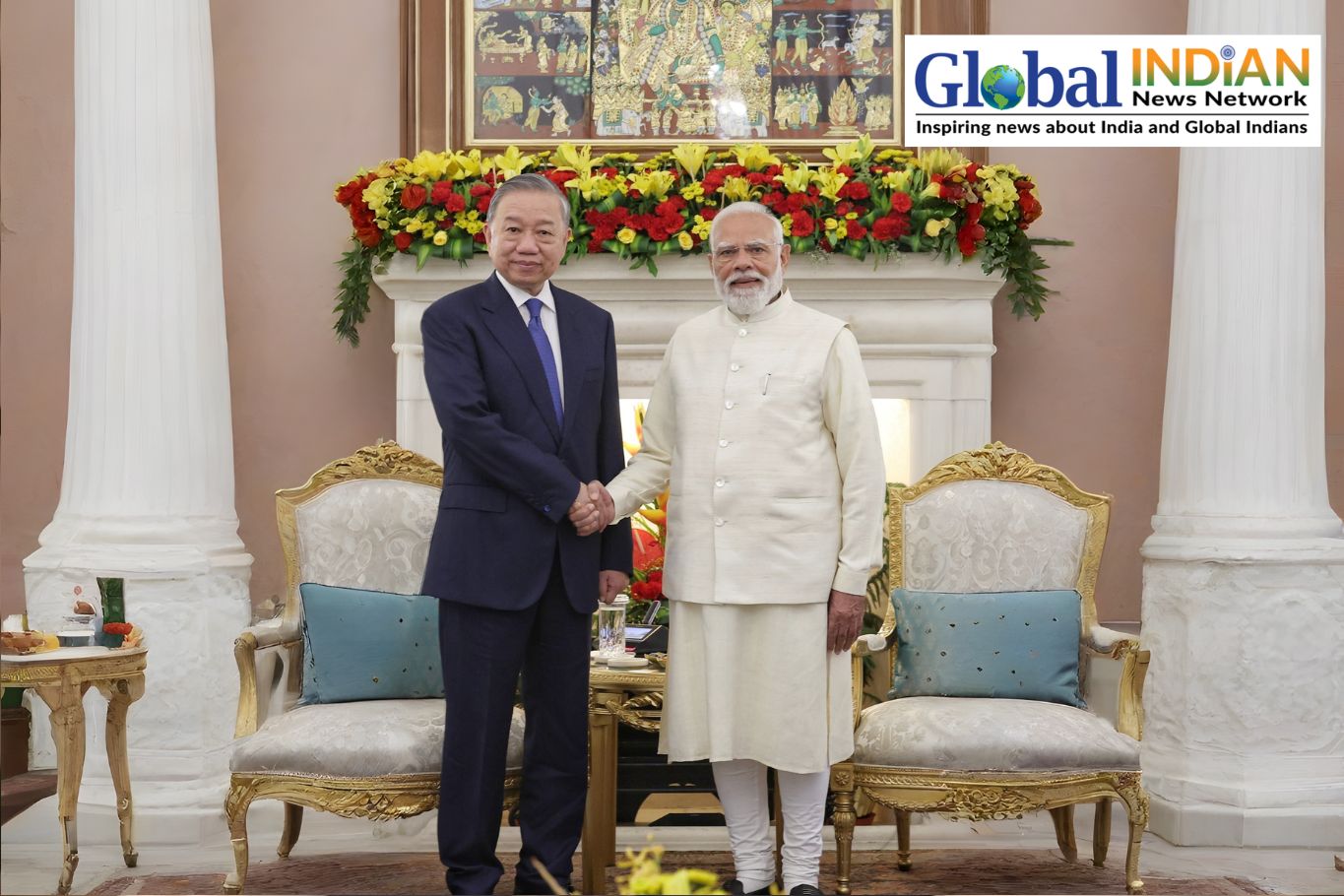
 Prime Minister Narendra Modi held a high-level bilateral meeting with Vietnamese President To Lam in New Delhi on May 6, 2026, marking an important step in strengthening ties between the two countries. The discussions took place at Hyderabad House following a ceremonial welcome at Rashtrapati Bhavan earlier in the day.
President To Lam, on his first State Visit to India, was received with full honors by President Droupadi Murmu and Prime Minister Modi. The ceremonial reception, accompanied by cultural performances, set a positive tone for the diplomatic engagement, reflecting the deepening partnership between the two nations.
The talks between the two leaders focused on enhancing cooperation across multiple sectors, including trade, investment, security, and regional stability. Both sides emphasized the importance of expanding their comprehensive strategic partnership, especially as India and Vietnam mark ten years of elevated bilateral relations.
Ahead of the main meeting, National Security Advisor Ajit Doval met President To Lam to discuss key strategic and security-related matters. According to officials, both sides exchanged views on strengthening collaboration across various domains, highlighting shared interests in maintaining stability in the Indo-Pacific region.
President To Lam began his India visit with a trip to Bodh Gaya on May 5, where he offered prayers at the Mahabodhi Temple, underlining the cultural and historical connections between the two countries. He was received in Bihar by state leadership before traveling to New Delhi for official engagements.
During his stay, the Vietnamese leader is also scheduled to visit Mumbai on May 7, where he will attend a business forum at the National Stock Exchange and interact with industry leaders. The visit aims to further enhance economic cooperation and attract investment opportunities between India and Vietnam.
Officials from India’s Ministry of External Affairs described the visit as a significant moment in bilateral relations, noting that the partnership has evolved from historical and cultural links into a modern, strategic collaboration.
The ongoing engagements reflect a shared commitment by both countries to deepen ties across political, economic, and strategic areas, reinforcing their position as key partners in the region.