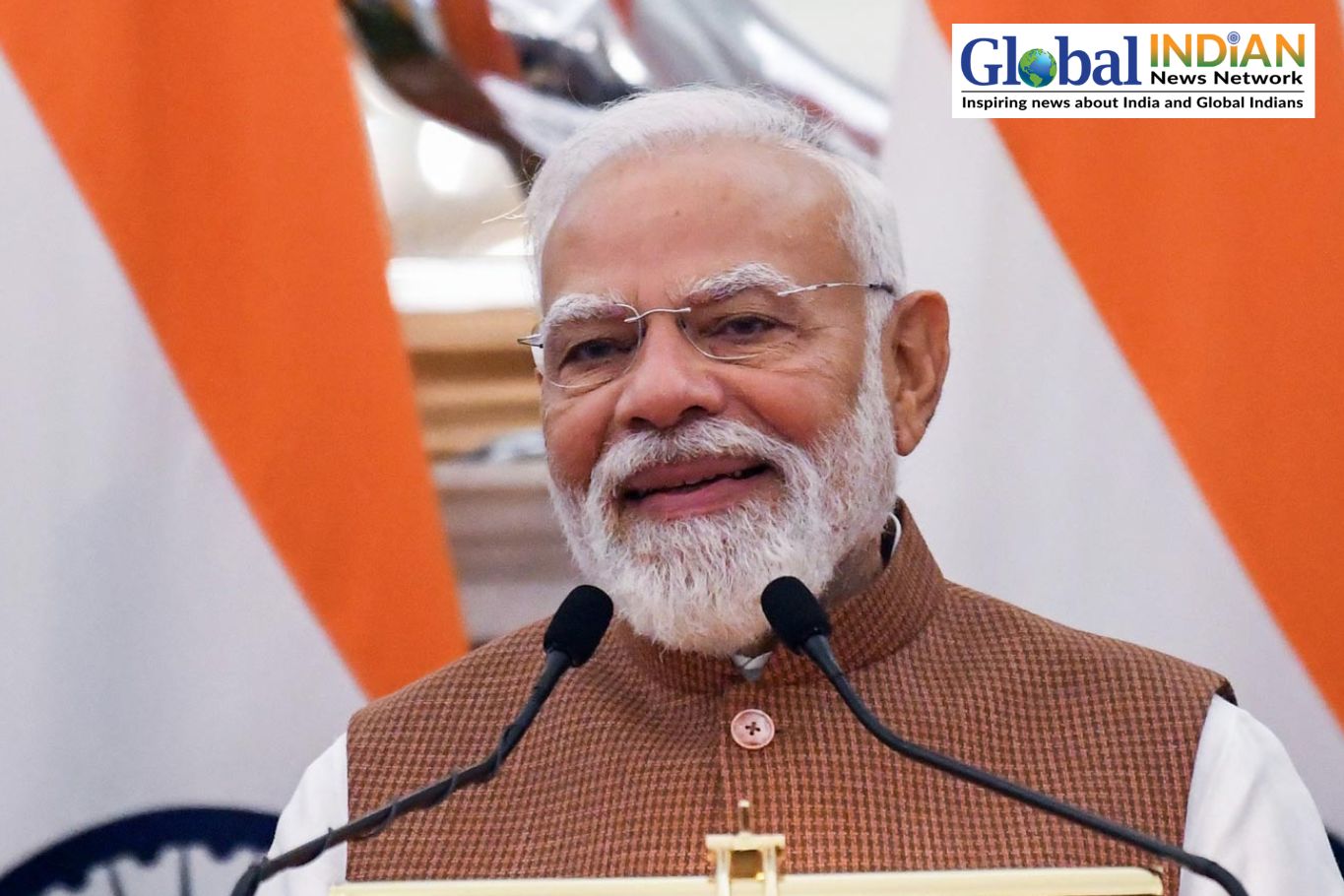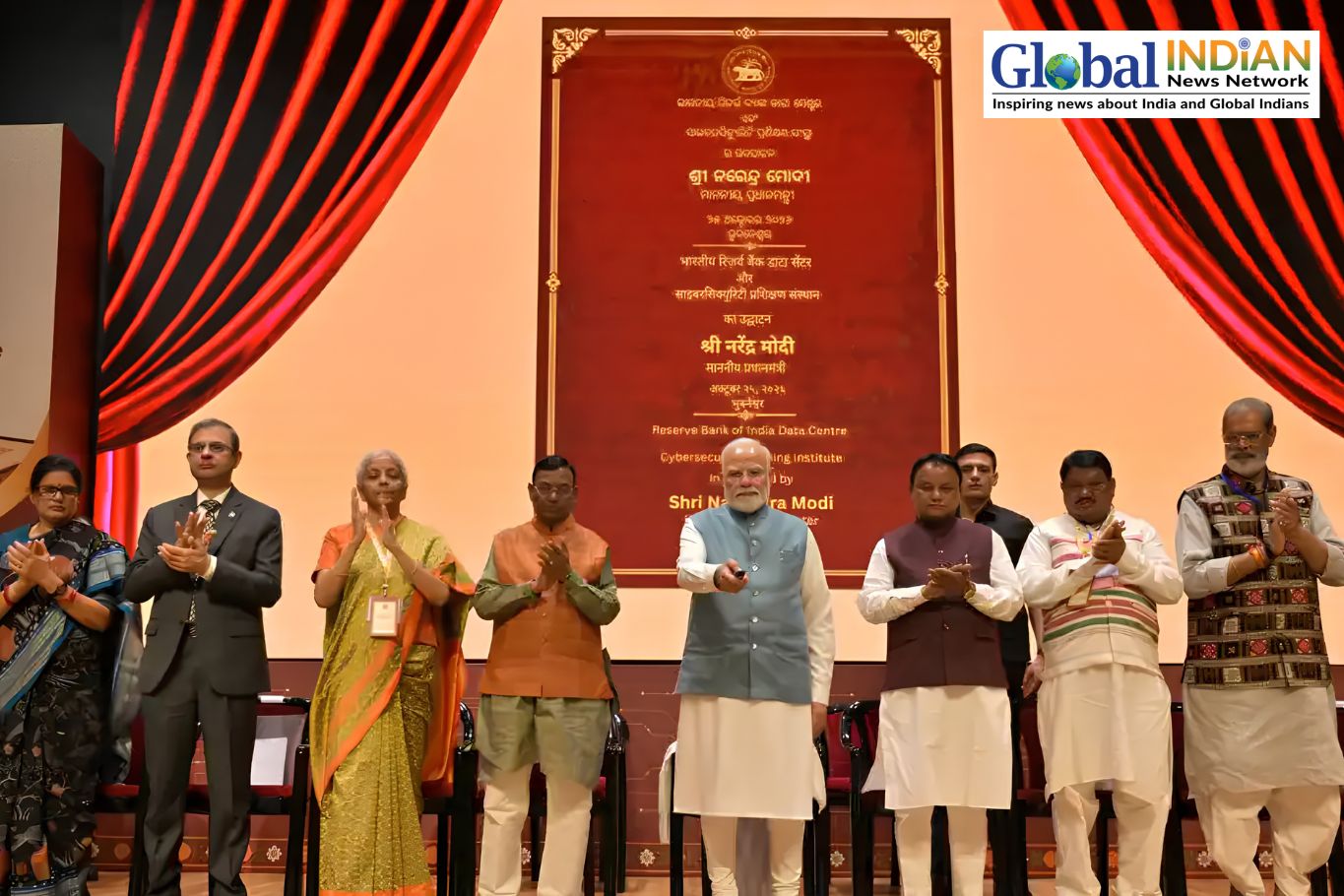
Prime Minister Narendra Modi inaugurated the Reserve Bank of India’s newly established Data Centre and Cybersecurity Training Institute in Bhubaneswar, Odisha, highlighting the importance of digital infrastructure, financial inclusion and cybersecurity in India’s economic development.
Invoking the blessings of Mahaprabhu Jagannath, the Prime Minister congratulated the RBI and all those involved in establishing the two facilities, describing them as significant additions to the state’s development and the country’s financial infrastructure.
Modi said the inauguration reflected India’s changing governance priorities, with greater emphasis on accelerating development, expanding access to public services and ensuring that benefits reach citizens across regions.
He highlighted the government’s approach to people-centric governance, citing the expansion of expressways, medical institutions, Ayushman Arogya Mandirs and digital connectivity in smaller towns and remote areas. According to the Prime Minister, improving citizens’ quality of life and creating opportunities for their aspirations have become central objectives of governance.
The Prime Minister underscored the transformation of India’s banking sector, noting that a significant section of the population remained outside the formal banking system for decades despite earlier efforts to expand access. He credited initiatives introduced over the past decade with bringing millions of households into the financial ecosystem through bank accounts, digital payments and formal credit facilities.
Modi highlighted the role of nearly 60 crore Jan Dhan accounts in strengthening financial inclusion and enabling government benefits to reach recipients directly. He said digital banking had expanded access to banking services and improved the delivery of welfare payments.
The Prime Minister also emphasised the contribution of schemes such as the Pradhan Mantri Mudra Yojana, PM SVANidhi and PM Vishwakarma in supporting small entrepreneurs, street vendors, traditional artisans and other workers who have historically faced difficulties accessing formal credit.
According to Modi, around 13 crore people had become first-time entrepreneurs through the Mudra scheme. He also highlighted financial assistance extended to self-help groups representing rural women, describing their growing access to institutional finance as an important step towards economic empowerment. The expansion of RuPay debit and credit cards was another example cited by the Prime Minister as evidence of broader access to financial services.
Modi also highlighted the expansion of social security programmes aimed at protecting economically vulnerable households against financial uncertainty. He noted that the Atal Pension Yojana covered approximately nine crore subscribers, including 38 lakh people in Odisha. He also referred to the Pradhan Mantri Suraksha Bima Yojana and the Pradhan Mantri Jeevan Jyoti Bima Yojana, which provide affordable accident and life insurance coverage.
The Prime Minister said these schemes had helped make insurance accessible to lower-income families and the middle class. He highlighted the disbursement of more than ₹25,000 crore in insurance claims, describing the support as an important component of citizen-focused governance. He credited the banking sector, including the central bank, commercial banks and their employees, for helping expand financial access and implement these initiatives across the country.
The new RBI facilities assume particular importance as India’s financial system becomes increasingly dependent on digital infrastructure. Modi said that while the previous decade had focused on bringing previously unbanked citizens into the financial system, the coming decade would require greater attention to making banking more efficient, reliable and secure.
He warned that cyber threats were emerging as a serious challenge to national economic security, with financial institutions and digital infrastructure increasingly exposed to sophisticated attacks. The Data Centre is expected to strengthen the RBI’s technological infrastructure, while the Cybersecurity Training Institute will support the development of expertise needed to address evolving digital threats.
The Prime Minister stressed that India’s expanding economic influence must be accompanied by stronger safeguards for its financial system. He called for modern infrastructure, updated training capabilities and skilled personnel to protect institutions against cybercrime and other digital risks. The inauguration comes amid the growing importance of secure digital transactions, resilient banking systems and advanced computing capabilities to India’s economic and technological ambitions.
The Prime Minister also highlighted Odisha’s potential to become a major contributor to India’s development, particularly through the expansion of technology-driven industries in eastern India. He said the state was building on its established mineral and industrial base while exploring new opportunities in semiconductors, electronics, data centres and advanced computing.
Describing this transition as a shift from “mines to microchips,” Modi expressed confidence that emerging industries would create new employment opportunities and support the aspirations of Odisha’s youth. The establishment of the RBI’s Data Centre and Cybersecurity Training Institute adds to the state’s institutional infrastructure as India seeks to strengthen its digital economy and technological capabilities.
Modi concluded by extending festive greetings and invoking the blessings of Mahaprabhu Jagannath, reiterating his confidence in Odisha’s role in building a developed India, or Viksit Bharat.