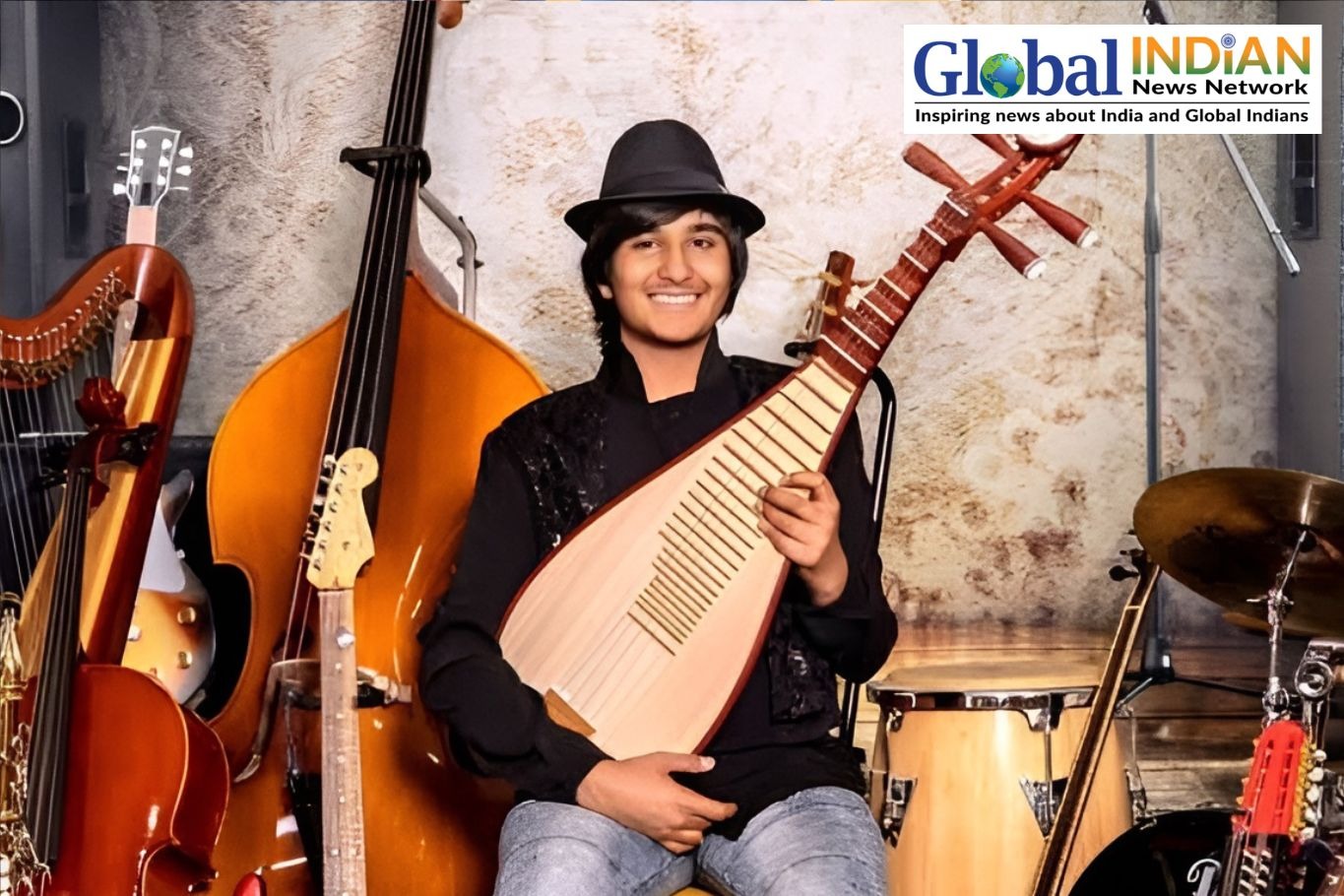
 Indian American musician Neil Nayyar has built an extraordinary career by mastering more than 140 musical instruments while seamlessly blending Indian classical traditions with contemporary global genres. The California-based composer, author, actor, and performer, who is fluent in 11 languages, says his artistic journey has always been guided by curiosity and a deep respect for music from around the world.
Speaking about his upbringing, Nayyar recalled that music became part of his life even before he was born. His parents regularly played classical compositions during his mother’s pregnancy, and after birth, he explored instruments with the same excitement most children reserve for toys. Rather than following a rigid path, he developed a natural fascination with how different cultures express similar emotions through sound.
Despite performing across genres including jazz, electronic music, cinematic scores, and multilingual vocals, Nayyar credits Indian classical music for providing the foundation of his artistry. He said years of training on the sitar, tabla, and tanpura shaped his understanding of rhythm, improvisation, and emotional expression, allowing him to explore new musical landscapes without losing his cultural identity.
Among the hundreds of instruments he plays, Nayyar describes the sitar, tabla, and tanpura as having the deepest spiritual significance. He views the sitar as a voice capable of expressing subtle emotional tones, the tabla as a living rhythm, and the tanpura as a meditative anchor that brings clarity before every performance.
His creative philosophy is reflected in his debut album, Breaking Barriers, which blends Indian classical influences with jazz, orchestral composition, and electronic production. According to Nayyar, the project challenges traditional musical boundaries while encouraging artists to embrace multiple identities instead of limiting themselves to a single genre or cultural label.
Nayyar also recently published Passion to Exploration of 107 Sound Machines, a book designed to encourage aspiring musicians to develop curiosity across cultures and musical traditions. Rather than focusing solely on technique, he hopes to inspire young artists to explore global sounds with confidence and originality.
Reflecting on collaborations with Pakistani singer Ali Zafar and appearances on television programs including The Jennifer Hudson Show and Good Morning America, Nayyar said mainstream platforms provide valuable opportunities to introduce audiences to Indian classical instruments in fresh, contemporary ways. He believes these performances help spark interest in world music while demonstrating that traditional instruments remain relevant in modern entertainment.
Looking ahead, Nayyar plans to continue expanding his creative work through live performances, film scoring, acting, and cross-genre collaborations. For the Indian American artist, the journey is not about mastering another instrument but about discovering new ways to connect cultures and tell meaningful stories through music.