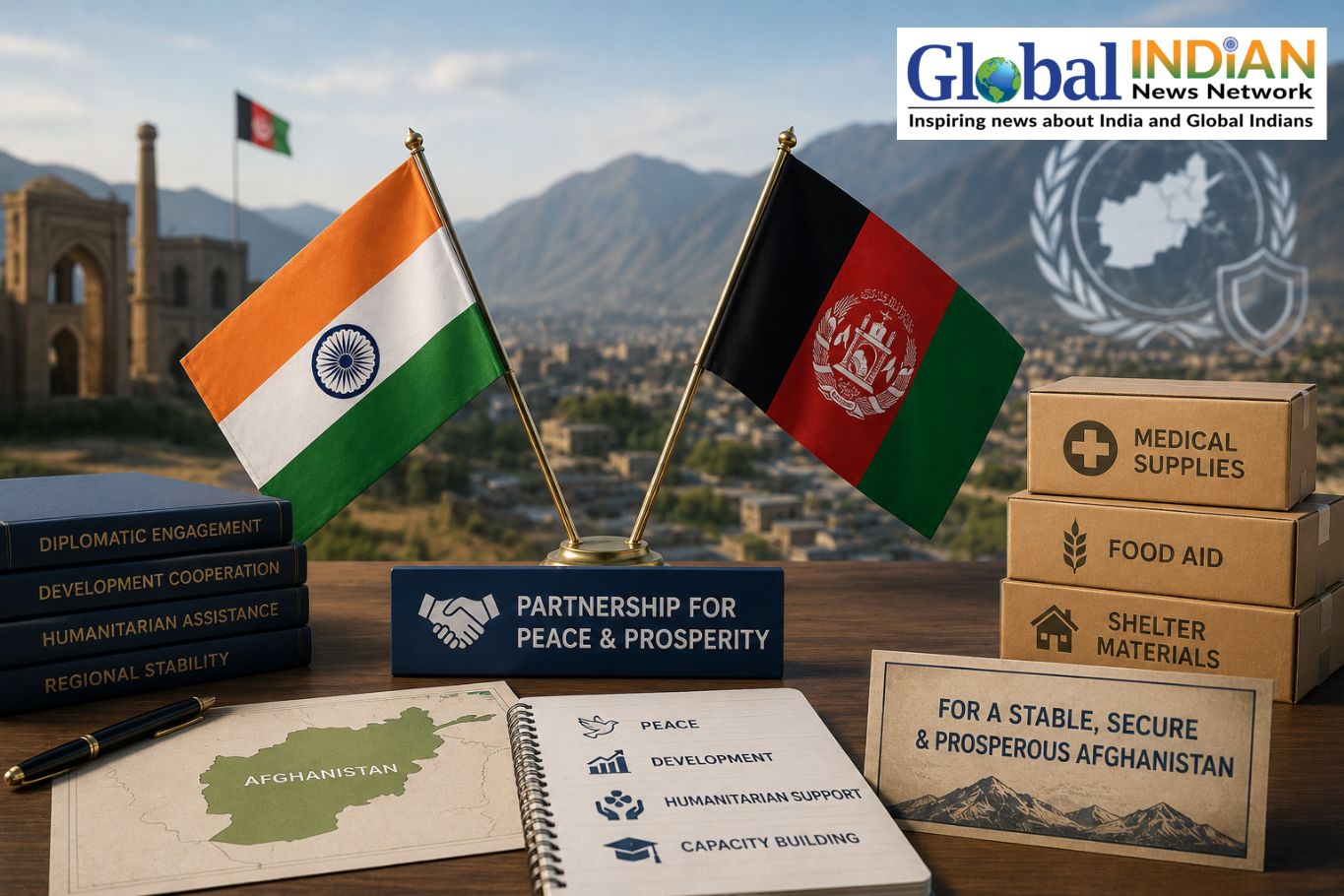
 India has reaffirmed its longstanding commitment to supporting peace, stability, and development in Afghanistan, emphasizing the deep historical and cultural ties that connect the two neighboring nations. During a weekly media briefing in New Delhi, the Ministry of External Affairs (MEA) highlighted India’s continued engagement with Afghanistan through humanitarian aid, development initiatives, and educational programs.
MEA spokesperson Randhir Jaiswal referred to India’s position presented during a recent United Nations Assistance Mission in Afghanistan (UNAMA) briefing in New York. He noted that India and Afghanistan share centuries-old civilizational connections and stressed that regional peace remains essential for ensuring prosperity and long-term stability across South Asia.
According to Jaiswal, India’s partnership with Afghanistan extends beyond diplomatic engagement and includes practical support aimed at improving the lives of ordinary Afghan citizens. New Delhi has consistently contributed to food security initiatives, supplied medicines and pharmaceutical assistance, and supported healthcare-related efforts in the country. These programs are designed to benefit all sections of Afghan society, including women and children.
India has also focused on capacity-building measures by offering scholarships and educational opportunities to Afghan students. Training programs and skill-development initiatives have formed an important component of the bilateral relationship, reflecting India’s commitment to empowering future generations and supporting Afghanistan’s reconstruction efforts.
The MEA maintained that India’s policy toward Afghanistan remains guided by the principles outlined at the United Nations, with a focus on promoting peace and addressing humanitarian concerns. New Delhi reiterated that its development-oriented approach seeks to contribute positively to Afghanistan’s progress and the broader stability of the region.
India also used the international platform to respond to comments made by Pakistan regarding the United Nations mission in Afghanistan. At the UN Security Council, India’s Permanent Representative, P. Harish, defended both UNAMA and the United Nations Secretary-General’s assessment of conditions in Afghanistan.
Harish criticized what he described as inconsistencies in Pakistan’s position, particularly referencing concerns over cross-border military actions that resulted in civilian casualties. He emphasized the importance of respecting international humanitarian law and safeguarding civilian populations during periods of conflict.
India expressed support for calls made by the United Nations for thorough investigations into incidents involving civilian harm. It also backed efforts aimed at ensuring accountability, preventing future occurrences, and protecting the rights of victims affected by violence.
Through its statements, India sought to reinforce its image as a responsible regional stakeholder committed to Afghanistan’s welfare, advocating for a future defined by peace, development, and constructive international cooperation.