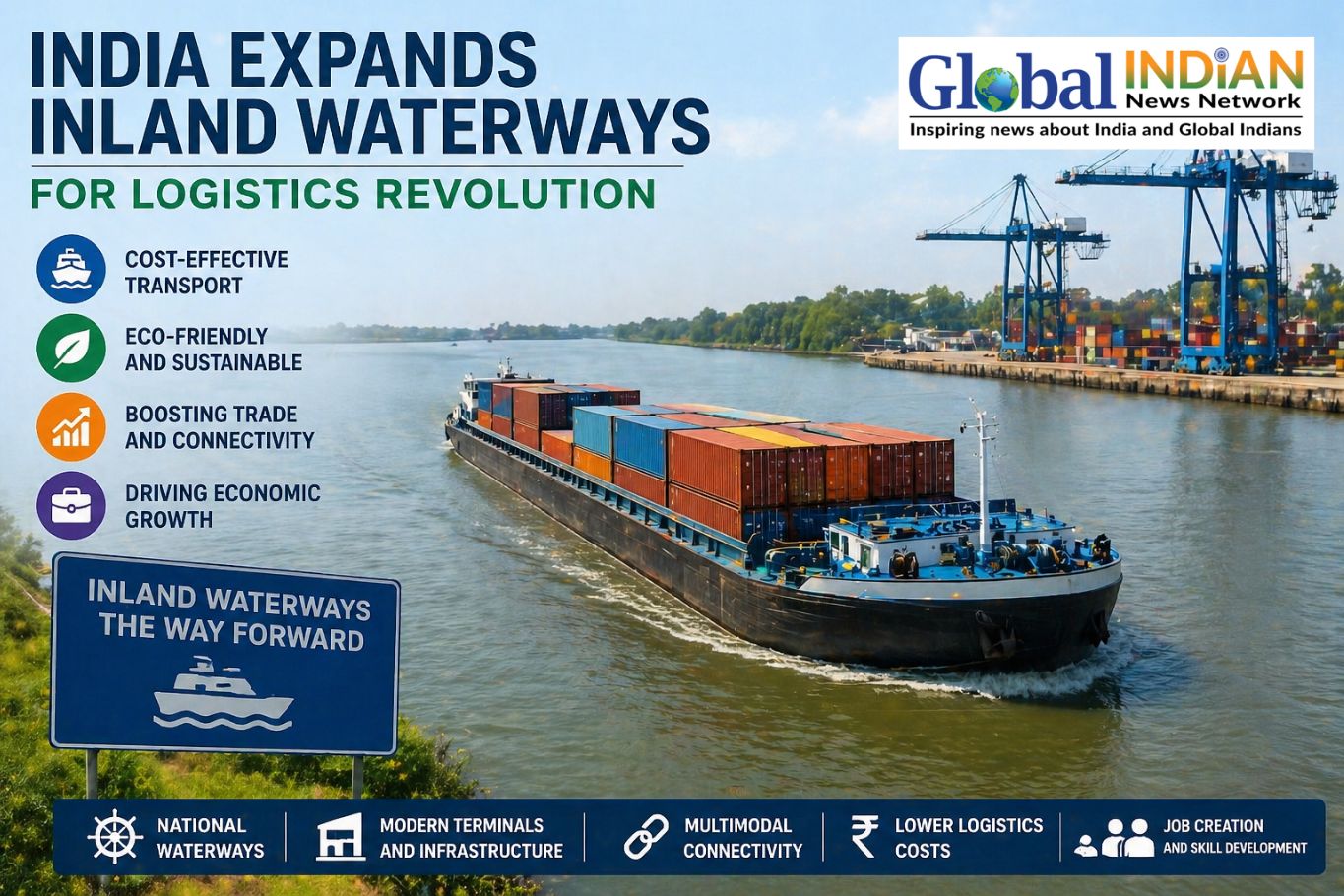
 India is rapidly accelerating the expansion of its inland waterways network as part of a broader strategy to modernize logistics and strengthen sustainable transport systems. The country is converting rivers, canals, and backwaters into a structured transport backbone aimed at reducing freight costs, improving connectivity, and lowering emissions. With 111 National Waterways stretching across 20,187 kilometers and covering 23 states and four Union Territories, India has built one of the largest inland water transport systems globally.
As of March 2026, 32 waterways spanning over 5,100 kilometers are already operational. The government has outlined plans to expand this to 52 operational waterways within the next five years, reflecting strong policy momentum. In addition, the Union Budget 2026–27 has proposed activating 20 additional waterways, further strengthening the long-term development pipeline for this sector.
Inland waterways are gaining importance as a cost-effective and environmentally sustainable transport option. They consume nearly six times less energy than road or rail transport and significantly reduce carbon emissions. A single vessel carrying about 2,000 tonnes of cargo can replace nearly 125 trucks, helping reduce highway congestion and lowering overall logistics expenses for industries.
The sector is already witnessing strong growth momentum. Cargo movement on National Waterways reached approximately 145.84 million metric tonnes in 2024–25 and increased sharply to nearly 198 million metric tonnes by February 2026. Passenger traffic has also expanded significantly, rising from 16.1 million in 2023–24 to about 76 million in 2024–25, indicating improved regional mobility and greater adoption of water-based transport.
Looking forward, India aims to increase the share of inland waterways in total freight movement from around 2% to 5% by 2030. Cargo volumes are expected to surpass 200 million metric tonnes by 2030 and reach nearly 500 million metric tonnes by 2047. Key initiatives such as the Jal Marg Vikas Project and the Jalvahak Cargo Promotion Scheme are supporting infrastructure development and encouraging greater private participation.
Overall, inland waterways are emerging as a crucial pillar of India’s logistics transformation, supporting economic expansion while promoting a cleaner, more efficient transport ecosystem.