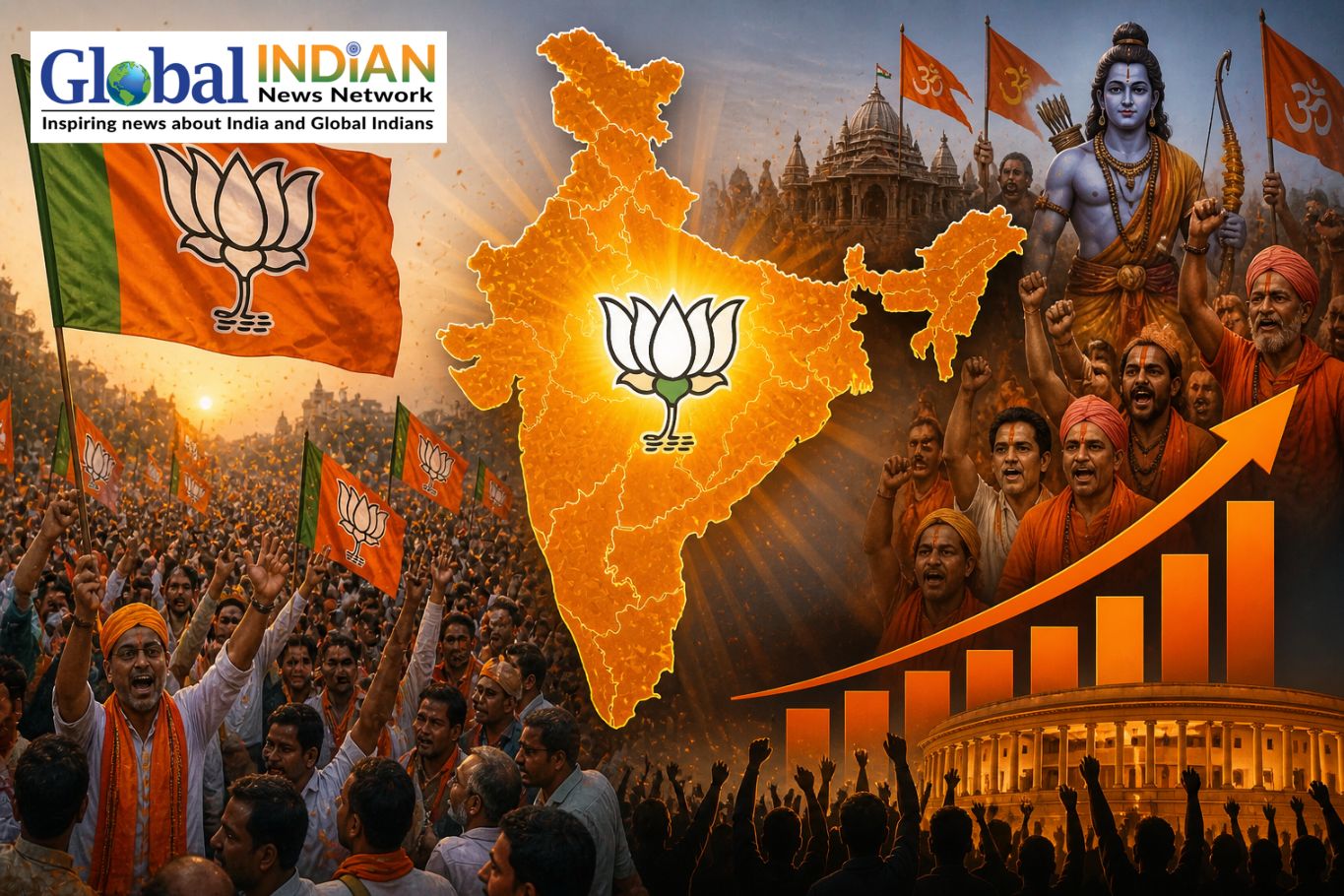
 A growing pattern of Hindu vote consolidation has emerged as a significant factor behind the Bharatiya Janata Party’s expanding electoral success across several Indian states, particularly in border regions and politically sensitive constituencies. This trend has been described by political analysts as a key multiplier in the BJP’s recent victories, especially in the 2026 Assembly elections.
According to electoral observations, the BJP and its National Democratic Alliance partners now hold power in a majority of states across India, stretching from western regions to the eastern borderlands and the northeastern states. This expansion reflects a broader political shift, with only a few states remaining outside the alliance’s control.
In West Bengal, the 2026 election witnessed a decisive political transformation. The BJP crossed the majority mark in the 294-member Assembly, effectively ending the Trinamool Congress’s 15-year rule. Analysts attribute a significant part of this outcome to the consolidation of Hindu voters across caste and community lines, which strengthened the party’s position in several key regions.
Border districts such as North 24 Parganas, Malda, and areas surrounding Murshidabad recorded high voter turnout. Political campaigns highlighted concerns over illegal immigration, demographic change, and cross-border security issues, which contributed to the unification of diverse Hindu voter groups, including upper castes, OBCs, and Matua communities.
The electoral strategy was strongly influenced by messaging focused on identity, security, and cultural concerns. This helped the BJP convert fragmented voter groups into a more consolidated support base, particularly in constituencies located near international borders.
In Bihar, similar patterns were observed during the 2025 Assembly elections, where the NDA secured a strong majority. The alliance, led by the BJP and Janata Dal (United), won 202 out of 243 seats. Analysts noted that Hindu voter consolidation played a supporting role by uniting non-Yadav Hindu communities, including upper castes and Other Backward Classes, against the opposition’s traditional caste-based coalition.
The BJP’s electoral strategy combined welfare delivery, governance messaging, and ideological appeal under its “double-engine” model of governance. This approach is believed to have strengthened voter alignment while weakening opposition fragmentation across multiple regions.
Political observers argue that this consolidation trend reflects a broader shift in India’s electoral dynamics, where identity politics, security concerns, and governance issues are increasingly intersecting. In several border states, these factors have contributed to reshaping voting behaviour and strengthening the BJP’s position.
As India’s political landscape continues to evolve, analysts suggest that the consolidation of Hindu votes across diverse communities may remain a key driver of electoral outcomes, particularly in regions marked by demographic sensitivity and strategic importance.