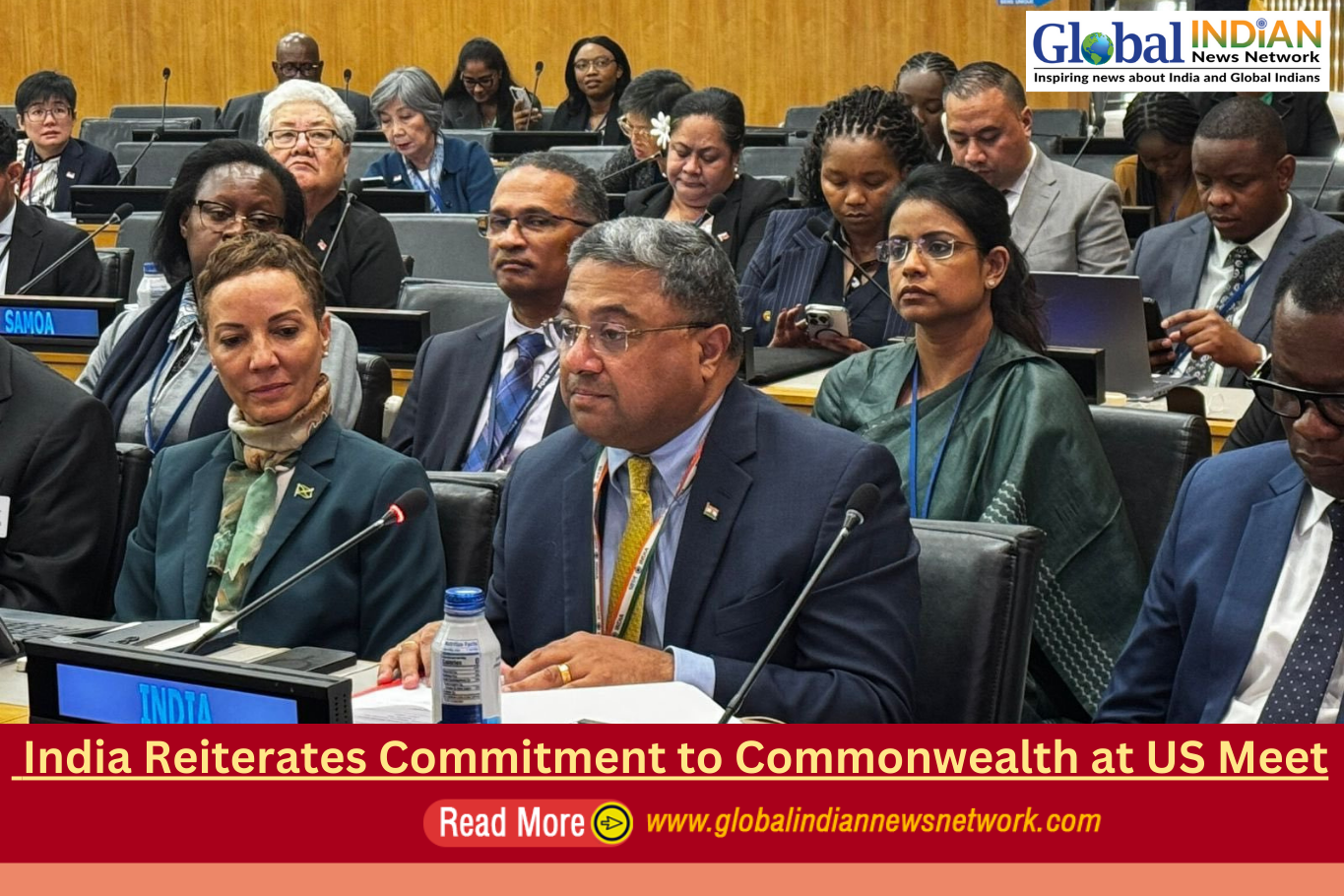
 India actively participated in the Commonwealth Foreign Affairs Ministers’ Meeting (CFAMM) 2025, reaffirming its commitment to the core principles and values set forth in the Commonwealth Charter. Representing India, Ministry of External Affairs Secretary West Sibi George attended the meeting held on the sidelines of the 80th United Nations General Assembly (UNGA) session on September 22, 2025.
In a statement shared on X, the Ministry of External Affairs noted that George highlighted India’s dedication to upholding the fundamental tenets of the Commonwealth Charter. He also addressed the need for reform within the Commonwealth to ensure that its structures and processes remain relevant in addressing contemporary global challenges.
The meeting, chaired by Samoa’s Deputy Prime Minister Toelupe Maoiautele Poumulinuku Onesemo, convened foreign ministers from across the Commonwealth at the UN Headquarters in New York for the 25th CFAMM. Participants collectively expressed strong support for the Commonwealth’s role in advancing multilateralism and fostering collective action in response to pressing international issues.
Ministers reviewed progress since the 2024 Commonwealth Heads of Government Meeting (CHOGM) in Samoa and began outlining strategies ahead of CHOGM 2026 in Antigua and Barbuda. A key highlight of the meeting was the endorsement of the ‘Strategic Plan 2025–2030: Building a More Resilient Commonwealth,’ which aims to strengthen democratic governance, economic stability, and environmental resilience across member nations.
Looking forward to CHOGM 2026, ministers stressed the importance of the Commonwealth serving as a model for efficient, coordinated international cooperation. India’s participation underscores its ongoing commitment to collective global action, multilateral partnerships, and the promotion of shared democratic and developmental values. By engaging in CFAMM 2025, India continues to position itself as a proactive member of the Commonwealth, supporting reforms and initiatives that aim to enhance the organization’s relevance and effectiveness in a rapidly changing world.