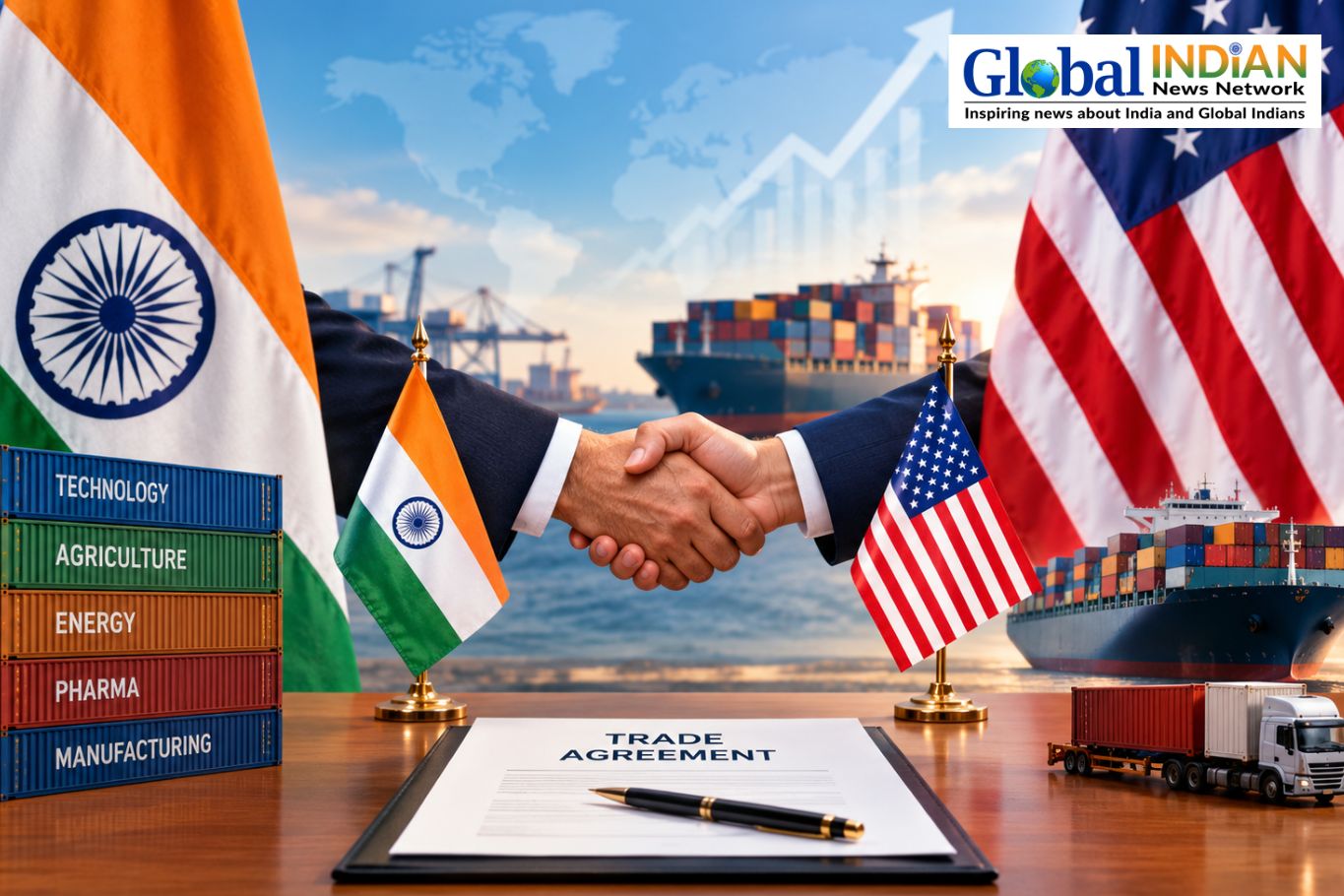
India and the United States have largely completed negotiations on their proposed trade agreement, according to Commerce Secretary Rajesh Agrawal. Speaking on the sidelines of the Global Fintech Fest 2026 on Wednesday, Agrawal said only a few matters remained under discussion and that the agreement would be signed when both governments consider the timing appropriate.
The two countries are now focusing on creating a framework that provides preferential access to each other’s markets. India generally operates under most-favored-nation tariff principles, while the US has been using executive tariffs. This difference requires a structure that can establish specific tariff advantages and improved market access for India under the proposed agreement. Agrawal also said businesses in both countries were already actively engaging with one another and appeared satisfied with the broad understanding reached by the two governments.
India is simultaneously advancing negotiations with other trading partners. Talks on an India-Chile free trade agreement have entered their final phase, although some issues remain unresolved. Agrawal expects further movement over the next two to three months. India is also looking to bring its trade agreement with New Zealand into operation as soon as possible, potentially in October.
Addressing concerns about rising freight expenses, Agrawal said the government was coordinating with exporters to improve access to ships and containers and reduce shipment delays and additional costs. Despite these challenges, India’s exports increased by more than 15% during the first four months, suggesting that higher freight expenses have had a smaller impact than initially expected.
Agrawal also emphasized the need for India to broaden its services export base. India recorded total exports of $863 billion in 2025-26, including $421 billion from services. However, around half of India’s exports are linked to IT and IT-enabled services, while professional services account for another 30%. He said greater diversification would be essential for long-term and sustainable growth.
Fintech could become an important part of that expansion. The global financial services market is estimated at roughly $670 billion, while India’s share is only around $8 billion. Agrawal pointed to India’s digital capabilities as an opportunity to expand its presence in international financial services, noting that about 95% of the country’s financial services exports are delivered digitally.
He also highlighted opportunities in cross-border payments, lending, insurance, trade finance and remittances, particularly across developing economies. Lowering the average cost of remittances for Indian migrant workers from 5-6% to 3% could potentially put another $5 billion into their hands. Globally, a similar reduction could generate savings of around $30 billion for migrants.
India’s digital public infrastructure, including UPI, was cited as an example of technology operating at population scale. Agrawal said such systems could help reduce transaction costs while improving financial access and inclusion.
E-commerce is another area where India sees significant room for expansion. The country currently accounts for about $5 billion in e-commerce exports, compared with a global market of approximately $1 trillion. Agrawal noted that India has signed nine trade agreements over the past five years covering economies with a combined GDP of $60 trillion, while 23 countries have signed memorandums of understanding with India to cooperate on digital public infrastructure.
With the global cross-border payments market expected to grow from roughly $182-190 billion today to $350-360 billion by 2032, India sees considerable potential for its fintech industry. Agrawal suggested that capturing even 10% of the relevant global trade could eventually expand India’s financial services exports from $8 billion to between $60 billion and $80 billion.