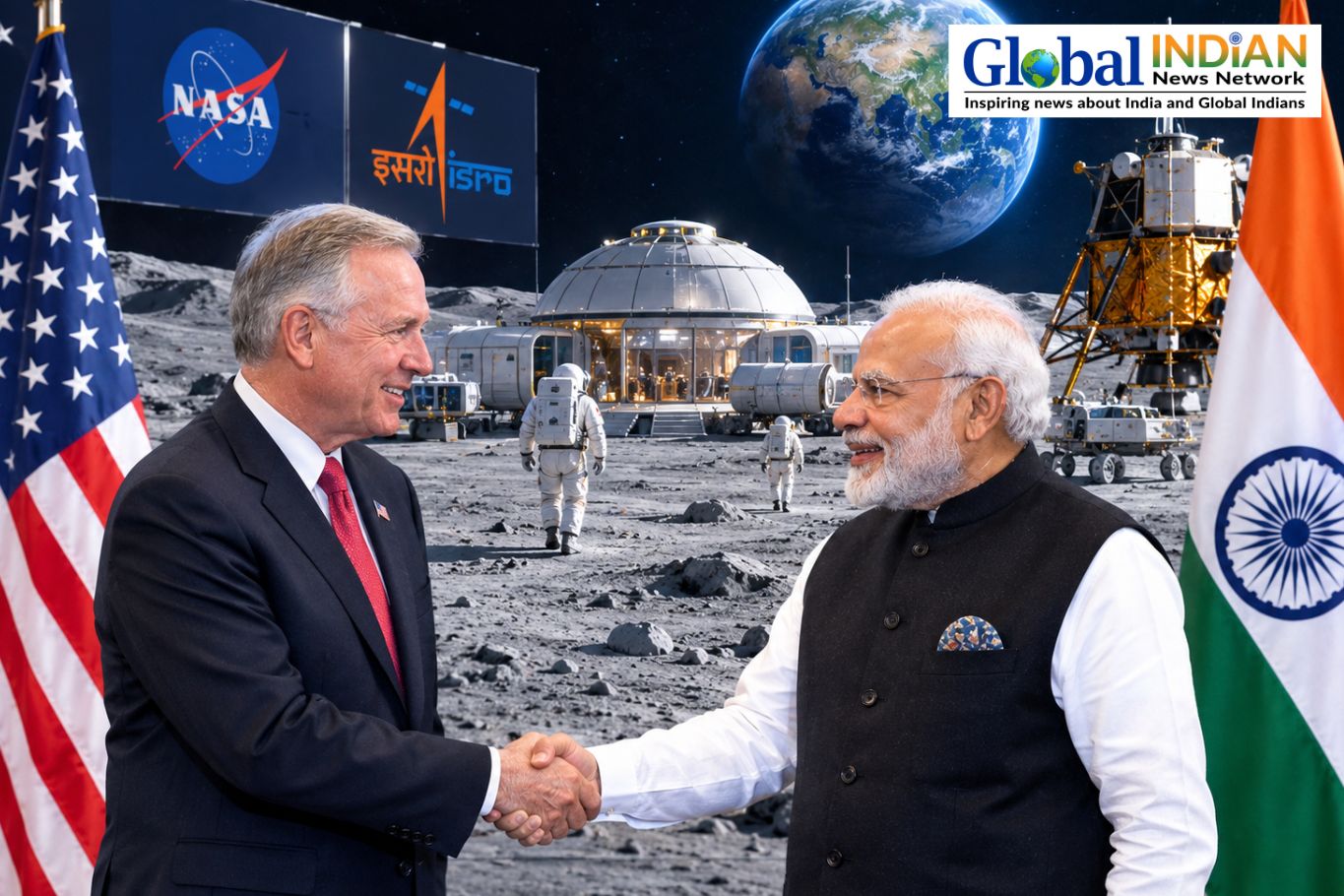
The United States is looking to take its space partnership with India to the next level by inviting the Indian Space Research Organisation (ISRO) to participate in its Moon base program. The proposal could give India a larger role in the next generation of lunar exploration as Washington moves forward with its plans to establish a sustained presence on the Moon.
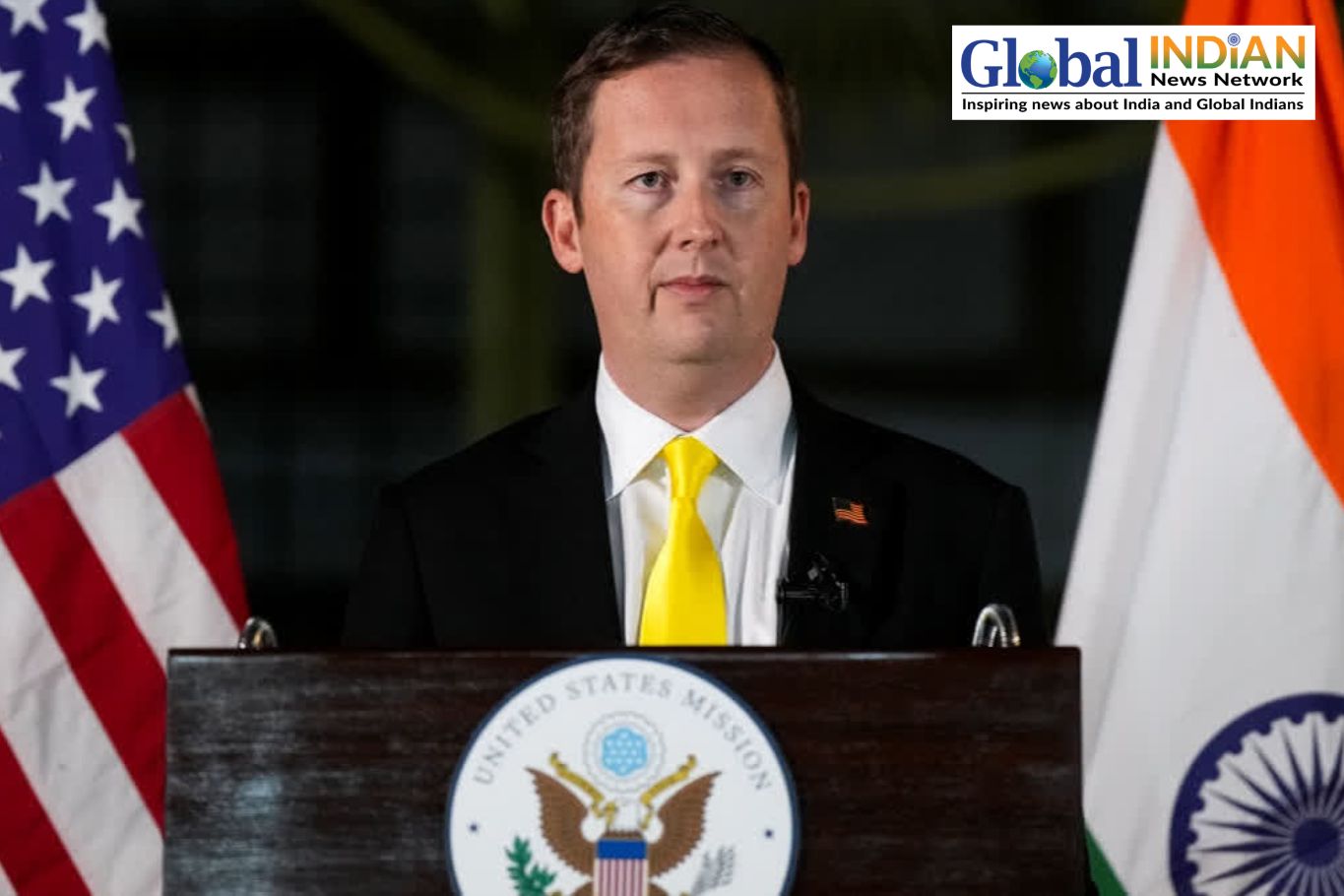
US Ambassador to India Sergio Gor made the announcement at the Bengaluru Space Expo 2026, emphasizing that the United States wants India to be an active partner in its return to the lunar surface. India’s participation in the Artemis Accords has already established a foundation for cooperation on peaceful and responsible space exploration.
The planned Artemis missions are expected to gradually expand human activity around the Moon. Beyond scientific discoveries, the program is intended to support technological development, create new economic opportunities, and build the capabilities needed for eventual human missions to Mars. An Indian role in the Moon base initiative could therefore broaden cooperation between the two countries well beyond individual missions.
Gor also pointed to the NASA-ISRO Synthetic Aperture Radar (NISAR) mission as evidence of what joint space programs can achieve on Earth. The satellite’s advanced radar technology can collect information even when clouds, dust, or darkness make conventional observation difficult. Gor highlighted its potential role in disaster response, noting that data from the mission was used to assist emergency efforts following an earthquake in Venezuela.
The growing relationship also extends to human spaceflight. Gor cited Group Captain Shubhanshu Shukla’s journey to the International Space Station as an important milestone for India. Following the Axiom-4 mission, the two countries have continued discussions and cooperation involving scientific research, astronaut training, docking systems, and technological compatibility.
India’s private space sector is another area where the US sees considerable potential. Gor encouraged Indian space entrepreneurs to explore the American market and highlighted companies such as Pixxel, GalaxEye, Digantara, Bellatrix Aerospace, Skyroot Aerospace, and Agnikul Cosmos. Greater access to US investors and commercial ecosystems could help these emerging companies expand internationally.
The two nations are also working together on broader questions surrounding space governance, including space traffic coordination and international radio-frequency regulations. Gor argued that stronger India-US cooperation could help shape a more open and rules-based global space environment.
His message from Bengaluru was ultimately centered on partnership: by combining their scientific expertise, commercial capabilities, and ambitions, India and the United States could play a defining role in the next era of lunar exploration.