 Five Indian-American Democrats secured victories in elections to the US House of Representatives during the November 3, 2026, midterm elections, marking another significant milestone for Indian-American political representation in the United States. A sixth congressional victory remained within reach, with physician and former Arizona state legislator Amish Shah holding a substantial lead in his race.
According to projections by Decision Desk HQ, Pia Dandiya, Suhas Subramanyam, Pramila Jayapal, Ro Khanna and Ami Bera were projected winners in their respective congressional contests. Their victories reflect the growing participation and influence of Indian Americans in the country’s political landscape.
In Florida’s 22nd Congressional District, Pia Dandiya, a former school principal whose parents immigrated from India, defeated Republican Casey Askar. Dandiya secured approximately 52 per cent of the vote, compared with Askar’s 48 per cent, winning a seat in the House of Representatives.
In Virginia, Suhas Subramanyam won a second term representing the 10th Congressional District. He defeated Republican candidate Dave Beckwith with approximately 61.5 per cent of the vote. Reacting to his victory, Subramanyam said the campaign had concluded but the work was just beginning, adding that he looked forward to working with the community to deliver change in Washington.
Washington state’s Pramila Jayapal secured re-election from the 7th Congressional District, continuing her representation in the House. In California, Ro Khanna defeated fellow Indian-American Republican Ritesh Tandon in the 17th Congressional District. Democrat Ami Bera was also projected to win another term, representing the newly redrawn 3rd Congressional District after defeating Republican Robb Tucker.
Another Indian-American candidate was in contention for a congressional victory in Arizona. Democrat Amish Shah, a physician and former state legislator, held a strong lead over Republican Jay Feely in the 1st Congressional District. Shah had secured approximately 54.6 per cent of the vote against Feely’s 43.5 per cent, with around 81 per cent of the expected vote counted in an overnight update from Decision Desk HQ. The contest had not yet been officially called.
Indian-American candidates also recorded important results in statewide elections. In Maryland, Lieutenant Governor Aruna Miller secured another four-year term after Democratic Governor Wes Moore won re-election. Wisconsin Attorney General Josh Kaul, whose father is of Indian origin, also retained his position by defeating Republican Eric Toney.
Several Indian-American candidates made significant gains in state legislative contests. In Texas, Democrat Pooja Sethi led Republican Jennifer Mushtaler in House District 47 with approximately 63.4 per cent of the vote, while more than 95 per cent of ballots had been counted. Sethi declared victory, although an independent projection was not immediately available.
In Georgia, Democrat Jyot Singh declared victory in House District 97 after unofficial results showed him leading Republican Yassin Moghazy by approximately 68 per cent to 32 per cent. In Illinois, Nabeela Syed led Republican incumbent Darby Hills in Senate District 26 with approximately 57 per cent of the vote. Ram Villivalam retained another Illinois Senate seat, while Arvind Venkat won re-election to the Pennsylvania House of Representatives.
However, the elections also brought defeats for several prominent Indian-American candidates. In Ohio, Democrat Amy Acton defeated Republican Vivek Ramaswamy in the gubernatorial race. Ramaswamy, who received strong backing from President Donald Trump and Vice President JD Vance, conceded the contest late Tuesday. His family traces its roots to Kerala’s Palakkad district.
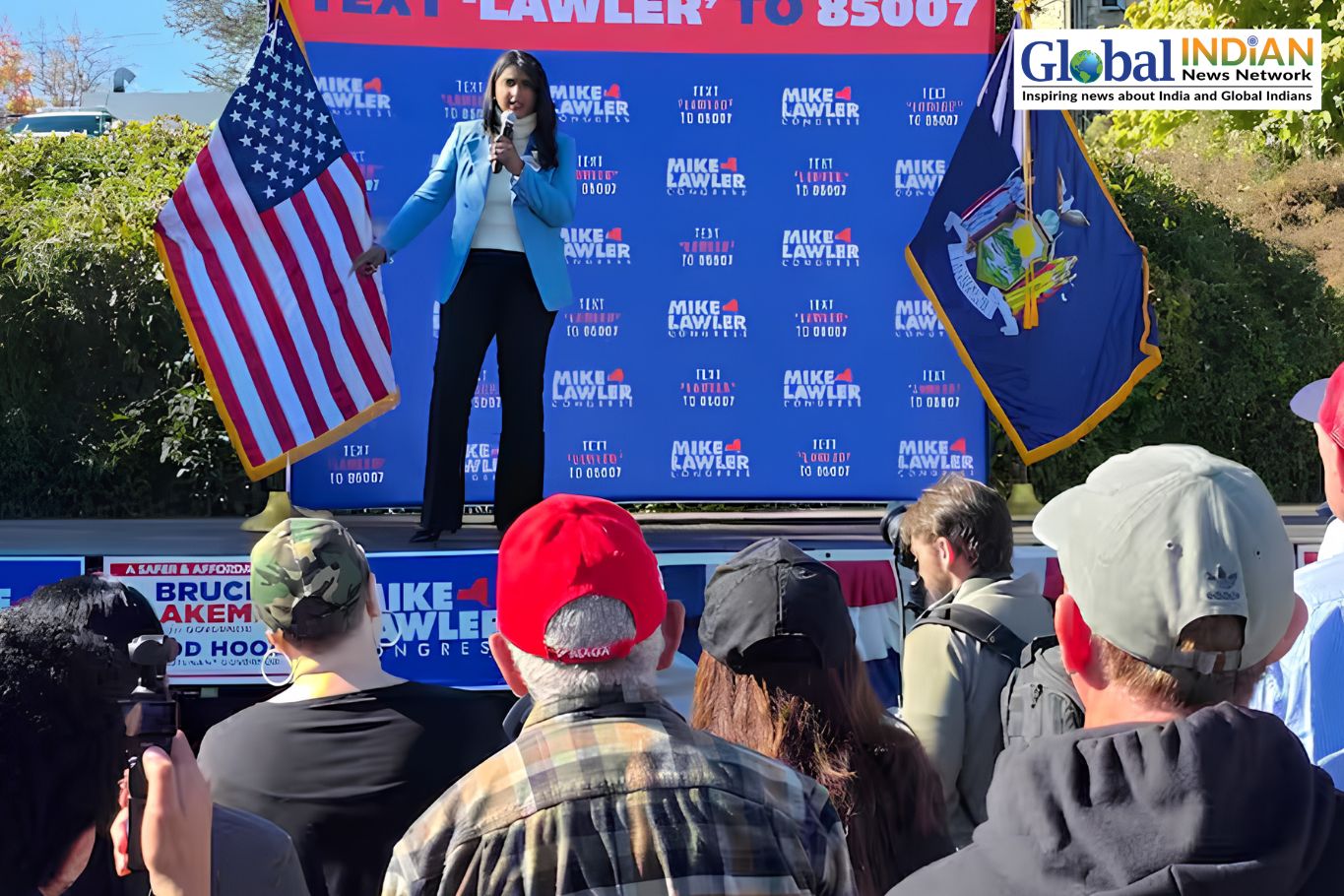
In New York, Republican Saritha Komatireddy lost the attorney general’s election to Democratic incumbent Letitia James. Other Indian-American candidates who were defeated included Mahesh Ganorkar in North Carolina and Sandeep Dixit in Ohio.
The elections were held midway through President Donald Trump’s second term and involved all 435 seats in the House of Representatives, 35 Senate seats, governorships and numerous state and local offices. Democrats were projected to gain control of both chambers of Congress, potentially reshaping the political balance in Washington.
Indian-American political representation in the United States has expanded significantly since Dalip Singh Saund became the first Indian-born member of Congress in 1957. Today, candidates of Indian descent are contesting and winning elections at congressional, statewide and local levels across both major political parties.
The latest results underline the expanding presence of the Indian-American community in American public life, with victories in congressional and state legislative races strengthening its representation across the country’s political institutions.