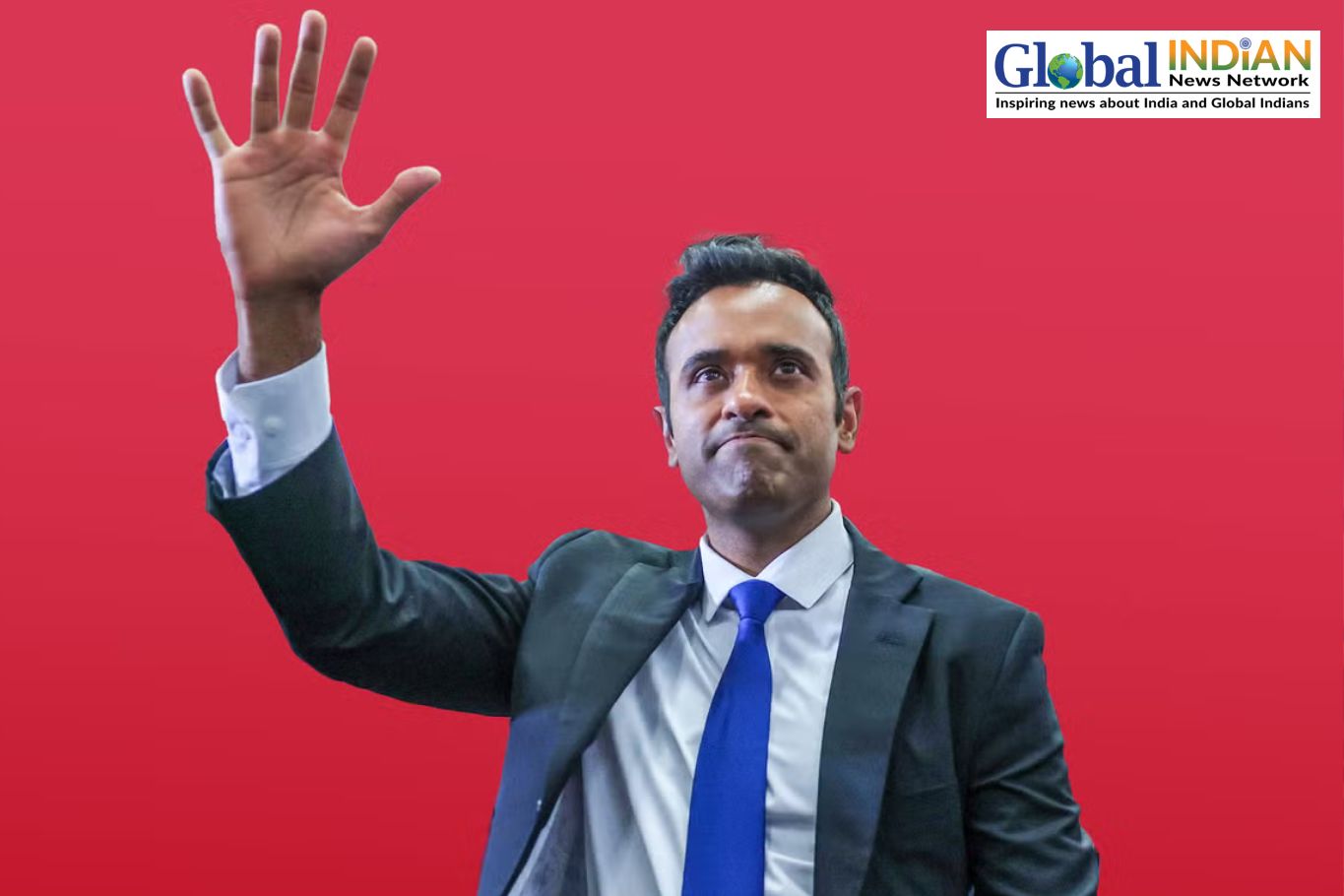
Vivek Ramaswamy has suffered a major political setback after losing the Ohio gubernatorial election to Democratic candidate Amy Acton, marking a significant blow to Republican ambitions in a state that has increasingly leaned toward the GOP in recent national elections.
Ramaswamy, a prominent conservative businessman and outspoken supporter of Donald Trump, entered the gubernatorial race with considerable political visibility and expectations of a strong Republican victory. However, his campaign ultimately failed to translate that recognition into electoral support, with Acton securing a victory by nearly five percentage points.
The outcome represents a particularly significant moment for Ohio Republicans, who had anticipated a comfortable victory. The defeat also marks the first time in two decades that a Republican candidate has lost a bid for the state’s governorship, highlighting the changing political dynamics in the traditionally competitive state.
Ramaswamy’s campaign had initially generated considerable enthusiasm among Republican supporters. Party leaders expressed confidence that his popularity and alignment with the MAGA movement would help deliver a decisive victory. Early expectations suggested that Republicans could build on Donald Trump’s electoral success and strengthen their position in Ohio.
However, the campaign struggled to maintain that momentum. Ramaswamy’s political messaging, public image and approach to campaigning became increasingly contentious. His aggressive political style, which had helped establish his national profile, appeared to create challenges in appealing to a broader electorate.
A controversial attack advertisement targeting his opponent, Amy Acton, further intensified scrutiny of the campaign. The advertisement became a defining moment in an increasingly difficult electoral contest, drawing attention to the campaign’s strategy and its broader political approach.
Acton, meanwhile, managed to turn the contest into a decisive opportunity for Democrats. Her victory demonstrated that Republican dominance in Ohio should not be taken for granted, even in an environment shaped by Trump’s continued influence over conservative politics.
The result also raises questions about Ramaswamy’s political standing and his ability to build a sustainable electoral coalition beyond his existing supporter base. Although he has established himself as a prominent voice within the Republican Party, the Ohio defeat exposes the difficulties of converting national recognition and political ambition into success at the state level.
For Republicans, the loss represents more than an individual candidate’s electoral disappointment. It challenges assumptions about the strength of the MAGA political brand and its ability to guarantee victories in competitive states. The result could also intensify internal discussions about candidate selection, campaign messaging and the party’s broader electoral strategy.
Ramaswamy’s defeat is therefore a significant moment in Ohio politics and a warning for Republicans heading into future elections. His political ambitions may not end with this loss, but the outcome has raised serious questions about his leadership credentials and his appeal among voters outside the core MAGA constituency.
The election has demonstrated that political visibility, strong ideological positioning and association with a popular national leader do not automatically translate into electoral success. For Ramaswamy and the Republican Party, rebuilding voter confidence may prove considerably more difficult than anticipated.