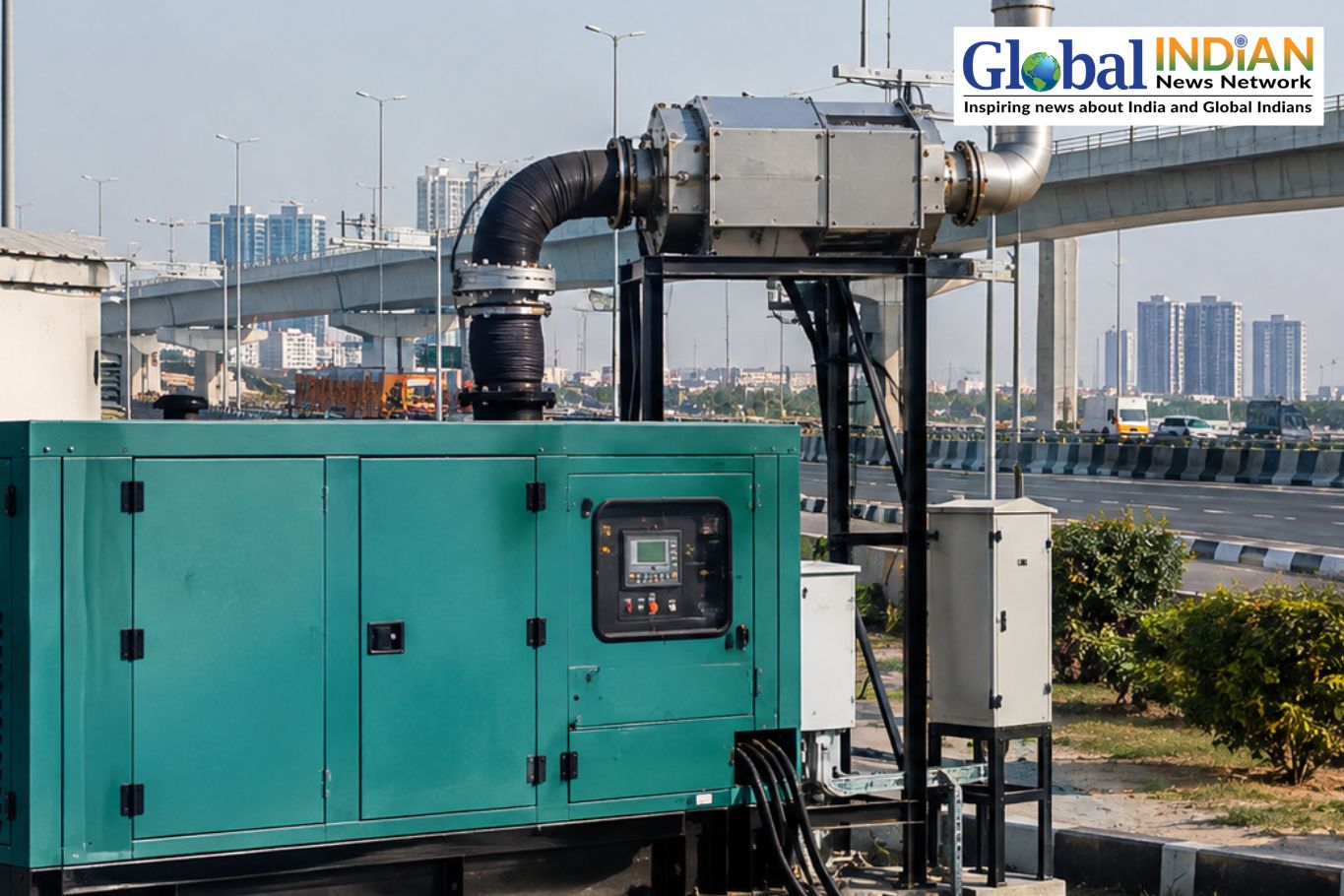
The National Highways Authority of India (NHAI) will install Retrofit Emission Control Devices (RECDs) on 25 diesel generator sets operating along the Dwarka Expressway as part of efforts to reduce air pollution in the Delhi-National Capital Region.
The initiative covers an 8.7-kilometre stretch of Package IV, connecting Basai to the Kherki Dhaula and Delhi-Gurugram Expressway cloverleaf intersection. The installation follows directions issued by the Commission for Air Quality Management (CAQM) concerning the regulation of diesel generator sets in the National Capital Region.
The move aims to limit emissions from generator sets used for expressway lighting and other associated operations. Pollution control measures are particularly important in Delhi-NCR, where air quality typically deteriorates during the winter season and authorities implement restrictions under the Graded Response Action Plan.
The project will include the installation, testing, and commissioning of emission control devices, along with comprehensive maintenance support. These systems are intended to help control harmful emissions produced by diesel generators that support essential highway operations.
NHAI has also specified that GPS-tagged photographs of the installations at individual generator locations will be maintained for verification and regulatory compliance. This documentation will help establish that the required equipment has been installed at the designated sites.
The initiative reflects the growing importance of incorporating environmental safeguards into highway construction and operations. Although diesel generator sets remain necessary for certain infrastructure functions, appropriate emission-control systems can help reduce their environmental impact.
With air pollution continuing to pose a major challenge across Delhi-NCR, the installation of emission control devices represents a targeted step toward improving emissions management. The measure also highlights the role of infrastructure agencies in supporting regulatory efforts to protect air quality while maintaining essential transport facilities.