 India should pursue a broad package of economic reforms rather than selecting one measure over another, according to Ajay Garg, Chairman and Managing Director of investment bank Equirus. He argues that the country has reached a stage where multiple reforms need to move forward simultaneously to accelerate economic growth.
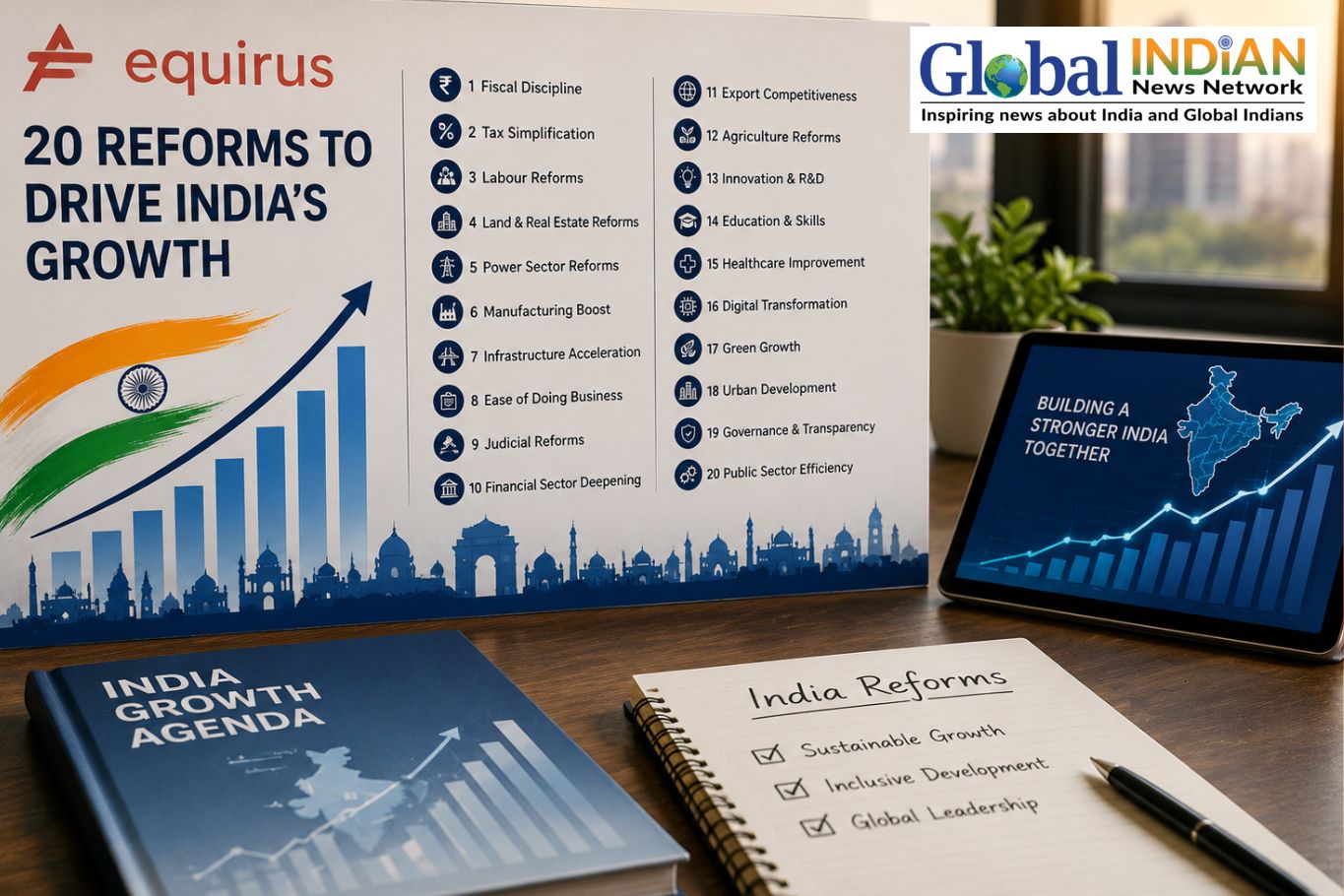
Garg made the comments while discussing a new Equirus roadmap outlining 20 reforms that could potentially help India expand its economy to approximately $20 trillion by 2036. He said that without such reforms, India could still reach that milestone, but the target may not be achieved until around 2047.
The proposal comes as India’s economy has grown substantially over the past decade, although per-capita income remains considerably lower than that of many developed economies. Garg believes this combination of a large overall economy and relatively low income per person creates significant room for further expansion.
He emphasized that the $20 trillion projection does not depend entirely on a major appreciation of the Indian rupee. Even if the currency does not strengthen as anticipated, he said the timeline could shift by several years without undermining the broader growth potential.
A major component of the roadmap involves developing India’s corporate bond market. Garg believes debt instruments should receive policy treatment comparable to listed equities rather than being viewed primarily as alternatives to bank deposits. He argued that a deeper bond market could provide businesses with additional financing options while giving investors greater access to stable, income-generating assets.
Garg also sees services as the primary engine of India’s next phase of growth. He identified financial markets, Global Capability Centers, tourism and education as areas that could benefit substantially from regulatory and structural reforms.
According to his outlook, agriculture’s contribution to the overall economy is likely to decline as India becomes wealthier, while manufacturing could expand without dramatically increasing its share of GDP. Services, in his view, will account for much of the additional economic activity.
Another proposal involves listing Indian Railways. Garg stressed that such a move would not necessarily amount to privatization, with the government potentially retaining ownership while allowing the organization to access capital markets.
He suggested that state-owned enterprises could also be consolidated under a holding structure inspired by models such as Singapore’s Temasek. Such an arrangement could allow the government to manage public assets more independently while potentially freeing capital for investment in social infrastructure.
Equirus released its reform roadmap around India’s Independence Day, presenting the proposals as ideas for wider public discussion. The overall vision is centered on accelerating investment, strengthening financial markets and expanding services to help India achieve faster and more sustainable economic growth.