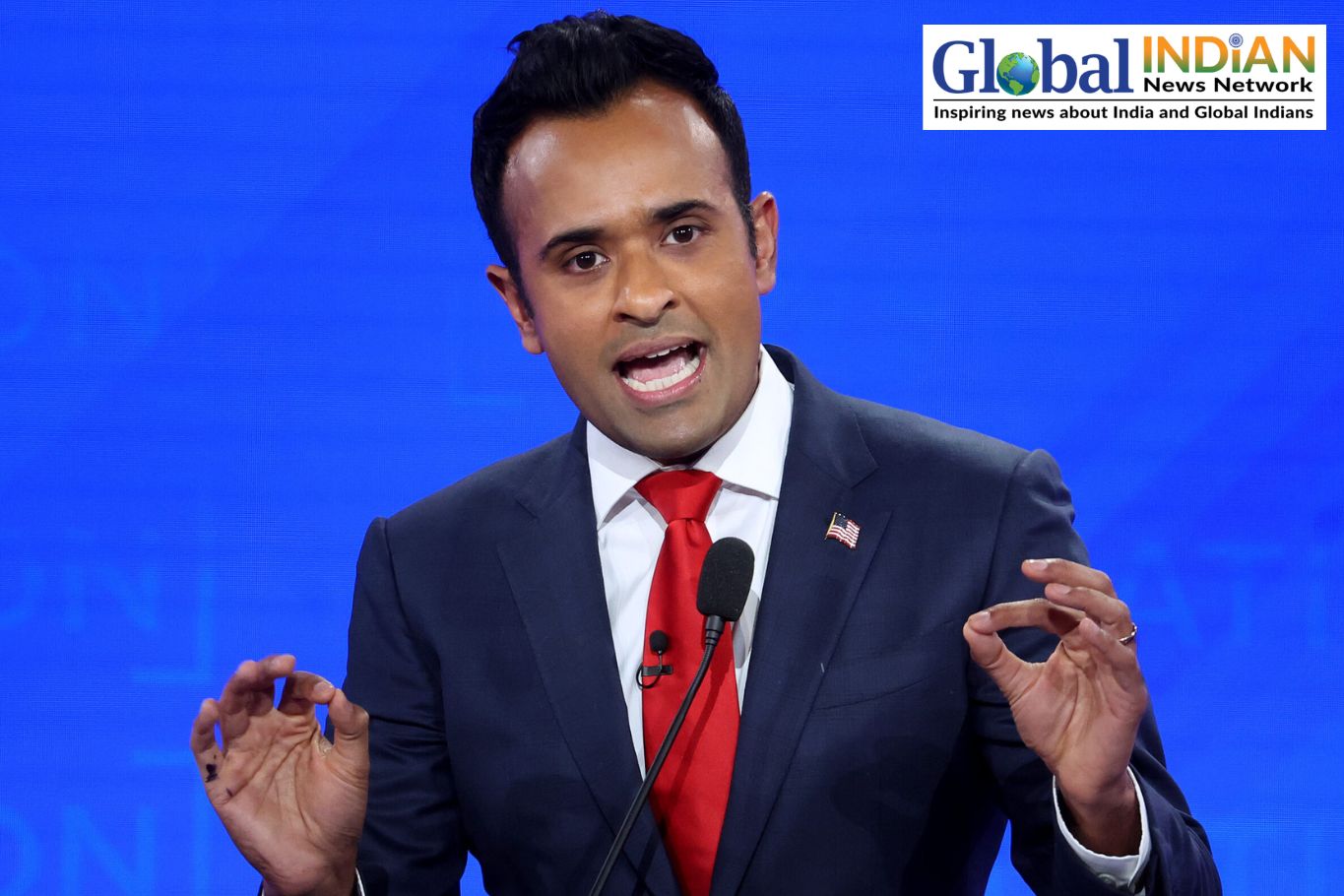
 Republican Ohio gubernatorial candidate Vivek Ramaswamy is proposing tighter rules for new data centers, arguing that these facilities should deliver measurable economic and environmental benefits to the communities where they operate.
Ramaswamy has stopped short of supporting a complete ban on data center construction. Instead, his proposal would temporarily halt approvals for new facilities until state lawmakers establish a framework outlining specific requirements for developers and operators.
The issue has become a major topic in Ohio’s gubernatorial race. All three leading candidates — Republican, Democrat and Libertarian — have proposed some form of restriction or pause on new data centers, although their approaches differ.
Ramaswamy has previously argued that data centers are important to Ohio because they provide infrastructure for storing and processing digital information. He believes an outright prohibition could prevent the state from benefiting from the technology sector and related investments.
Under his proposed framework, data center operators would have to provide direct financial benefits to host communities. One of his key ideas is requiring facilities to cover the electricity costs of local communities. He has also proposed requiring operators to pay their full property tax obligations, with the resulting revenue potentially being used to reduce property taxes for homeowners.
Environmental considerations would form another major part of the proposed policy. Ramaswamy wants data centers to meet strict air and water quality standards while encouraging developers to use previously developed or abandoned industrial properties, commonly known as brownfield sites.
His proposal would discourage the construction of large facilities on productive agricultural land. The goal, he said, would be to accommodate technology infrastructure without placing additional pressure on farmland or compromising environmental standards.
Ramaswamy has indicated that he would act quickly if elected governor. He has proposed issuing an executive order on his first day in office that would pause approvals for new data centers until the state legislature adopts his broader regulatory framework.
The proposal comes as Ohio debates how to balance the economic opportunities created by rapidly expanding digital infrastructure with concerns about electricity consumption, land use, taxation and environmental impacts.
For Ramaswamy, the approach represents an attempt to position Ohio as a competitive destination for technology investment while ensuring local residents receive tangible benefits from large-scale developments.
The proposal also adds another dimension to the closely watched gubernatorial contest, where data center expansion has emerged as an increasingly important economic and environmental policy issue.