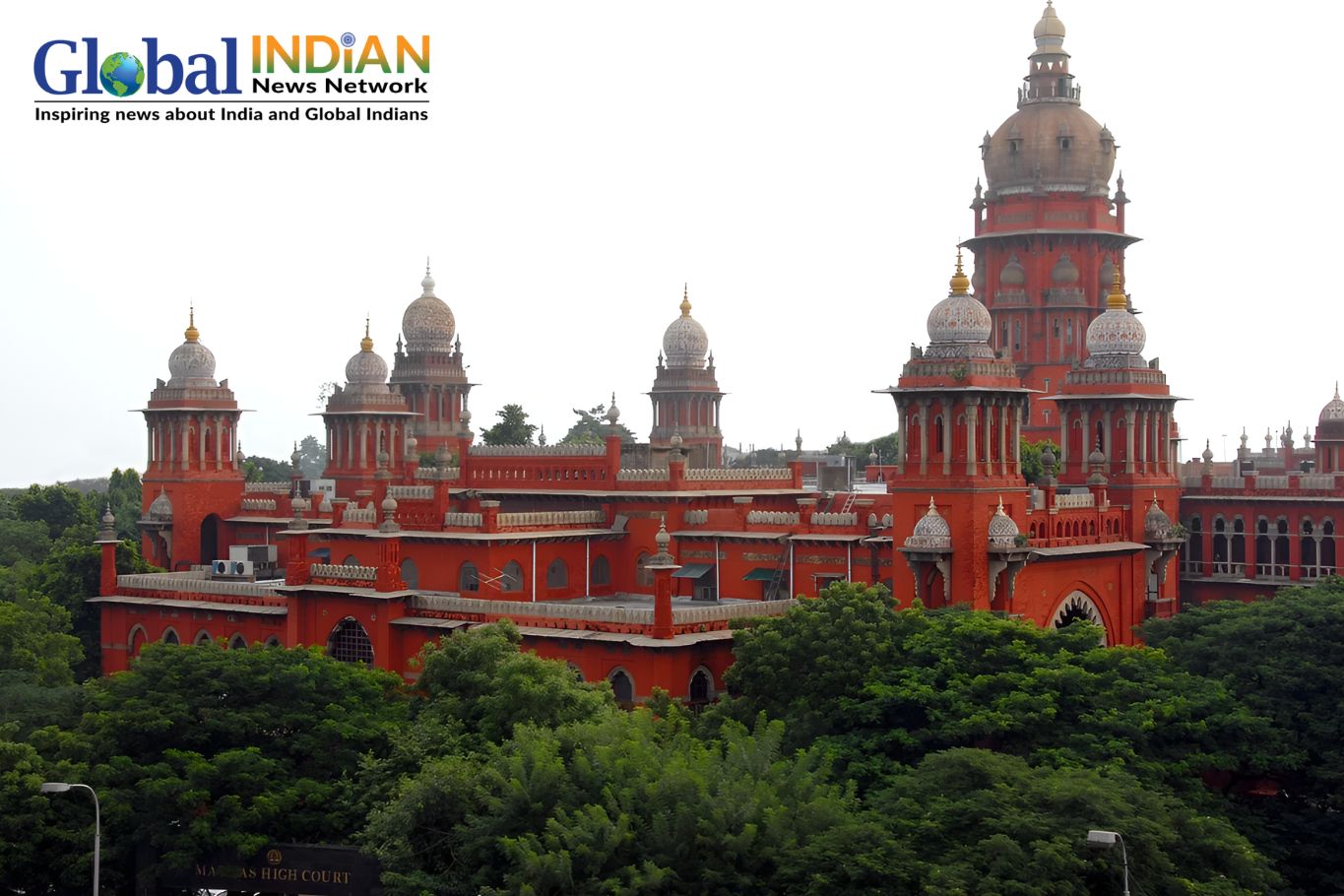
 The Madras High Court has ruled that an American citizen who has embraced Hinduism cannot be denied entry into Hindu temples or the rights available to Hindu devotees solely because of her foreign nationality or non-Hindu name. The Court observed that under Hindu law, a person’s religious identity is determined by faith, beliefs, and conduct rather than citizenship, birth, or personal name.
Justice D. Bharatha Chakravarthy delivered the ruling while allowing a petition filed by Laura Frances Iyengar, who challenged an order issued by the Hindu Religious and Charitable Endowments (HR&CE) Department. The department had described her as an “American Christian woman” and restricted her access to the Sri Arulmighu Abishta Varatharajaperumal Temple in Tamil Nadu’s Thanjavur district.
The Court held that the department’s classification had no legal basis. It emphasized that Hinduism does not require a formal conversion ceremony, official certificate, or administrative recognition for an individual to be accepted as a Hindu. Instead, consistent faith, religious practice, and voluntary acceptance of Hindu traditions are sufficient to establish religious identity.
Laura Frances Iyengar, a U.S. citizen, informed the Court that she had followed Hinduism for several years and regularly participated in religious rituals and pilgrimages across India. She also stated that she had consistently identified herself as a Hindu in official records, including immigration and visa documents.
The Court noted that she married Varadha Balaji Venkadakrishnan according to Hindu customs at the same temple in September 2023. It also observed that her husband’s grandfather had previously served as a trustee of the temple, demonstrating her social and religious association with the Hindu community.
The dispute began after some local residents questioned her entry into the temple, believing she was not Hindu. Following these objections, the HR&CE Department limited her access to the outer areas of the temple.
Rejecting the department’s argument that her American citizenship created a presumption of Christianity, the Court ruled that such reasoning was arbitrary and inconsistent with constitutional principles. It directed temple authorities and the HR&CE Department to allow her the same rights and privileges available to any Hindu woman devotee, while clarifying that she would not be entitled to any special treatment beyond what is granted to other worshippers under existing temple customs and regulations.