 India and the United States have held high-level discussions aimed at expanding cooperation in strategic technology areas, including semiconductors, artificial intelligence, critical minerals, and trusted global supply chains. The talks were confirmed by the Embassy of India in Washington following a diplomatic meeting between senior officials from both nations.
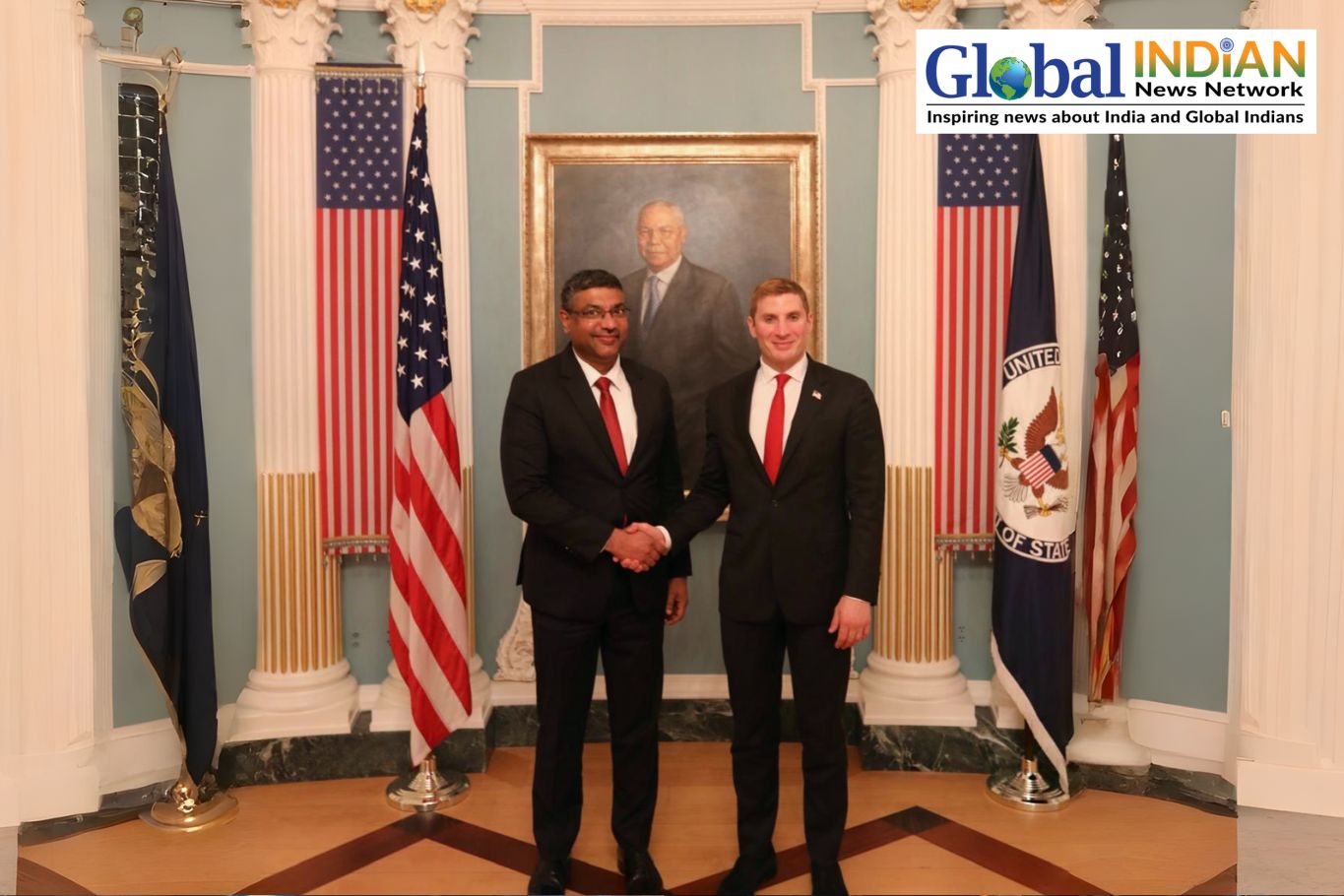
The engagement took place on June 24, when S. Krishnan, Secretary of India’s Ministry of Electronics and Information Technology (MeitY), met with Jacob S. Helberg, the U.S. Under Secretary of State. The meeting focused on strengthening bilateral collaboration in emerging technologies that are increasingly shaping global economic and security frameworks.
According to the Embassy of India, both sides explored new opportunities to deepen cooperation in semiconductor manufacturing, AI integration, and secure access to essential critical minerals. These resources are considered vital for advanced industries, including electronics, clean energy systems, and high-end manufacturing ecosystems.
A key point of discussion was the development of diversified and trusted supply chains, designed to reduce overdependence on limited sources and improve global resilience. Officials emphasized that collaboration in these areas is becoming more important as technology competition intensifies worldwide.
The talks reflect a broader strategic alignment between India and the United States, where both countries are working to strengthen cooperation in next-generation technologies while ensuring stability in global supply networks. This includes joint efforts in building a more secure and predictable ecosystem for semiconductor production and AI-driven innovation.
The meeting also aligns with India’s growing ambitions to become a major player in the global semiconductor industry. Indian policymakers have been actively promoting investment and skill development in the sector as global demand continues to rise.
Earlier, India’s Electronics and Information Technology Minister highlighted that the global semiconductor market, currently valued at around $800 billion, is expected to surpass $1 trillion within the next year. He also noted that the industry could generate around one million new jobs globally by 2032, even as it faces a significant shortage of skilled professionals.
As both countries continue to strengthen their strategic partnership, cooperation in semiconductors, artificial intelligence, and critical minerals is expected to play a central role in driving future economic growth, innovation, and technological competitiveness on the global stage.