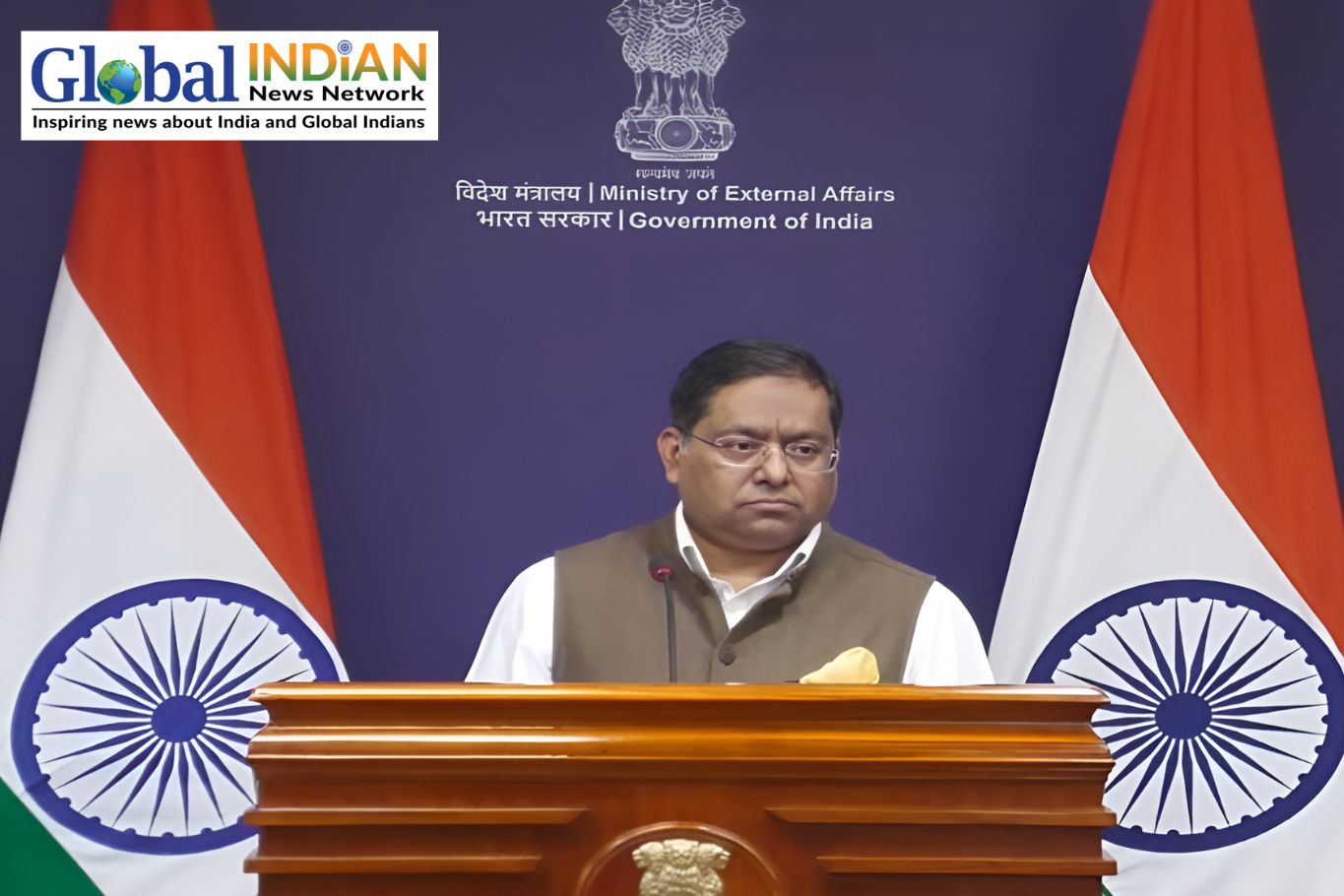
 India has reiterated that all boundary-related issues with Nepal must be addressed through bilateral mechanisms, firmly stating that there is no role for any third party in matters concerning the two neighboring countries.
The response came after remarks by Nepal Prime Minister Balendra Shah regarding unresolved border issues between India and Nepal. Addressing the matter, India’s Ministry of External Affairs emphasized that the two countries have established frameworks and channels to manage and resolve boundary concerns through direct engagement.
According to the government, nearly 98 percent of the India-Nepal boundary has already been demarcated, with only a few segments remaining unresolved. Officials noted that changes in the course of the Gandak River have contributed to some of the complexities surrounding the remaining areas.
India also highlighted that certain cases involving cross-border occupation and encroachment in demarcated sections of the boundary are currently being jointly mapped and examined by both sides. The ongoing process reflects the cooperative approach adopted by the two countries to address technical and administrative challenges along the border.
The Ministry of External Affairs stressed that established bilateral mechanisms remain the appropriate platform for discussing and resolving all aspects of boundary management. It underlined that issues related to borders, sovereignty, and territorial concerns are matters to be handled directly between India and Nepal.
The remarks followed comments by Nepal Prime Minister Balendra Shah, who stated that both countries have concerns regarding territorial encroachments. He made the observations while responding to questions from lawmakers on disputed regions including Limpiyadhura, Lipulekh, and Kalapani, areas over which both India and Nepal have asserted claims.
The Kalapani-Lipulekh-Limpiyadhura region has remained a sensitive issue in India-Nepal relations for several years. While differing interpretations of historical maps and treaties have contributed to the dispute, both nations have repeatedly expressed commitment to resolving outstanding issues through dialogue and diplomatic engagement.
India’s latest statement reinforces its position that border-related matters should be settled through existing bilateral channels and constructive discussions. The emphasis on direct cooperation reflects the broader importance of maintaining strong ties between the two countries, which share deep historical, cultural, economic, and people-to-people connections.
As both nations continue discussions on unresolved boundary segments, diplomatic engagement remains central to efforts aimed at preserving stability and strengthening the longstanding partnership between India and Nepal.