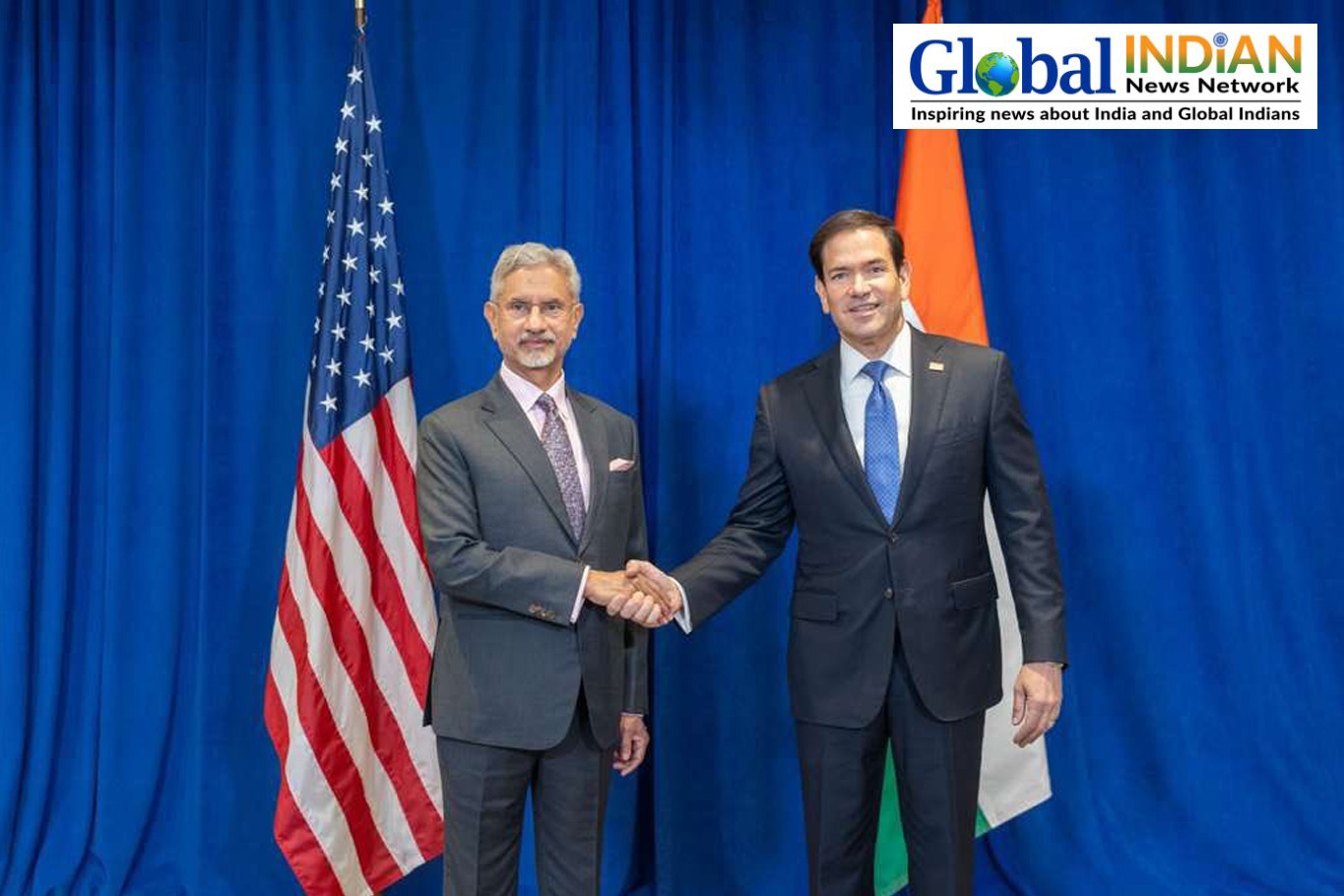
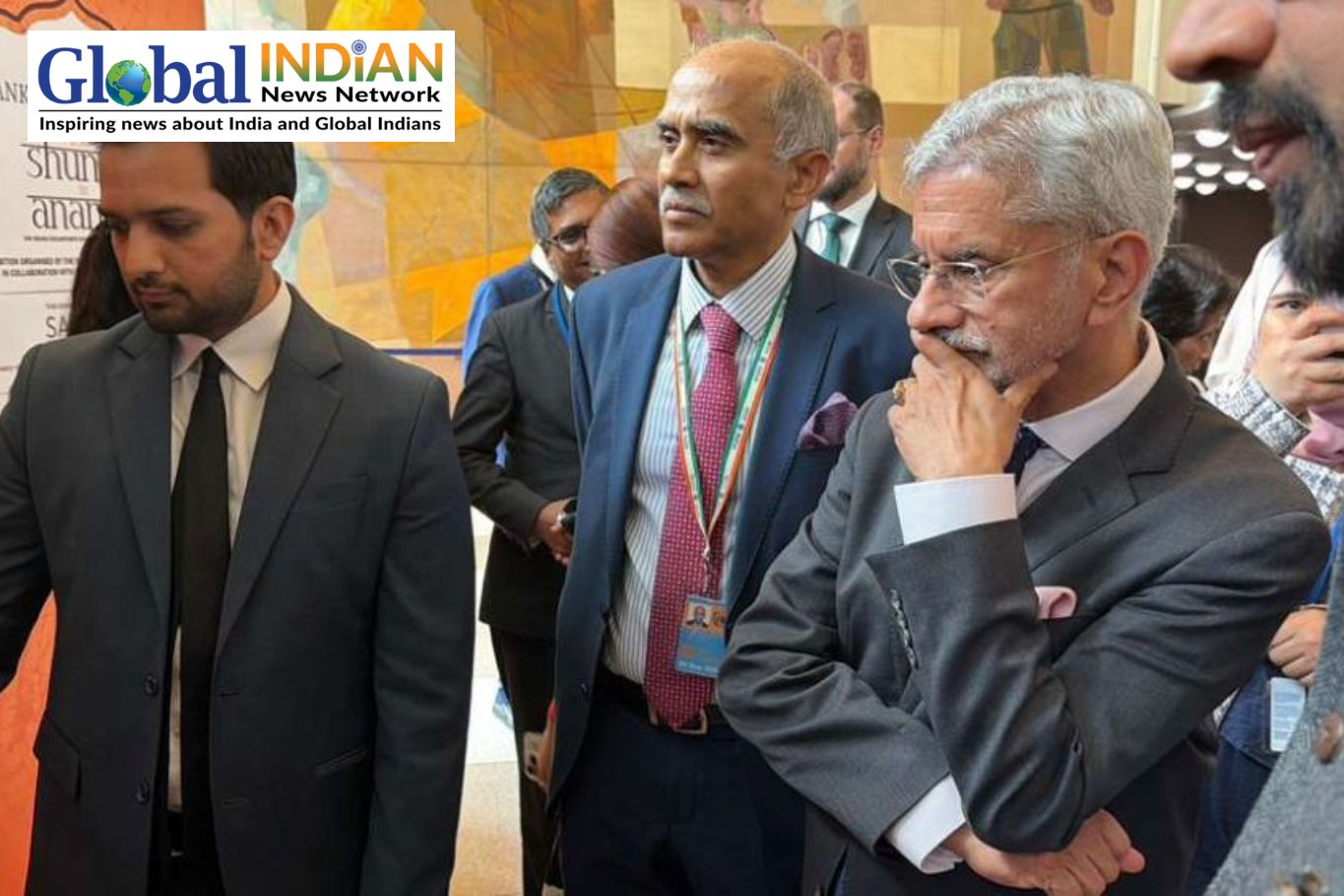
 External Affairs Minister S. Jaishankar inaugurated a special exhibition at the United Nations headquarters in New York celebrating India’s historic contributions to mathematics and scientific thought. The exhibition, titled “From Shunya to Ananta (Zero to Infinity) — The Indian Civilisation’s Contribution to Mathematics,” was organized by the Permanent Mission of India to the United Nations.
The exhibition aims to present the evolution of mathematical ideas that originated in ancient India and later influenced global scientific and technological advancement. Through historical displays and educational material, the initiative highlights India’s role in shaping mathematical concepts that continue to impact modern society.
While speaking at the inauguration ceremony, Jaishankar described mathematics as a universal language that has benefited civilizations across the world for centuries. He emphasized that the exhibition serves not only as a celebration of India’s intellectual heritage but also as a reminder of the importance of international collaboration in advancing knowledge and innovation.
The minister stated that the exhibition could encourage broader discussions about cultural diversity, inclusivity, and the interconnected nature of human progress. According to him, understanding contributions from different civilizations can help challenge stereotypes and promote a more balanced perspective on technological and scientific development in the modern era.
Jaishankar also highlighted the relevance of the United Nations as a global platform for cooperation among nations. He suggested that the spirit of shared learning reflected in mathematics aligns closely with the UN’s mission of fostering dialogue and collaboration across borders.
During his address, the minister referred to the AI Impact Summit held earlier this year in New Delhi, where India emphasized the importance of ensuring wider access to emerging technologies such as artificial intelligence. He noted that innovation and creativity should not remain limited to a small group of countries or institutions, stressing the need for inclusive technological growth.
The exhibition was attended by several distinguished guests, including Jaishankar’s wife Kyoko Jaishankar, India’s Permanent Representative to the UN Ambassador Harish Parvathaneni, and renowned mathematician Manjul Bhargava, who received the Padma Bhushan in 2015 for his achievements in mathematics.
Bhargava has previously spoken extensively about India’s foundational role in the history of mathematics. He has credited ancient Indian scholars with introducing concepts such as zero, the number system, quadratic equations, negative numbers, and early formulations of trigonometric principles like sine and cosine.
According to Bhargava, many mathematical ideas in India emerged from broader philosophical and spiritual traditions. He once noted that the concept of zero was connected to the philosophical idea of “shunyata,” reflecting how intellectual thought in India often combined mathematics, philosophy, and social sciences.