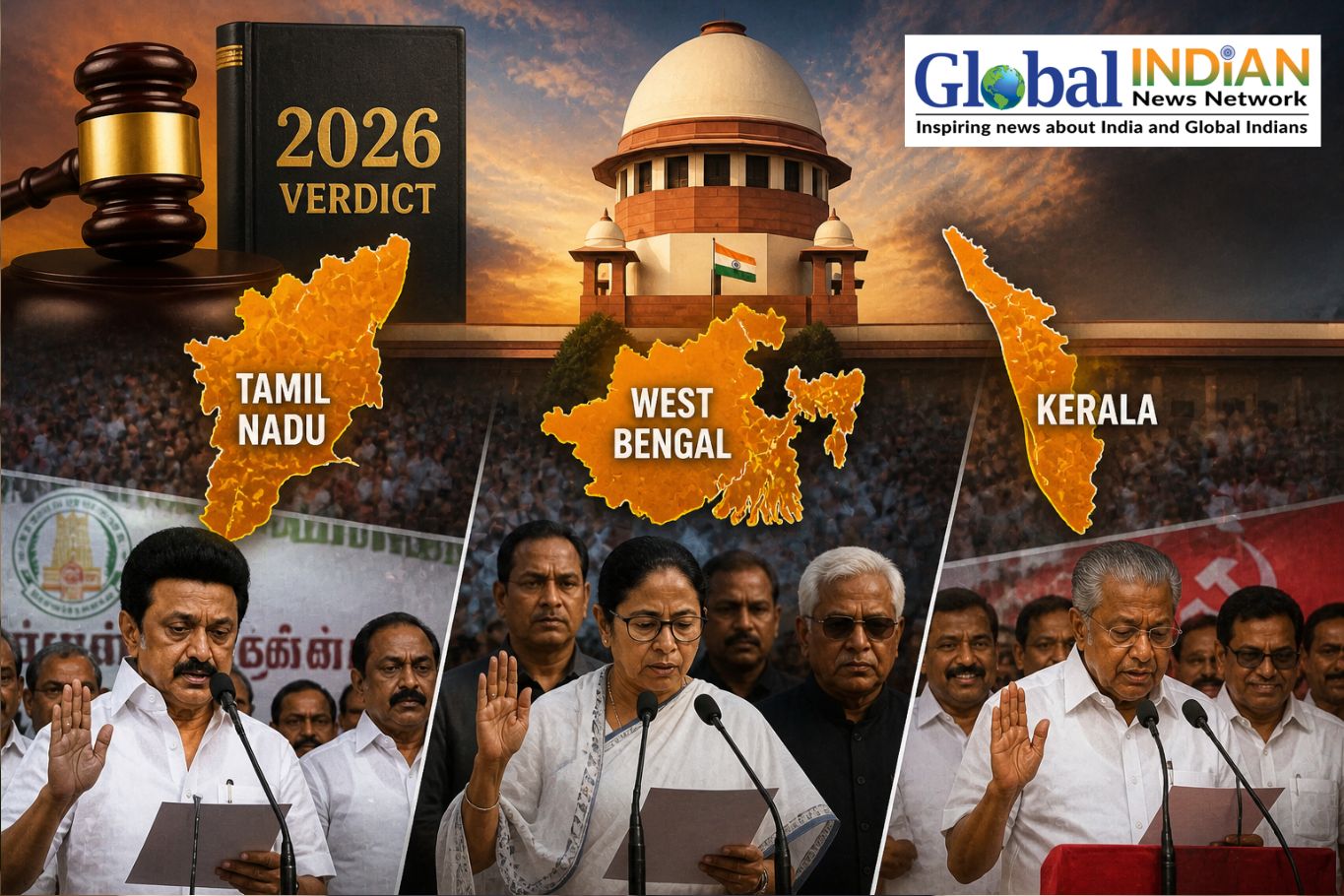
 Following the 2026 Assembly election results, three major Indian states—West Bengal, Assam, and Tamil Nadu—are preparing for oath-taking ceremonies in May 2026, marking the formal transition of power to newly elected governments. The results have triggered constitutional processes across these states, with leadership selection and swearing-in arrangements now underway.
In West Bengal, the Bharatiya Janata Party is set to form its first government in the state after securing a clear majority in the 294-member Assembly. The party has appointed senior leaders, including Union Home Minister Amit Shah as central observer, to supervise the selection of the legislative party leader. Once the leader is chosen by the newly elected MLAs, the name will be sent to the Governor for approval. The oath-taking ceremony for the new Chief Minister and council of ministers is scheduled for May 9, 2026, in Kolkata.
In Assam, the BJP-led National Democratic Alliance has retained power with a strong mandate. The internal process to select the legislative party leader is being overseen by BJP president JP Nadda, who has been appointed central observer for the state. After the selection is finalized, the Governor will formally invite the leader to form the government. The swearing-in ceremony in Assam is expected to take place on May 10, 2026.
In Tamil Nadu, the election results have brought a significant political shift, with actor Vijay’s Tamilaga Vettri Kazhagam (TVK) emerging as the single-largest party in the 234-member Assembly by winning 108 seats. The process of government formation is underway, with newly elected MLAs expected to elect their legislative leader in early May 2026. The oath-taking ceremony for the new government is likely to be held around May 11, 2026, in Chennai, following approval from the Governor.
As per constitutional procedure, in all three states, the Election Commission’s role concludes with the declaration of results, after which the responsibility shifts to elected representatives and Governors for government formation. Once majority support is confirmed, the Governor invites the leader to form the government, followed by the formal swearing-in ceremony.
The oath-taking events mark the final step in the democratic process, officially transferring executive authority to newly elected administrations. Once sworn in, the new governments in West Bengal, Assam, and Tamil Nadu are expected to begin governance focused on development, administration, and implementation of their respective electoral mandates.