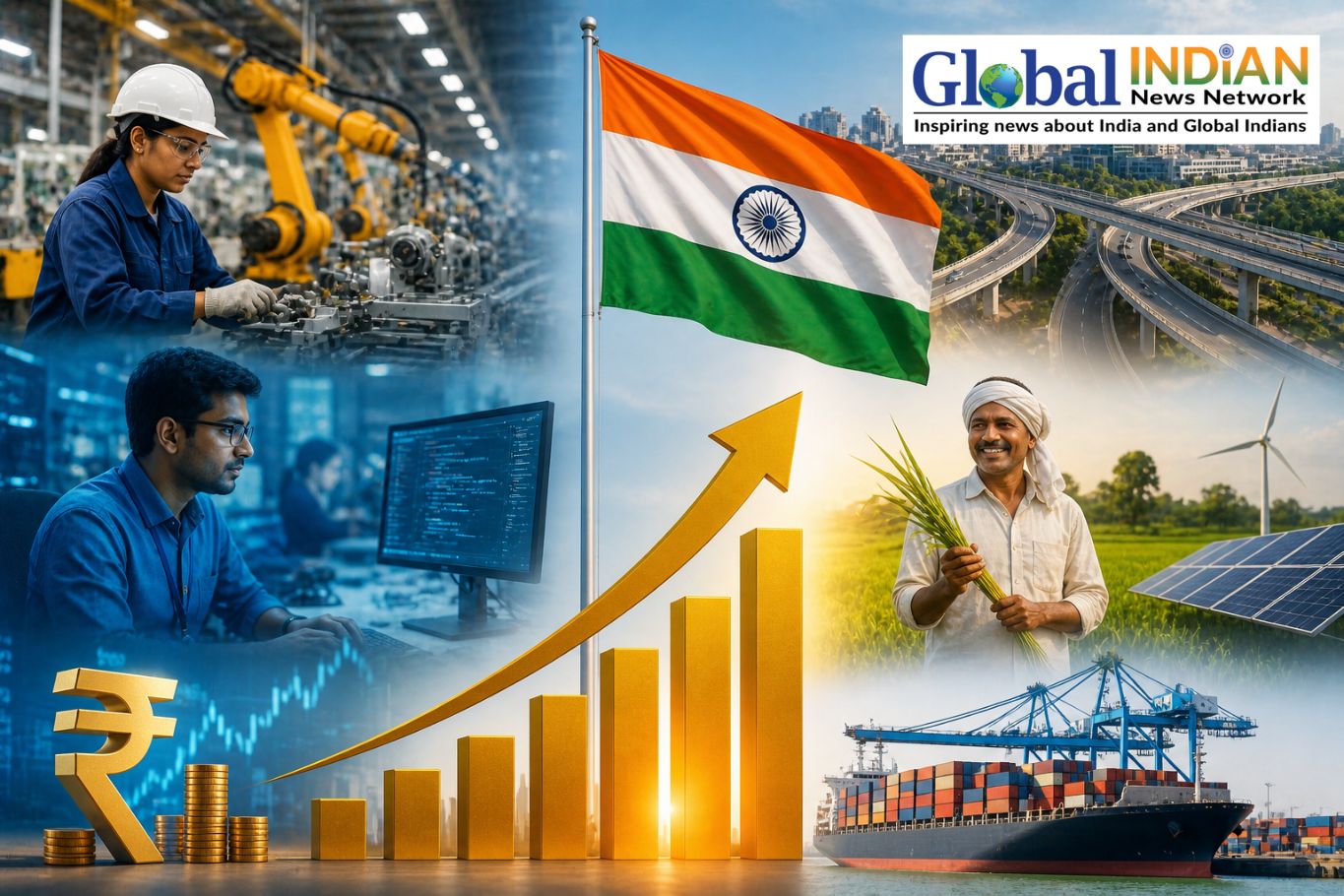
 India’s economic trajectory continues to draw global attention as a new report highlights both structural strengths and emerging challenges shaping the country’s growth story. The KPMG “Decoding the Indian Economy 2026” report presents a detailed overview of key macroeconomic indicators, positioning India as one of the fastest-evolving major economies worldwide.
One of the most significant highlights is the sharp decline in inflation. Despite global pressures such as crude oil prices crossing $120 per barrel and ongoing geopolitical tensions, India’s retail inflation for FY26 has eased to around 2.1%, the lowest level in five years and well below the central bank’s target of 4%. This provides relief to households and businesses facing input cost fluctuations.
On the digital economy front, India’s Unified Payments Interface (UPI) continues to set global benchmarks. In March 2026 alone, UPI processed approximately 22.6 billion transactions, marking a 27% year-on-year increase. The system has become a critical backbone for real-time payments, significantly supporting sectors like retail, logistics, and financial services by enabling seamless and instant transactions at massive scale.
Foreign direct investment patterns are also shifting. During the first nine months of FY26, equity inflows from Japan surged by 108.9%, while investments from the United Arab Emirates increased by 134.4%. Although the United States remained the largest investor in absolute terms at approximately $7.8 billion, its growth rate of 40.8% was comparatively moderate. This trend indicates a growing influence of Asian and Gulf capital in India’s investment landscape.
Trade diplomacy has also accelerated at an unprecedented pace. India finalized or progressed negotiations with multiple partners, including the United Kingdom, Oman, New Zealand, and the European Union within a single financial year. Discussions with the United States are reportedly close to completion, which could further expand export opportunities for key industries such as textiles, pharmaceuticals, and engineering goods.
However, structural challenges remain. The report highlights a significant MSME credit gap estimated between $213 billion and $266 billion. While over 173,000 small and medium enterprises are now engaged in global exports—more than three times the level recorded in FY21—access to affordable credit continues to limit their expansion potential.
In the technology sector, India’s position in artificial intelligence is strengthening rapidly. The country now represents about 16% of the global AI talent pool, up from nearly 5% in 2016. More than 6 million professionals are currently employed across the broader technology ecosystem, reflecting India’s growing importance in global digital innovation.
Looking ahead, the report projects India’s GDP growth at approximately 6.5% for FY27, with expectations that the country will become the world’s third-largest economy by 2031. While the numbers signal strong momentum, sustained execution and structural reforms will be key to maintaining this growth trajectory.