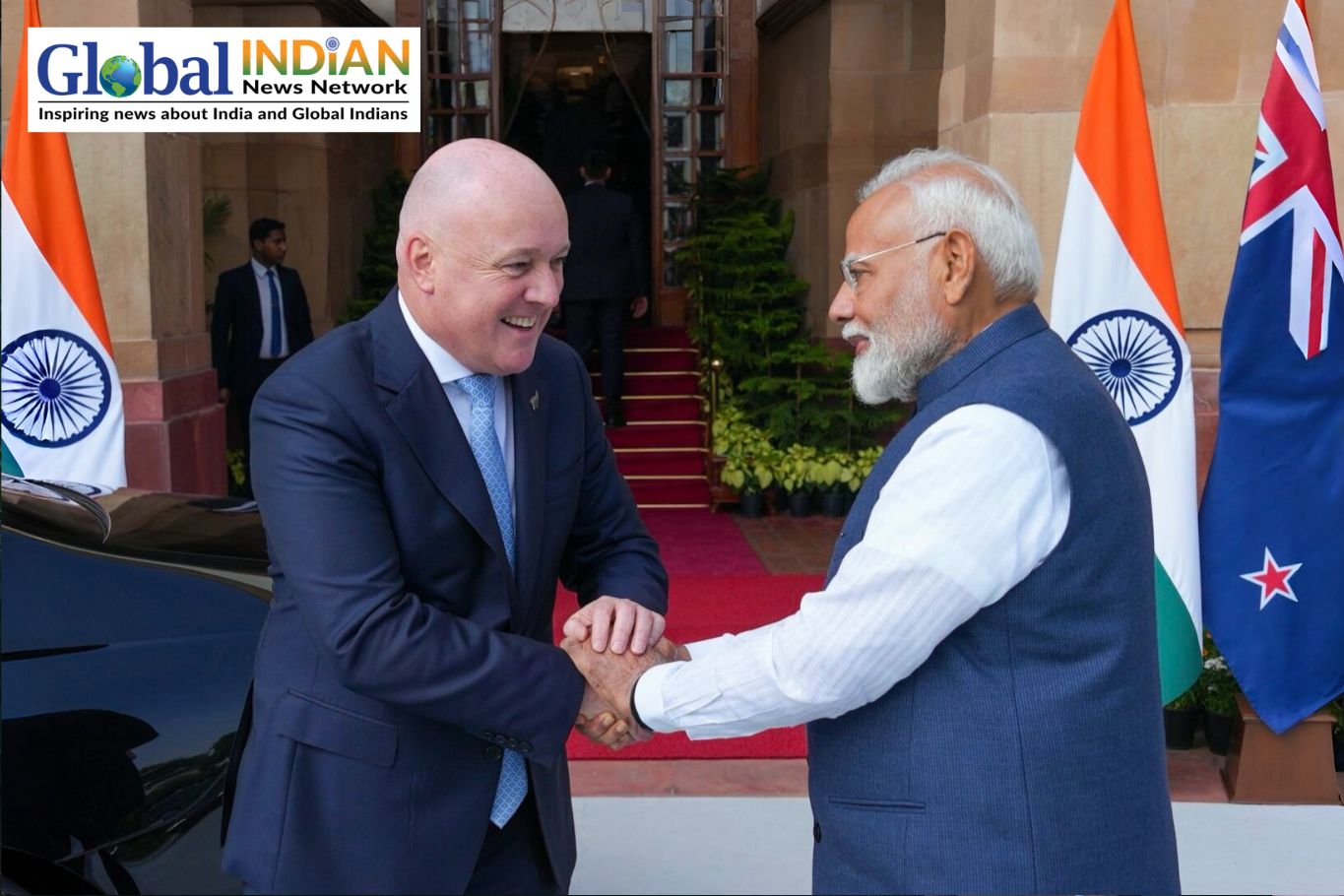
 New Zealand Prime Minister Christopher Luxon has highlighted the recently concluded India–New Zealand Free Trade Agreement as a landmark, once-in-a-generation development that unlocks significant economic potential between the two nations. Speaking shortly after the agreement was finalized in New Delhi, he emphasized India’s rapid rise as a global economic force and its growing importance as a destination for international trade and investment.
Luxon pointed out that India, with a population of approximately 1,500 million people, is not only the world’s most populous nation but also one of the fastest-growing consumer markets. He described this transformation as a major opportunity for New Zealand exporters seeking access to high-value markets with increasing demand for quality goods and services.
In a message shared on social media platform X, he stated that the agreement is expected to generate strong domestic benefits for New Zealand. According to him, the deal will support job creation, contribute to higher wages, and open new commercial pathways for businesses across multiple sectors.
He further noted that the agreement will significantly ease trade restrictions between the two countries. Under the framework, 57% of New Zealand’s exports to India will become tariff-free immediately, while additional tariff reductions will be introduced gradually over time. This phased liberalization is expected to strengthen the competitiveness of New Zealand products in the Indian market while improving their positioning in global trade networks.
Luxon also stressed that aligning with India’s economic growth trajectory is a strategic advantage for New Zealand, especially as India continues its path toward becoming one of the world’s largest economies. The FTA is expected to deepen trade integration and enhance long-term cooperation between the two nations.
The agreement was finalized on April 27 and is seen as a major milestone in bilateral relations. It was formally signed alongside New Zealand’s Trade and Investment Minister Todd McClay. From India’s perspective, the deal reflects a broader effort to expand its global trade partnerships. Commerce and Industry Minister Piyush Goyal described it as the seventh free trade agreement concluded during his current tenure, highlighting India’s accelerated push toward global economic integration. The agreement is expected to come into effect by the end of the year.