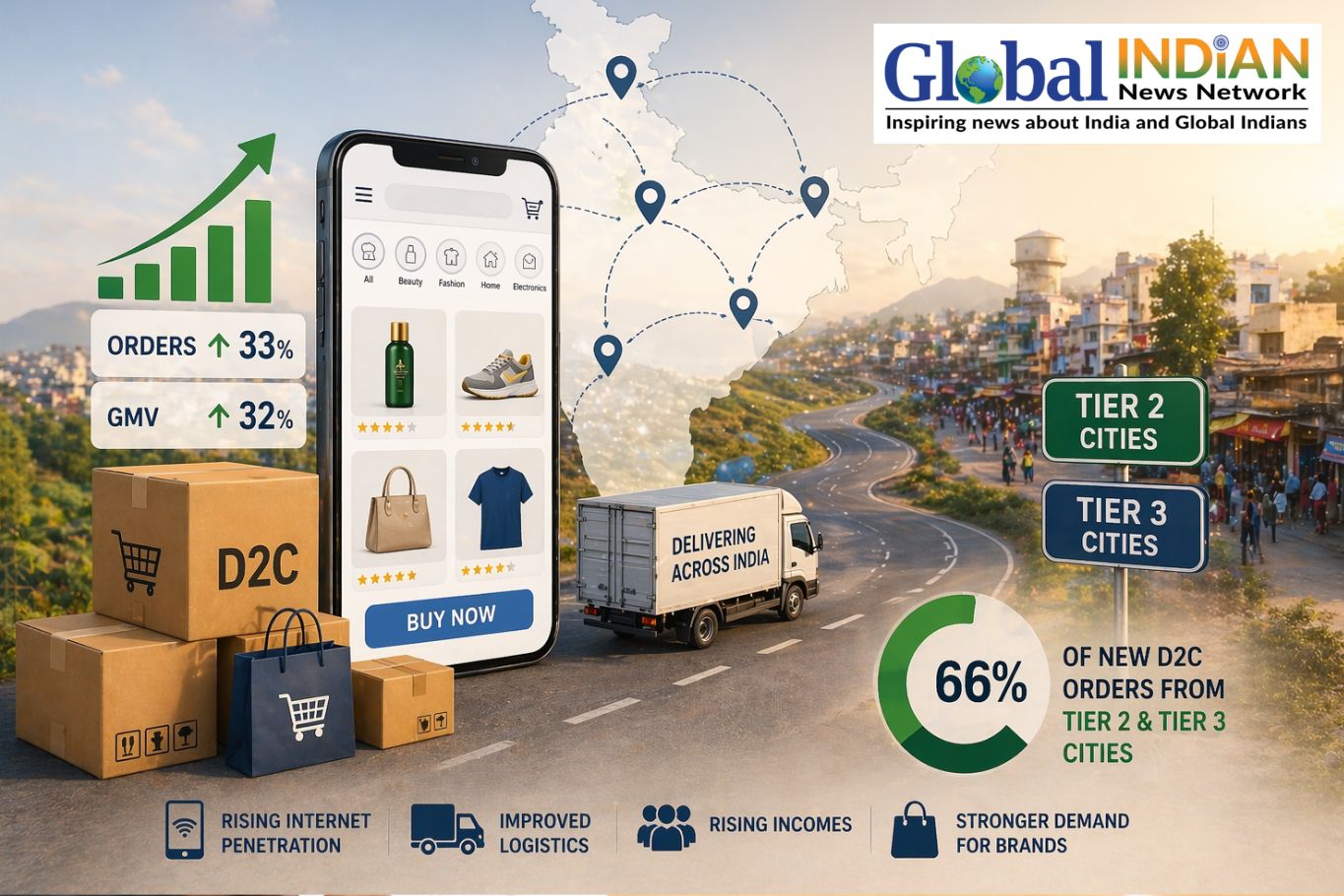
 India’s direct-to-consumer (D2C) industry is undergoing a major transformation, with Tier 2 and Tier 3 cities emerging as the strongest drivers of growth. According to a report by Unicommerce cited by IBEF, these non-metro regions are expected to generate nearly 66% of all new orders in FY26, marking a clear shift in consumption patterns away from traditional metro-centric markets.
This rising demand from smaller cities is fueling strong expansion in the sector, with overall order volumes increasing by 33% and gross merchandise value (GMV) rising by 32%. The growth reflects not only higher purchasing activity but also deeper market penetration by online-first brands across India.
The trend is being supported by improved digital infrastructure, better logistics networks, and rising disposable incomes in emerging urban and semi-urban regions. These factors are enabling D2C brands to scale faster and reach previously underserved markets, significantly broadening their customer base.
As a result, Tier 2 and Tier 3 cities are no longer seen as secondary markets but are now central to the growth of India’s digital commerce ecosystem. Consumers in these regions are increasingly adopting online shopping platforms and showing strong interest in branded and niche products, driven by aspirational consumption patterns.
This shift is also influencing how companies design their business strategies. D2C brands are increasingly customizing their product offerings, pricing models, and supply chain networks to cater to diverse regional demands. The focus is shifting toward building more localized and efficient delivery systems that can support fast-growing demand outside metro cities.
Looking ahead, India’s D2C market is projected to reach around Rs. 5.58 lakh crore, equivalent to approximately 60 billion US dollars, by 2030. This growth will be driven by continued internet penetration, increasing digital adoption, and a growing preference for online shopping across a wider consumer base.
Overall, the rapid rise of Tier 2 and Tier 3 cities is reshaping India’s e-commerce landscape, making it more inclusive and distributed. This evolution is expanding the country’s consumption footprint and positioning smaller cities as key engines of future digital retail growth.