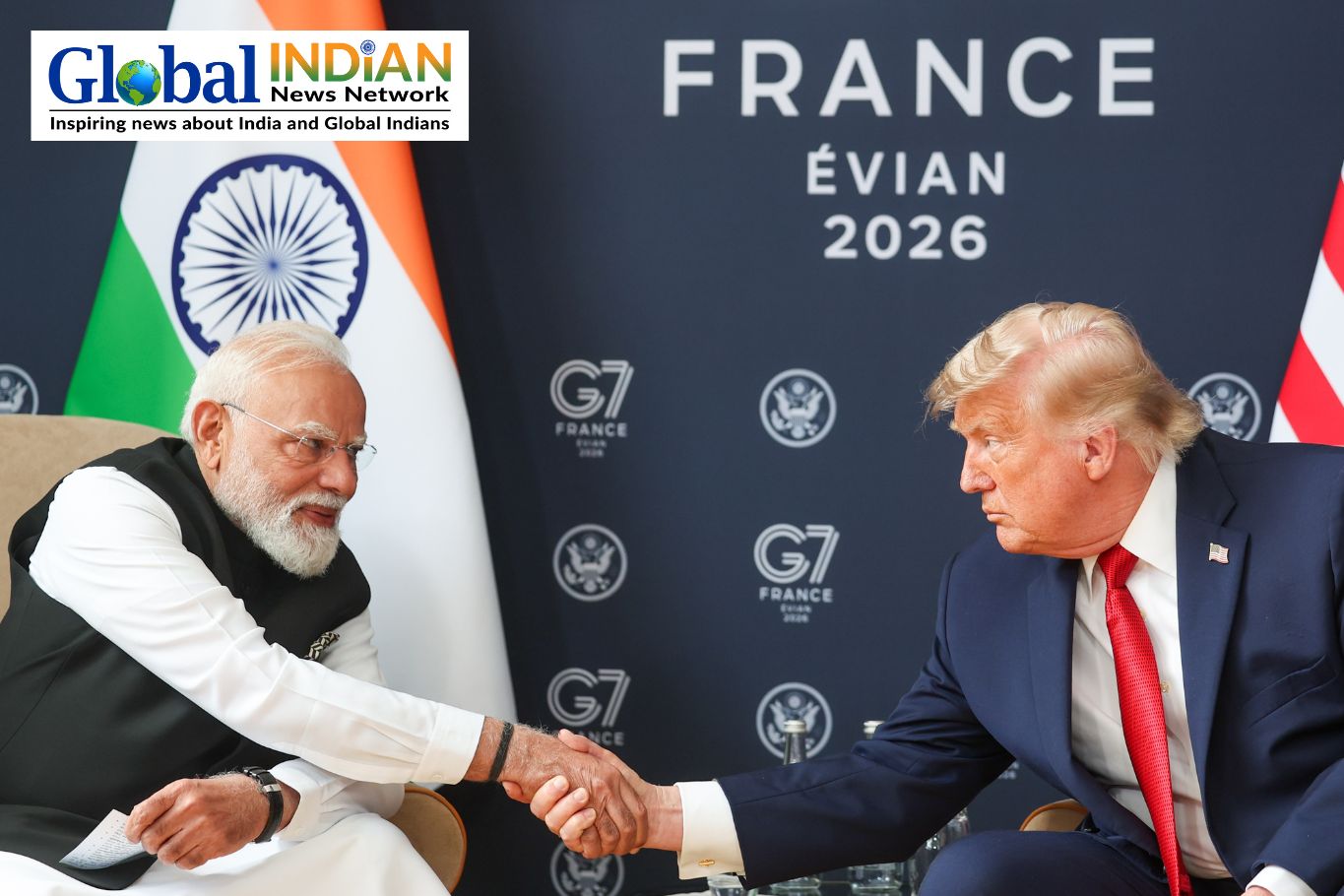
 A senior US lawmaker has voiced confidence that discussions between Prime Minister Narendra Modi and President Donald Trump will help reinforce one of the world’s most significant strategic partnerships. Speaking after the two leaders met in France on the sidelines of international engagements, Senator Mark Warner highlighted the need for Washington and New Delhi to continue building closer ties rather than allowing policy differences to weaken their relationship.
The Virginia Democrat, who serves as co-chair of the Senate India Caucus, described the partnership between the two democracies as essential to maintaining geopolitical balance in the twenty-first century. He said the United States has spent decades encouraging India to deepen cooperation with Washington and gradually reduce its reliance on traditional partners, making the relationship increasingly valuable for both nations.
Warner pointed to collaborative efforts among democratic powers in the Indo-Pacific, including the Quad grouping involving India, the United States, Japan, and Australia. According to him, such initiatives have become critical as countries seek to address growing regional challenges and promote long-term stability.
The senator also reflected on previous tariff decisions imposed on Indian products, noting that such measures had raised concerns about the direction of bilateral ties. He argued that policies creating friction with a close strategic partner could potentially undermine broader US objectives in Asia. Warner suggested that maintaining trust and expanding cooperation should remain central priorities for both governments.
He emphasized that the United States has consistently worked to strengthen India’s role as a key democratic ally and that preserving this momentum is crucial. Warner added that he intended to review the details of the recent Modi-Trump discussions but remained hopeful that the dialogue would contribute to stronger relations.
Over the years, India and the United States have expanded collaboration across defense, critical technologies, energy, education, semiconductor development, artificial intelligence, and resilient supply chains. Their partnership has steadily evolved into one of the most influential relationships in the Indo-Pacific, with both nations increasingly working together to address shared economic and strategic priorities.