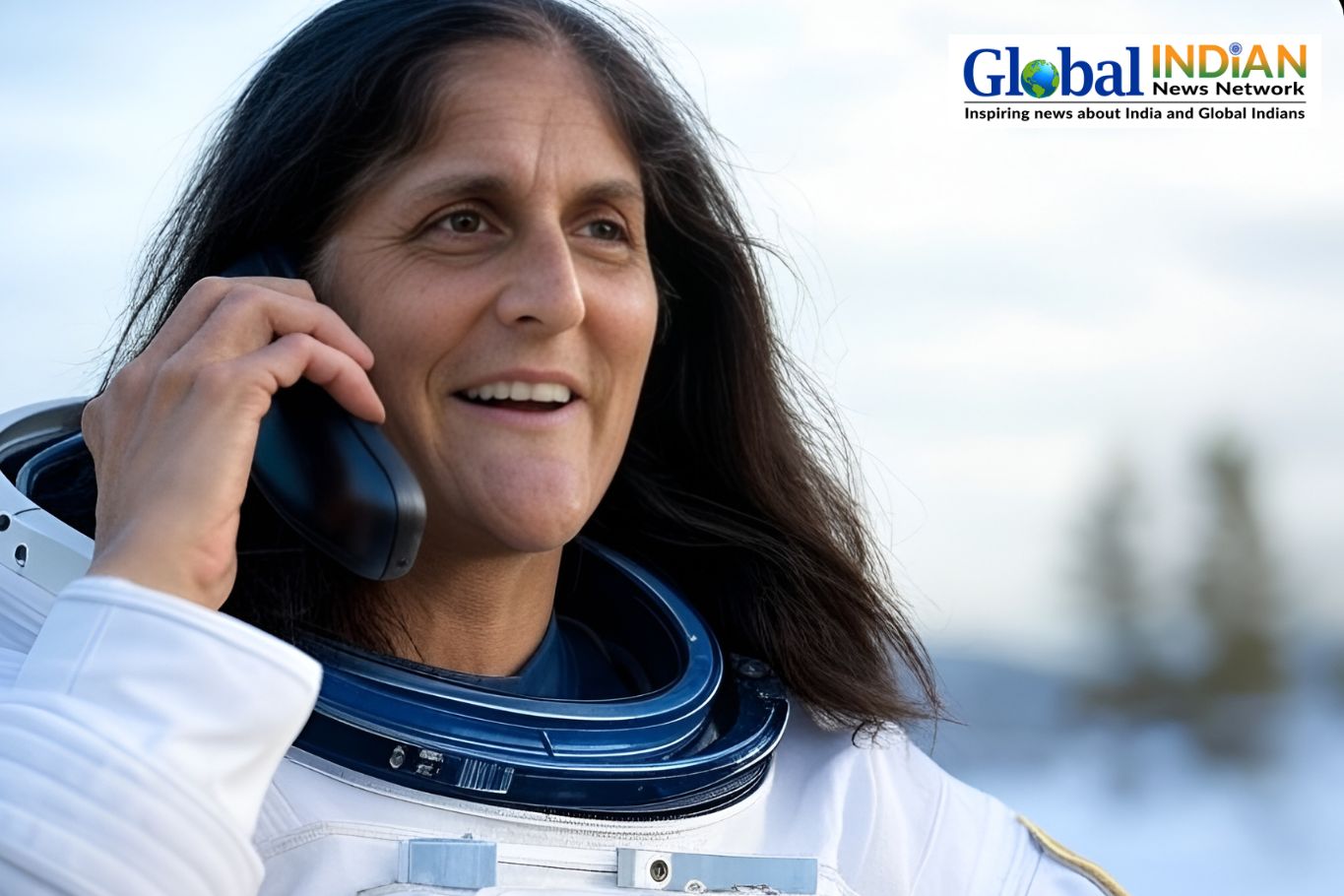
 NASA astronaut Sunita Williams has expressed confidence in India’s ability to take on the challenges of building future space stations, while emphasizing that the next era of human spaceflight will depend heavily on technological innovation and international partnerships.
Speaking during a Space Expo session focused on the future of exploration and scientific research, Williams reflected on her experience aboard the International Space Station (ISS) and discussed what astronauts may need as missions move farther from Earth. She said future stations should be equipped with technologies that allow crews to operate more independently rather than relying constantly on support teams on the ground.
One area she highlighted was the need for comprehensive onboard databases. Unlike people on Earth who can quickly search for information using their phones or computers, astronauts have limited access to such resources in space. A robust database carried aboard future stations could help crews troubleshoot equipment and resolve technical problems, particularly when communication delays become longer during distant missions.
Williams also pointed to dependable 3D printing as another important capability. Even ordinary printing can be challenging in microgravity because many machines designed on Earth depend on gravity to function properly. Future spacecraft will therefore require equipment specifically engineered for space environments.
Another priority, she said, is autonomous scientific analysis. Astronauts currently send significant amounts of experimental data back to Earth for examination. As missions become more distant, having systems capable of processing medical tests and scientific results onboard could reduce dependence on Earth-based teams and speed up decision-making.
Williams described the transition from the ISS to newer commercial and government-led stations as an opportunity to apply decades of experience to more advanced infrastructure. She acknowledged that introducing major upgrades to the ISS is difficult after more than 25 years of operation, making future stations a better platform for new technologies.
She also connected these developments with broader exploration goals, including potential lunar bases. Technologies developed for future stations could help researchers understand how to build and operate systems needed for long-term exploration beyond Earth.
Reflecting on her career, Williams said international cooperation played a major role in the ISS program. She expressed particular confidence in India, saying the country is ready to take on similarly challenging projects.
Her comments come as India expands its ambitions in human spaceflight and space technology. Williams said lessons from years of research aboard the ISS, including work involving biology, DNA sequencing, materials science and plant growth, could help shape future missions to the Moon and beyond.
The session also featured Group Captain Angad Pratap and Tom Shelley of VAST Space, focusing on commercial space stations, scientific research and the next generation of human exploration.