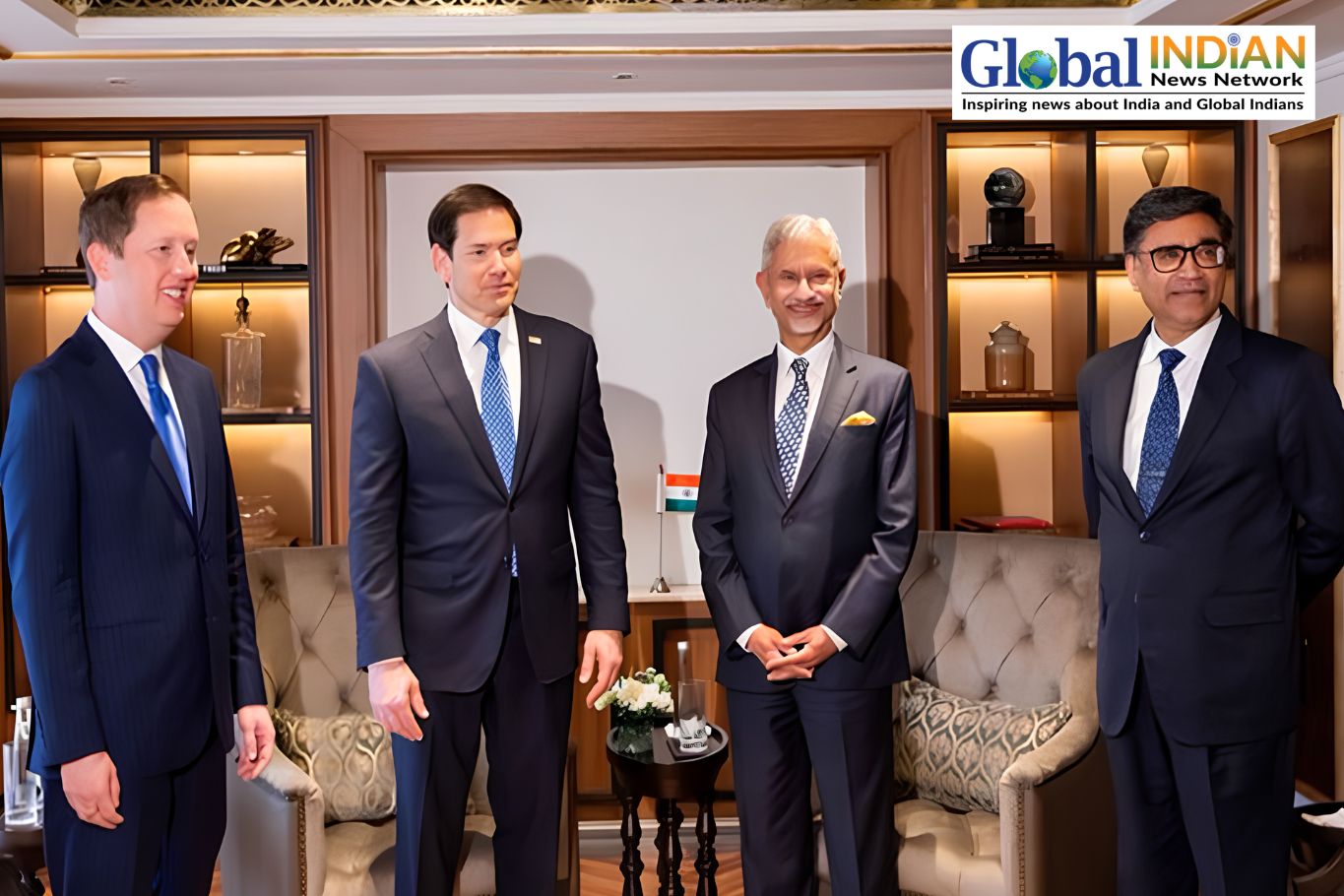
US Secretary of State Marco Rubio is set to discuss opportunities and potential challenges related to Venezuelan oil with Reliance Industries during his visit to Jamnagar, Gujarat. The discussions are expected to focus on strengthening India-US energy cooperation, with particular attention to Reliance’s extensive refining capabilities and its potential role in processing Venezuelan crude.
Rubio said Washington had previously held discussions with Reliance about opportunities in Venezuela and would examine the factors affecting further cooperation during his visit to the company’s Jamnagar refinery, one of the largest refining complexes in the world.
“We’ve talked to them about it in the past. We’re gonna go see what the hold-up is and what opportunities exist,” Rubio said after arriving in Mumbai.
The US Secretary of State highlighted Reliance Industries’ experience in processing heavy crude oil, noting that the company had previously operated in Venezuela. Its technical expertise and large-scale refining infrastructure could make it an important partner as Washington explores ways to increase the availability of Venezuelan oil in international markets.
Rubio also described India as a major refining power, pointing to the country’s ability to process additional crude supplies as Venezuelan production potentially expands. India’s established refining sector could offer opportunities for closer energy collaboration between the two countries.
The discussions are also expected to examine the potential for Indian companies to expand their participation in Venezuela’s oil industry. Rubio noted that Indian firms already hold oil concessions in the country and could have opportunities to increase production through their existing assets.
However, sanctions remain a significant consideration in determining the scope of future cooperation. Rubio acknowledged that restrictions and other regulatory hurdles could complicate efforts to expand commercial engagement involving Venezuelan oil. Any potential arrangement would therefore depend on addressing the relevant legal and policy constraints.
The proposed cooperation comes at a time of uncertainty in global energy markets. Conflicts and disruptions affecting oil transportation routes and refining infrastructure have intensified concerns about supply reliability and fuel affordability. Additional Venezuelan crude could help ease some of these pressures, although Rubio cautioned that it would not fully compensate for wider disruptions in global supplies.
For India, the discussions could create opportunities to leverage its refining capacity and strengthen its position in international energy markets. For the United States, closer engagement with Indian refiners could support efforts to broaden the channels through which crude oil reaches global consumers.
Reliance Industries’ Jamnagar complex is central to these discussions because of its scale and ability to process different grades of crude. The outcome of the talks could help clarify whether existing commercial relationships and refining capabilities can translate into expanded cooperation involving Venezuelan oil.
The visit highlights the growing importance of energy security in India-US relations. While commercial opportunities appear significant, the extent of future cooperation will depend on market conditions, production capacity, regulatory requirements and the resolution of sanctions-related challenges.