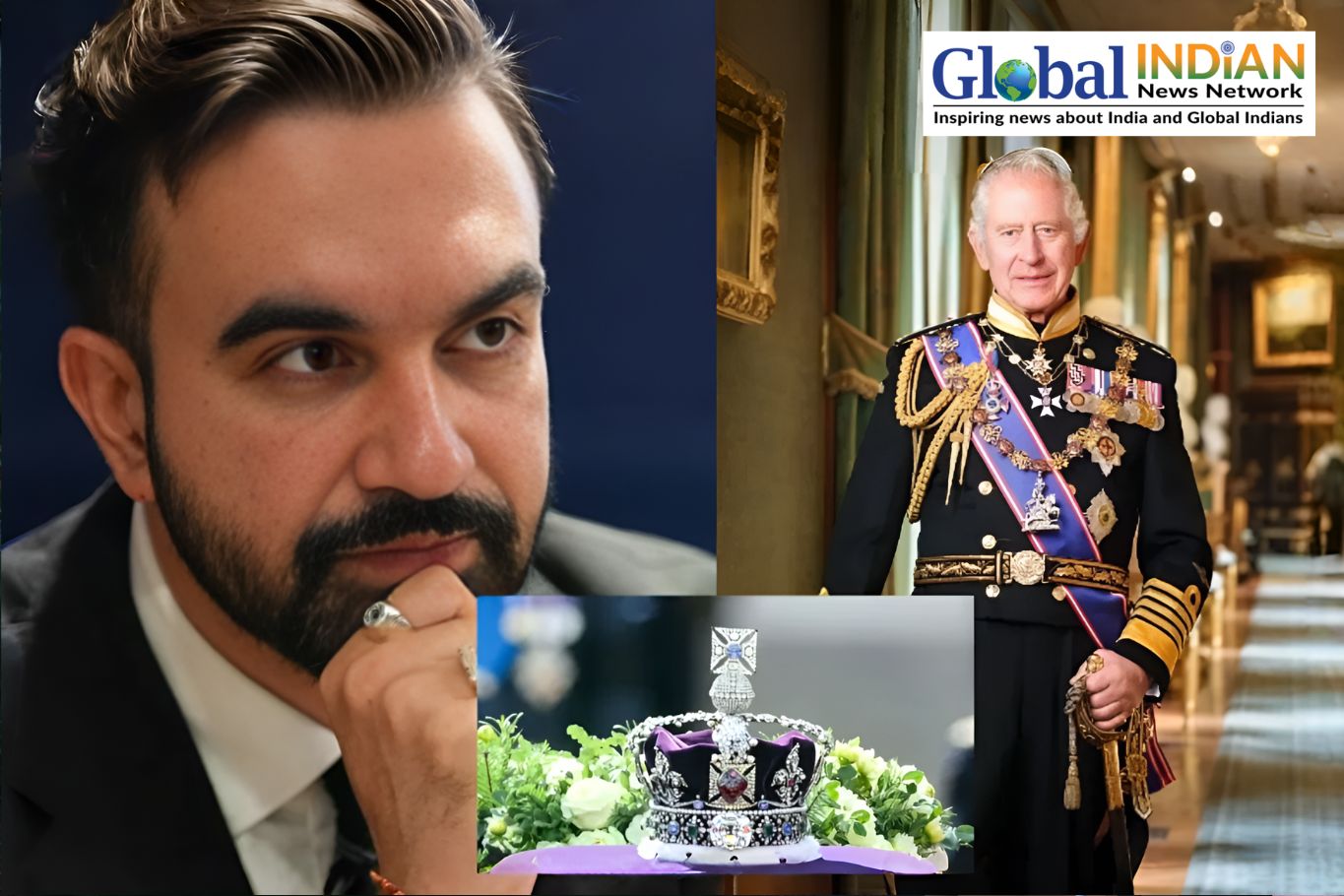
 New York City Mayor Zohran Mamdani has stirred international discussion after publicly suggesting that the Kohinoor diamond should be returned to India if he were to meet King Charles III. His comments, made during a press interaction, moved beyond conventional diplomatic language and directly addressed one of the most debated colonial-era artefacts in the world.
Mamdani stated that he would encourage the British monarch to return the historic diamond, which has long been a subject of dispute between India and the United Kingdom. His remarks quickly gained attention as they touched upon broader questions of colonial legacy, cultural ownership, and historical accountability.
The Kohinoor diamond, often referred to as the “Mountain of Light,” was originally mined in India and passed through several Indian dynasties over centuries. It eventually came under British possession in the 19th century after the Second Anglo-Sikh War, when the young Maharaja Duleep Singh was compelled to surrender it under a treaty signed during British colonial rule. The diamond is now part of the British Crown Jewels and is displayed in London.
Today, it is widely regarded in India as a symbol of cultural heritage taken during colonial expansion. Many Indian voices consider it a significant artefact that represents historical loss and economic extraction during British rule. In contrast, the UK has traditionally maintained that its acquisition was legally formalized through agreements made at the time.
Mamdani’s comments have added a modern political dimension to a long-standing historical debate. By referencing the Kohinoor in the context of a potential diplomatic conversation, he has brought renewed attention to discussions about restitution of cultural artefacts held in Western institutions and royal collections.
His remarks also come amid broader global conversations where countries such as Greece and Nigeria have sought the return of culturally significant objects taken during colonial periods. The Kohinoor remains one of the most prominent examples in this global debate.
The issue continues to evoke strong emotional and political responses, particularly in India, where the diamond is often viewed as a powerful symbol of historical identity and colonial injustice. Mamdani’s statement has therefore reignited international discourse on how history should be addressed in modern diplomatic relationships and whether cultural treasures should remain in their current locations or be returned to their countries of origin.