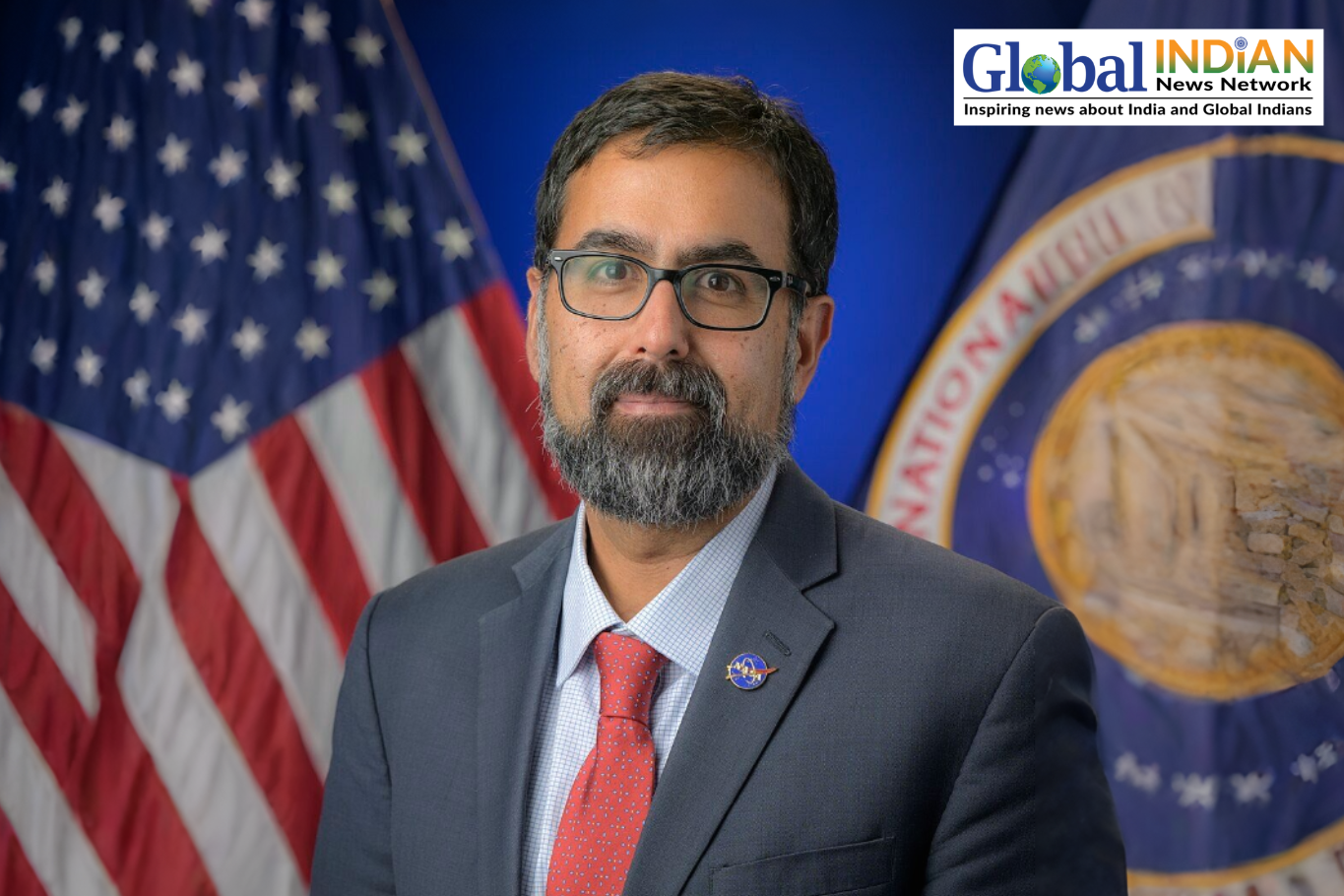
 NASA’s Indian-American senior official Amit Kshatriya has highlighted the growing capabilities of the Indian Space Research Organisation (ISRO), expressing optimism about expanding collaboration between the two space agencies in scientific research and human spaceflight.
Kshatriya, who serves as NASA’s Associate Administrator and Chief Engineer, described the existing relationship between NASA and ISRO as an important partnership. Speaking during an interaction at New York’s Intrepid Museum, he acknowledged India’s progress in developing advanced space missions and its increasing involvement in human space exploration.
He specifically pointed to the NASA-ISRO Synthetic Aperture Radar (NISAR) mission as an example of successful cooperation. Launched in July 2025, the joint satellite is designed to track changes across the Earth’s surface, including land, ice, water and vegetation. The mission combines technological expertise from both countries to support scientific observation and environmental monitoring.
Kshatriya also noted that NASA and ISRO are collaborating on human spaceflight initiatives. He emphasized the value of sharing experiences and lessons learned from previous space programmes as both nations work toward advancing their capabilities.
Discussing the broader future of space exploration, the NASA official stressed that international leadership should extend beyond technological competition. He advocated cooperation built around shared values, responsible practices, common standards and agreed norms for activities in space.
India’s participation in the Artemis Accords was another point of reference. The non-binding framework outlines principles for peaceful, transparent and responsible civil space exploration, reflecting the importance of international coordination as space activity expands.
Kshatriya made the remarks during a panel discussion commemorating the 50th anniversary of the public rollout of Enterprise, NASA’s prototype space shuttle orbiter. Former NASA Administrator Charles F. Bolden Jr. and veteran astronaut Peggy Whitson also joined the event.
Whitson spoke favorably about working with Group Captain Shubhanshu Shukla, who served as pilot of Axiom Mission 4 to the International Space Station. Shukla became the first Indian to reach the station and only the second Indian citizen to travel into space after Rakesh Sharma’s 1984 mission.
Bolden, meanwhile, recognized India’s achievements in planetary exploration, citing the Mars Orbiter Mission, popularly known as Mangalyaan. Launched in November 2013, the mission made ISRO the fourth space agency to successfully place a spacecraft in orbit around Mars.
He also acknowledged NASA’s contribution through its Deep Space Network, which supported spacecraft tracking and navigation during the mission.