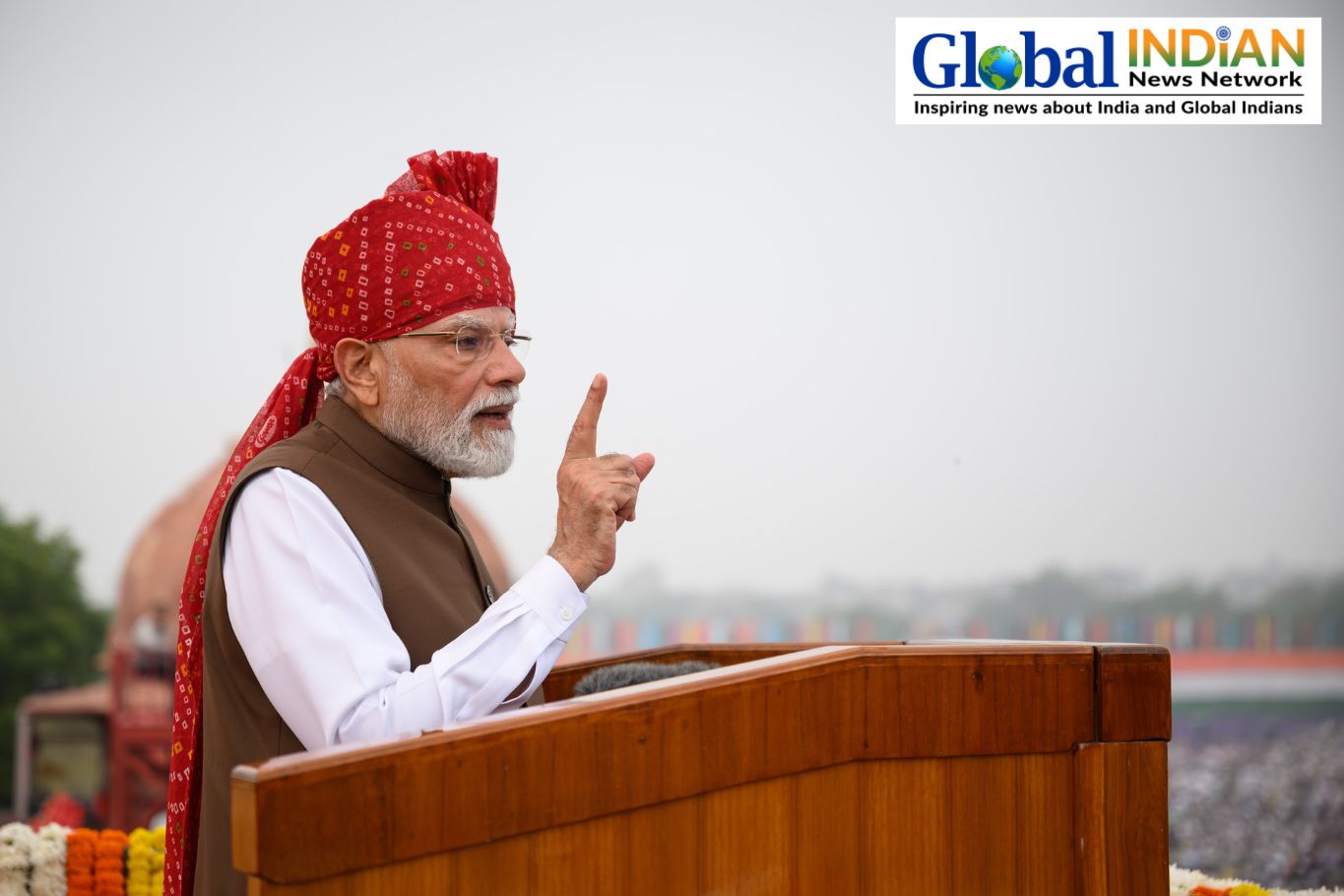
Prime Minister Narendra Modi has outlined a seven-part roadmap aimed at shaping India’s economic and national development over the next five to seven years. Known as “Sapt Dhara,” or Seven Streams of Power, the framework was presented during his Independence Day address from the Red Fort and brings together economic priorities, technological ambitions, infrastructure development, national security, sustainability and cultural influence.
Manufacturing sits at the center of the plan, with India seeking to move beyond production and build greater control over complete supply chains. The vision calls for Indian companies, entrepreneurs and micro, small and medium enterprises to compete globally through stronger quality, competitive pricing and large-scale production. Building a reputation for dependable products could help India become a more important destination for global supply chains.
Agriculture represents the second stream. The vision looks beyond domestic food production by encouraging Indian agricultural products to gain stronger recognition in international markets. Products such as millets, spices, fruits and flowers could be developed into globally recognized Indian brands.
Technology and innovation make up the third stream, with emerging fields expected to play a major role in the country’s future. Artificial intelligence, quantum technology, space exploration, robotics and data centers were highlighted as areas where India can expand its capabilities and strengthen its position as an innovation-driven economy.
The fourth stream focuses on Gati Shakti and connectivity. India’s development plans include integrating highways, high-speed rail, airports, inland waterways and logistics systems to create smoother movement of people and goods. Port-led growth is also expected to contribute to a more efficient transportation network.
Defense self-reliance forms the fifth stream. India aims to expand domestic defense production while developing advanced capabilities, including counter-drone systems and hypersonic defense technologies. The broader goal is to strengthen national security while increasing India’s role as an international defense supplier.
The sixth stream centers on the green and blue economy. Opportunities in green hydrogen, renewable power, energy storage, clean mobility and environmentally focused manufacturing are expected to support sustainable growth, while India’s maritime resources offer additional economic potential.
The final stream is soft power. India’s global cultural and knowledge-based strengths, including yoga, Ayurveda, holistic healthcare and spiritual traditions, are viewed as assets that can expand the country’s international influence. Initiatives such as Heal in India are intended to promote these capabilities worldwide.
Together, the seven streams present a broad strategy for combining industrial strength, innovation, connectivity, security, sustainability and cultural influence as India seeks to shape its next phase of development.