 New York City officials have unveiled a major $95 million investment aimed at reducing chronic flooding in Brooklyn’s Homecrest neighborhood through an advanced Cloudburst stormwater management initiative. The project was jointly announced by Mayor Zohran Kwame Mamdani along with senior officials from the city’s Department of Environmental Protection (DEP), Parks Department, Department of Transportation, and Public Schools system. The initiative represents a large-scale effort to modernize urban infrastructure in response to increasingly severe weather patterns.
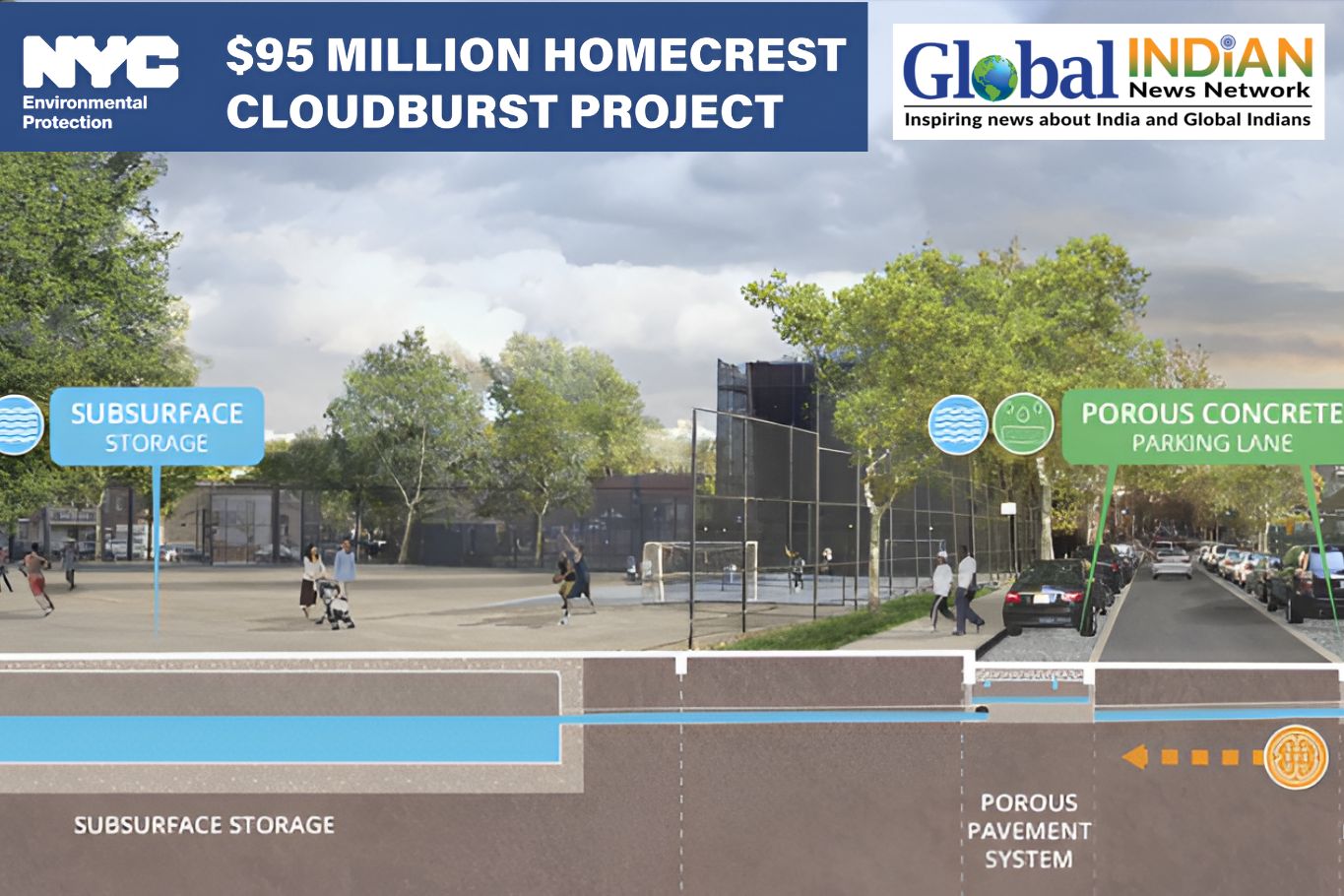
The Cloudburst system is designed to manage sudden, heavy rainfall events that overwhelm traditional drainage networks. Instead of relying solely on underground sewer expansion, the program introduces neighborhood-level infrastructure that temporarily captures and redirects stormwater during intense storms. In Homecrest, the project will incorporate porous pavement, underground storage systems, and redesigned public spaces capable of absorbing excess rainwater. Officials estimate that the system will be able to manage approximately 30 million gallons of stormwater annually.
Climate scientists and city engineers have raised concerns about the growing frequency of extreme rainfall events, including storms that can deliver more than two inches of rain in just one hour. Such conditions often lead to street flooding, property damage, and pollution runoff into nearby waterways. The Homecrest project is intended to directly address these challenges by preventing stormwater from overwhelming the combined sewer system and flowing untreated into Coney Island Creek.
City leaders emphasized that the project will significantly reduce flood risk across a 350-acre area that includes key corridors such as Kings Highway and Coney Island Avenue, along with multiple residential avenues in the surrounding neighborhood. By capturing water at the surface level and storing it temporarily underground, the system is expected to reduce pressure on existing sewer infrastructure during peak rainfall periods.
Mayor Mamdani described the initiative as a transformation of everyday public spaces into protective infrastructure. He stated that schoolyards, streets, and parking areas would now serve dual purposes—supporting community use while also functioning as critical flood defense systems. He stressed that as climate change accelerates, investments in resilience are becoming essential rather than optional for urban survival.
City officials also highlighted environmental benefits, noting that reducing polluted runoff will help improve water quality in nearby waterways and support compliance with federal Clean Water Act standards. DEP leadership explained that the project not only addresses flooding but also strengthens long-term environmental protection goals.
Deputy Mayor for Operations Julia Kerson added that climate impacts are already being felt across the city and that infrastructure must evolve accordingly. She emphasized collaboration among multiple city agencies to implement innovative, green infrastructure solutions that can adapt to changing weather conditions.
Overall, the Homecrest Cloudburst project represents a significant step in New York City’s broader strategy to build climate-resilient neighborhoods while modernizing aging urban systems.