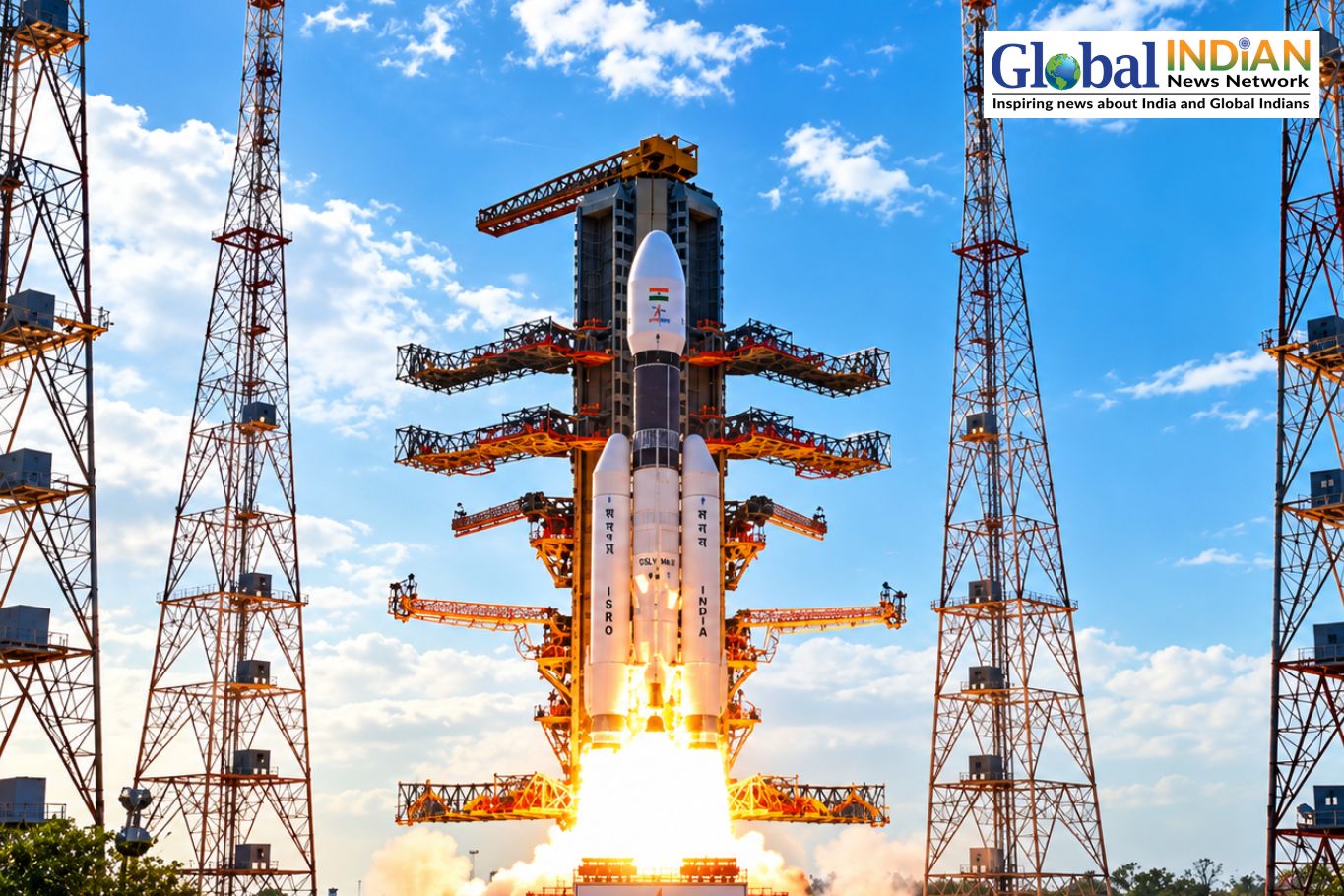
The Indian Space Research Organisation (ISRO) is preparing to launch its indigenous navigation satellite NVS-03 on October 30 aboard the GSLV Mk II launch vehicle, marking an important step towards strengthening India’s satellite navigation capabilities.
ISRO Chairman V Narayanan indicated that the mission had been cleared for a launch attempt from the Satish Dhawan Space Centre in Sriharikota. The launch had previously been tentatively scheduled for the October 15–20 period.
The upcoming mission comes as India’s national space agency adopts a cautious approach following consecutive failures of its Polar Satellite Launch Vehicle (PSLV). The agency has been examining the anomalies associated with the unsuccessful missions to improve launch reliability and ensure the readiness of subsequent operations.
ISRO’s launch activity has faced challenges in 2026. Following the PSLV failure in January, the agency focused on understanding the technical issues affecting the launch vehicle. The GSLV Mk II, meanwhile, completed a successful mission in September, providing an important boost to the agency’s launch programme.
NVS-03 is part of India’s efforts to strengthen its indigenous satellite navigation infrastructure. A reliable navigation satellite constellation is important for applications such as transport management, navigation, location-based services and strategic operations.
One significant application is the real-time tracking of trains across the Indian railway network. A fully operational navigation satellite constellation can support the government’s objective of tracking approximately 12,000 trains in real time. Around 8,700 trains have already been equipped with the relevant tracking system, according to the report.
The expansion of satellite-based navigation capabilities is expected to support improved monitoring, operational efficiency and the delivery of location-based services across sectors. Indigenous infrastructure also helps India strengthen its technological independence in critical navigation services.
The NVS-03 mission assumes additional importance as ISRO works to restore momentum to its launch schedule following the setbacks involving the PSLV. The agency’s cautious approach reflects the need to identify and address technical concerns before proceeding with further missions.
The delays have also affected timelines for other major programmes, including Gaganyaan, India’s ambitious human spaceflight initiative. The first uncrewed test flight, previously targeted for mid-2026, could move to late 2026 or early 2027, depending on mission readiness and the progress of ongoing preparations.
The Gaganyaan programme is intended to demonstrate India’s ability to undertake human spaceflight missions using indigenous technology. Ensuring the reliability of launch vehicles and associated systems remains essential to the programme’s progress.
With the NVS-03 launch scheduled for October 30, ISRO will seek to strengthen India’s navigation infrastructure while continuing efforts to improve launch reliability. The mission’s outcome will be closely watched as the agency works towards its broader objectives in satellite navigation, space exploration and human spaceflight.