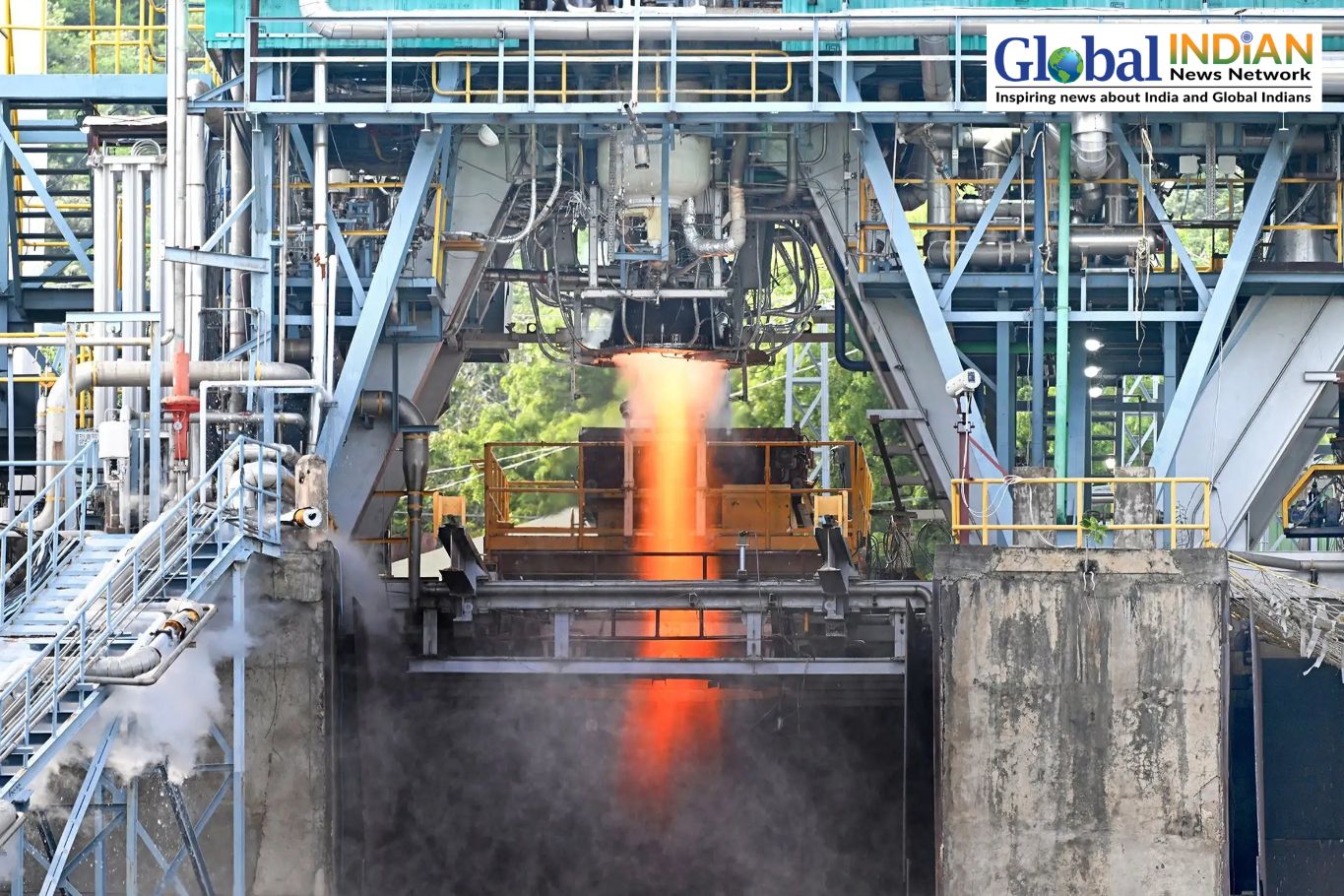
India’s space program has achieved another important milestone, with the Indian Space Research Organisation (ISRO) successfully completing a flight acceptance test of the cryogenic engine designated for its upcoming GSLV-F19 mission. The test was conducted on November 5, 2026, at the ISRO Propulsion Complex in Mahendragiri, marking a significant step toward preparing the launch vehicle for its next mission.
During the evaluation, both the Main Engine (ME) and Gas Generator (GG) ignited successfully, performing as anticipated. Once the engine reached steady-state operation, its performance remained stable and aligned with the expected technical parameters. The entire trial lasted 200 seconds, allowing engineers to assess the engine’s functioning and verify whether it met the established performance requirements.
According to ISRO, the engine’s overall performance was satisfactory and consistent with predictions made before the test. The successful evaluation confirms that the engine has met this important acceptance milestone and can move forward toward integration into the launch vehicle’s cryogenic stage.
The tested engine will be incorporated into the cryogenic stage of the GSLV-F19 rocket, which is scheduled to carry the NVS-04 navigation satellite into space. The mission forms part of India’s ongoing efforts to strengthen its indigenous satellite navigation capabilities and advance its space technology infrastructure.
The successful test highlights ISRO’s continued progress in developing and validating critical rocket propulsion systems. Cryogenic engines play an essential role in launch vehicles by providing the high performance required to carry satellites into their intended orbits. With this test completed successfully, preparations for the GSLV-F19 mission have moved another step forward.