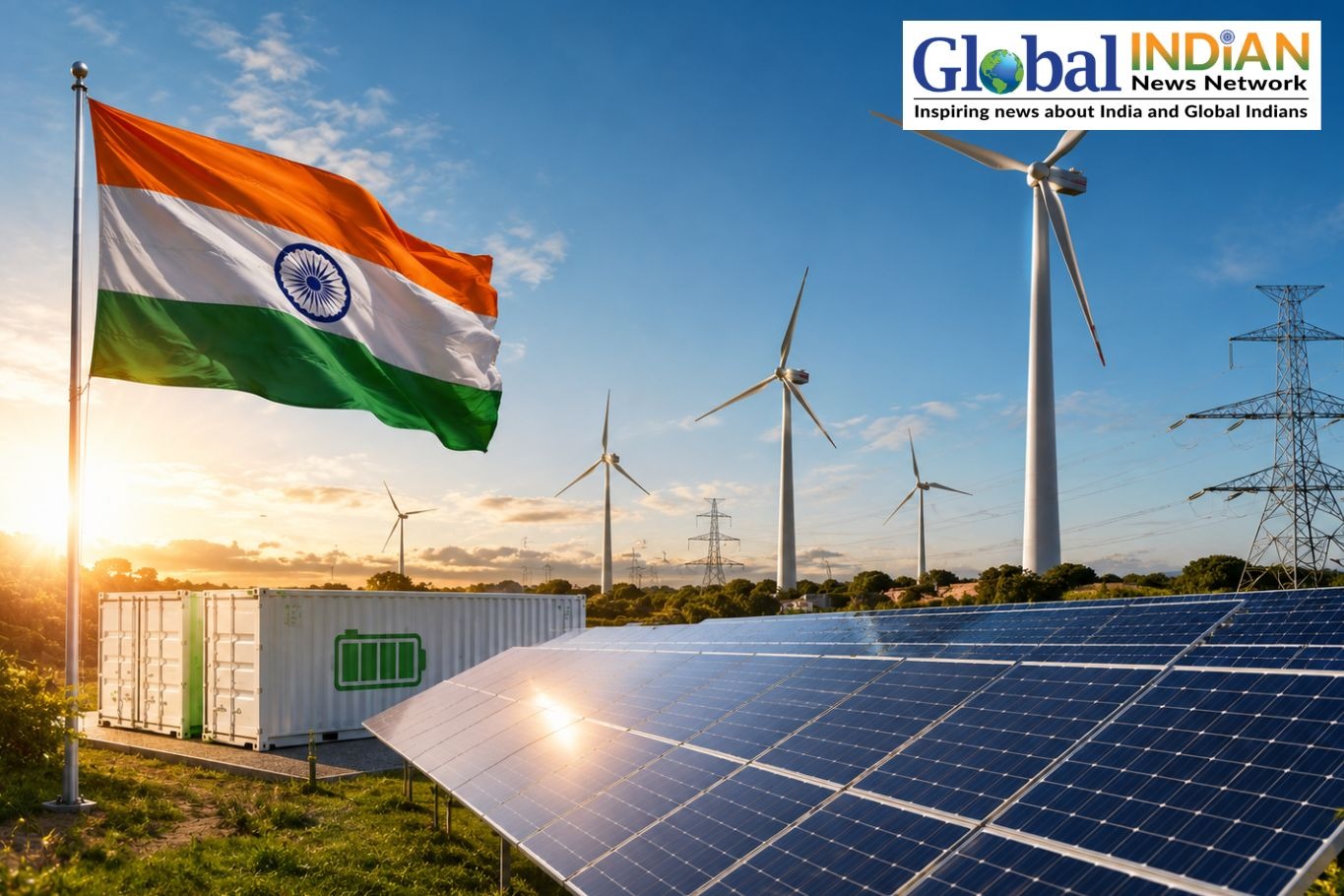
India’s renewable energy sector has achieved a major milestone, with installed capacity rising to 288.58 GW as of June 30, 2026, marking nearly four times growth from 76.38 GW recorded in 2014. The rapid expansion highlights India’s increasing role in the global transition toward cleaner and more sustainable energy sources.
In a written response in the Rajya Sabha, Minister of State for New and Renewable Energy Shripad Yesso Naik shared details of the country’s renewable energy progress. Solar power has emerged as the largest contributor, accounting for 162.15 GW of installed capacity. It is followed by wind energy with 57.44 GW, hydropower with 57.24 GW, and bioenergy with 11.75 GW.
Including 8.78 GW of nuclear power capacity, India’s total non-fossil fuel-based electricity capacity has reached 297.36 GW. The growth reflects the country’s continued efforts to meet climate commitments, improve energy security, and reduce dependence on traditional fossil fuel sources.
The renewable energy sector has also attracted significant financial support over the past decade. Between fiscal year 2014 and fiscal year 2026, the industry received foreign direct investment worth approximately $45.72 billion, highlighting strong global confidence in India’s clean energy potential.
Domestic financial institutions have also played a key role in supporting renewable projects. Several public sector banks and major financial organizations collectively invested around $131.06 billion during the same period to expand renewable energy infrastructure across the country.
The government expects continued investment from both domestic and international sources to accelerate renewable energy deployment. Increased funding is also expected to strengthen local manufacturing capabilities, create new opportunities in the clean energy sector, and encourage further innovation.
With its expanding solar, wind, and other renewable energy capacities, India is emerging as one of the world’s fastest-growing clean energy markets. The country’s progress demonstrates its commitment to balancing economic growth with environmental sustainability while building a more secure and resilient energy future.