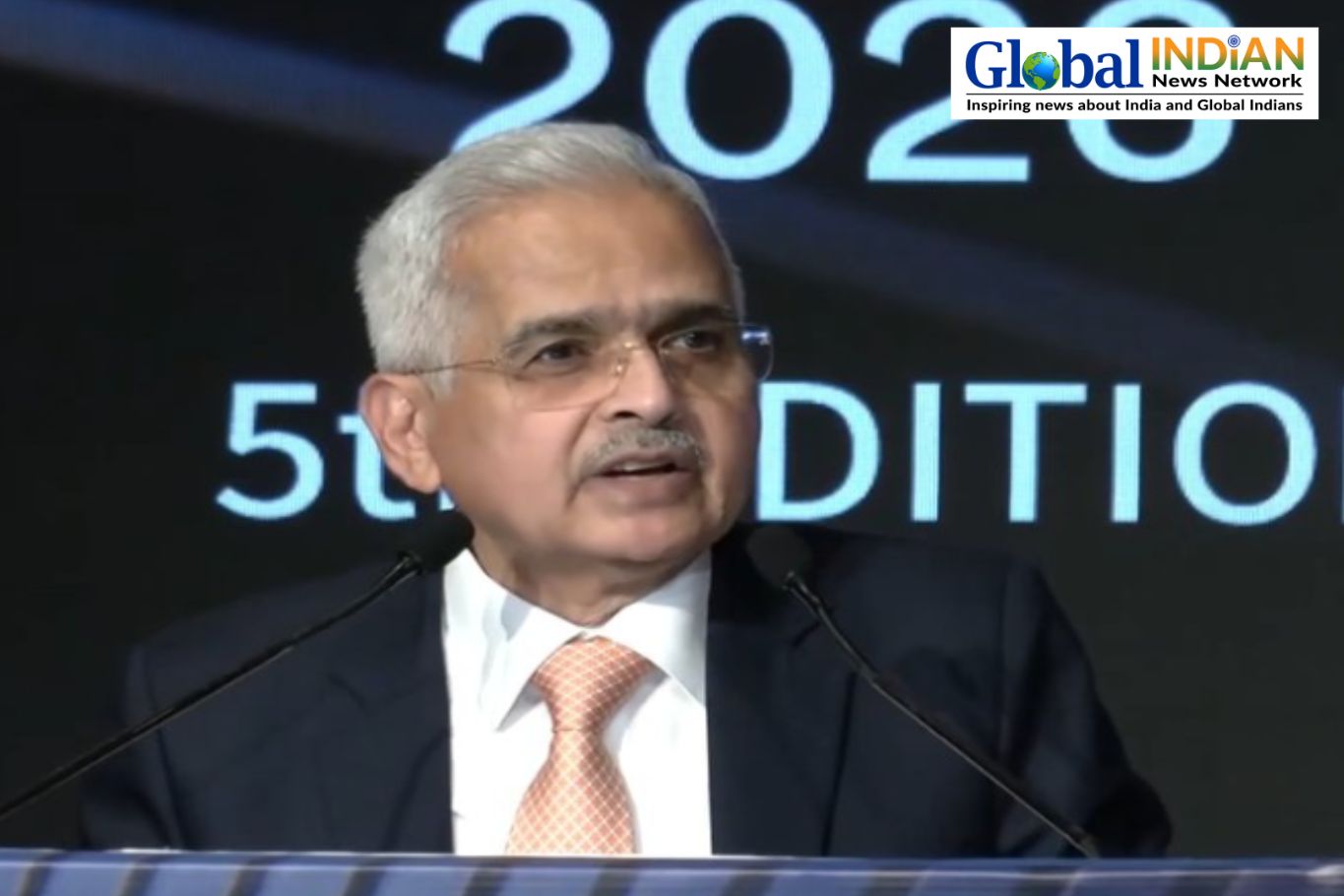
India’s broad-based economic reforms over the past decade have strengthened institutions, improved macroeconomic stability and encouraged investment in productive sectors, helping the economy withstand a series of global shocks, Principal Secretary to the Prime Minister Shaktikanta Das has said.
Speaking at the Kautilya Economic Conclave, Das, a former Reserve Bank of India Governor and former Economic Affairs Secretary, said the reforms were designed not as isolated measures but as systemic buffers capable of helping the economy absorb disruptions and recover quickly.
He highlighted flexible inflation targeting, the introduction of the Goods and Services Tax, the expansion of digital payments and banking sector reforms as some of the key measures that have strengthened India’s economic foundations.
India’s resilience has become particularly significant against a global backdrop marked by geopolitical uncertainty, trade fragmentation, technological restrictions, volatile energy prices and elevated public debt in advanced economies.
Das pointed to the strength of domestic demand and investment as important drivers of India’s current growth momentum. Real GDP growth reached 7.8 per cent in the first quarter of 2026-27, while growth remained above 8 per cent across the four quarters spanning July-September 2025 to April-June 2026-27. He said India was now within striking distance of 8 per cent growth.
Macroeconomic stability, Das said, has been another major pillar of the country’s resilience. The flexible inflation-targeting framework introduced in 2016 helped India navigate major disruptions, including the Covid-19 pandemic, the Russia-Ukraine war and conflicts in West Asia.
The government’s sustained approach to fiscal consolidation, while continuing to support growth-enhancing expenditure, has also contributed to greater economic stability. Tax reforms, particularly the GST, created a more integrated national market, reduced cascading taxation and helped accelerate formalisation across the economy.
The strengthening of the banking sector has been another defining feature of India’s economic recovery. Improvements in bank balance sheets and reforms across the financial system have created a stronger platform for credit growth and investment.
Large-scale investment in transport and logistics infrastructure has further reduced economic friction. Initiatives such as PM Gati Shakti, the National Logistics Policy, Sagarmala and UDAN have strengthened connectivity and logistics networks, supporting the foundation for investment-led growth.
India has also sought to reduce its vulnerability to external energy shocks by diversifying its energy mix across fossil fuels, renewable energy, biofuels and nuclear power. Greater diversification has provided the economy with additional resilience amid volatility in global energy markets.
At the same time, India is witnessing a manufacturing resurgence driven by production-linked incentives, semiconductor investments, automation and Industry 4.0 technologies. These developments are expected to play an increasingly important role in strengthening domestic production and integrating India more deeply into global supply chains.
Looking ahead, Das identified artificial intelligence, deeper financial markets, strategic self-reliance, sustainable development and human capital as five areas likely to shape the next phase of India’s economic expansion.
Maintaining the pace of reform will remain critical, he said, as India’s ambition extends beyond rapid growth to building an economy that can sustain strong expansion while remaining resilient to future global disruptions.