India’s economy is projected to grow by 7.3% in the second quarter of fiscal year 2026-27, supported by resilient domestic demand, investment activity and continued strength across key sectors, according to the Finance Ministry’s Monthly Economic Review for September 2026.
The projection follows a strong 7.8% expansion recorded in the first quarter of FY27, with high-frequency indicators for July and August pointing to continued economic momentum, albeit at a more measured pace. While e-way bill generation and manufacturing activity moderated during the period, services activity strengthened, driven by an improvement in new business and employment.
The review also pointed to sustained investment momentum. Healthy electricity and fuel consumption, continued expansion in bank credit and stronger production of capital and infrastructure goods indicate that investment activity remains supportive of overall growth.
India’s external sector has also shown strength. Total exports reached nearly Rs. 37.95 lakh crore, or about US$400 billion, during the first five months of FY27. At the prevailing pace, total exports for the full financial year could approach Rs. 94.97 lakh crore, equivalent to around US$1 trillion.
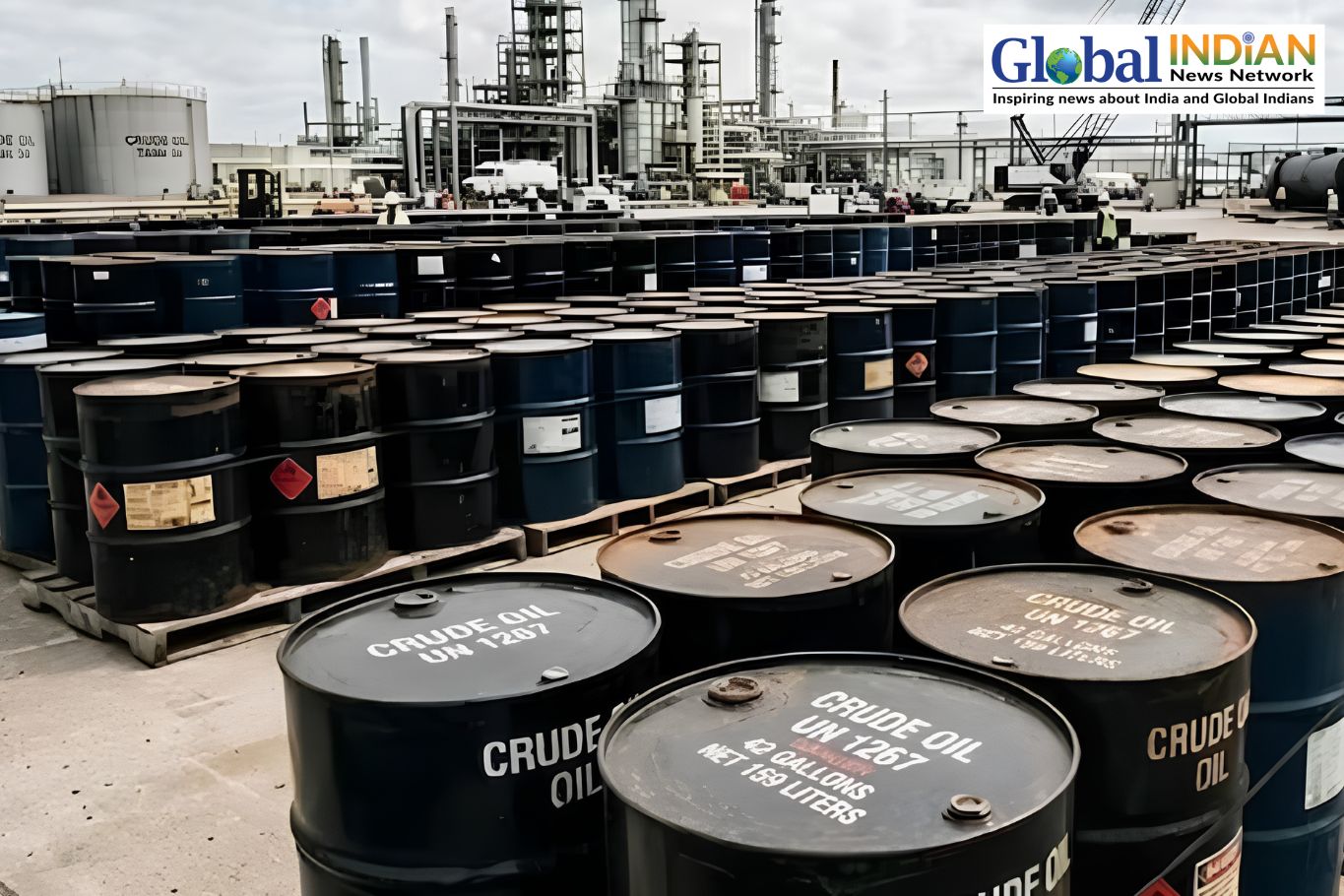
Despite the positive growth outlook, the Finance Ministry cautioned that the expansion remains exposed to a range of global risks. Geopolitical polarisation, disruptions to global supply chains, elevated crude oil prices, tighter financial conditions and trade-related uncertainty could affect growth prospects.
Rising oil prices and higher global bond yields are also creating pressure on the rupee and capital flows. Higher interest rates in developed economies could encourage investors to retain capital in domestic markets, potentially slowing cross-border investment flows.
The review further noted that competition for global investment is intensifying as countries seek capital to expand artificial intelligence infrastructure and manufacturing capacity. For India, uncertainty over trade relations with the United States, tariff pressures and fluctuations in crude oil prices remain important factors influencing investor sentiment.
The combination of strong domestic demand, investment activity and export performance provides a supportive foundation for growth in FY27. However, the Finance Ministry’s assessment underscores the importance of global financial conditions, energy prices and trade developments in determining the pace and durability of India’s economic expansion.