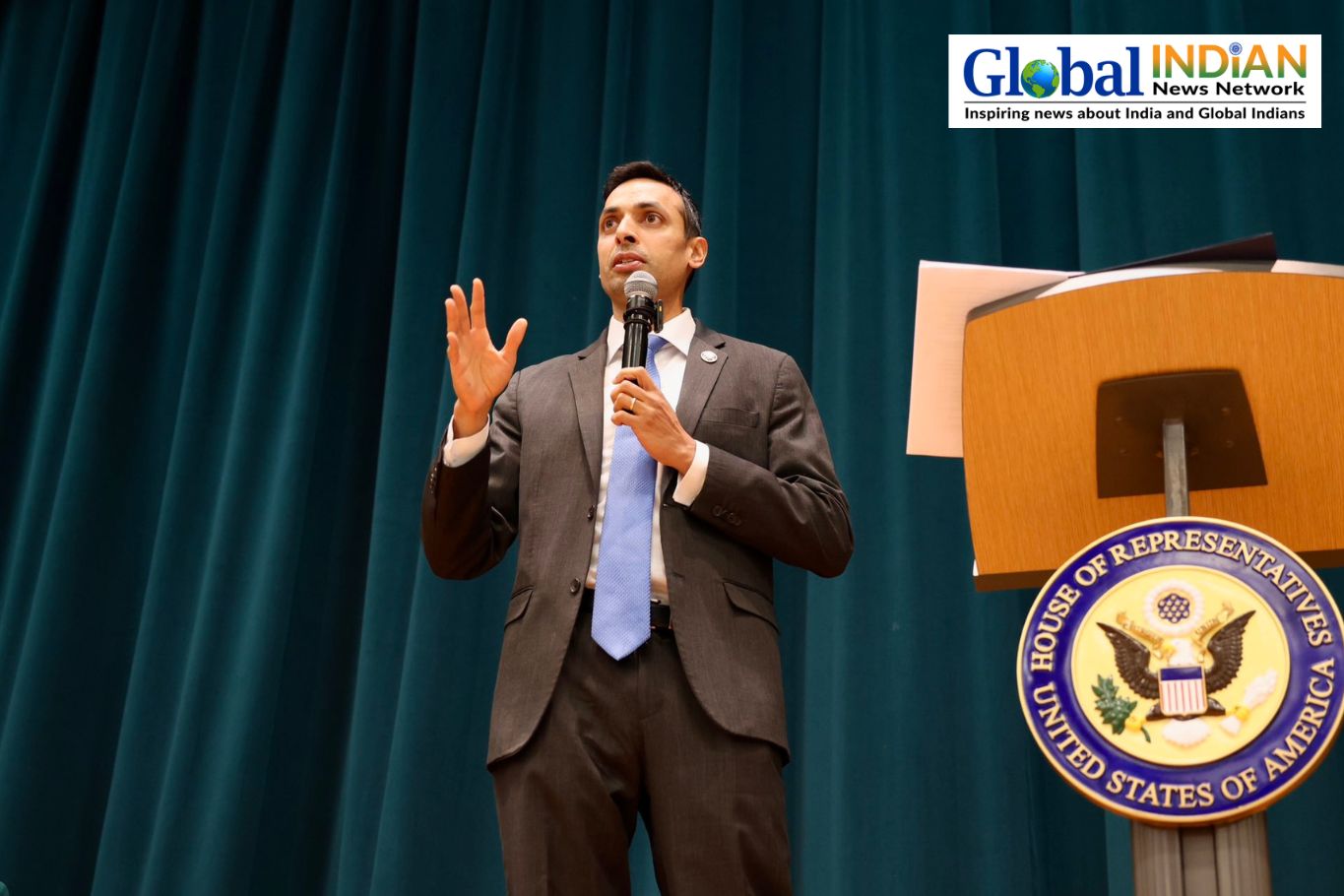
Indian-American Congressman Suhas Subramanyam is pushing for a nationwide framework to manage the rapid growth of data centers across the United States. The Virginia Democrat has introduced a package of four bills designed to ensure that the companies operating large data facilities bear the infrastructure costs associated with their growing energy demands instead of shifting those expenses to residential customers.
The proposed legislation would establish broader standards for where data centers are built and how their impact is measured. It would address electricity and water consumption while also examining effects on nearby communities, the environment, workforce needs, tax revenues, and national security.
Subramanyam represents Virginia’s 10th Congressional District, an area that includes parts of Northern Virginia, one of the largest data center markets in the world. He has argued that the region’s rapid development has brought economic opportunities but has also created concerns over utility bills, transmission infrastructure, noise, water use, and the effect on neighborhoods.
His legislative package includes the Responsible Data Center Siting Act, which would task the US Department of Energy with developing national recommendations for data center locations. The proposed standards would take factors such as available power, environmental effects, water usage, community impact, and security risks into account.
Another proposal, the Data Center Fair Share Act, would require large electricity users to cover the costs of power generation and grid improvements needed to support their facilities. Under the plan, states would establish specific electricity rates for major users. States that fail to adopt the required tariffs could face reductions in access to federal highway funding.
The Data Infrastructure Energy Measurement and Standards Act would have the National Institute of Standards and Technology create methods for consistently tracking data centers’ electricity and water consumption.
The fourth measure, the Data Infrastructure Risk Reduction Act, would focus on safeguarding communities and critical infrastructure surrounding data centers against potential threats from both domestic and foreign adversaries.
The legislation has received support from several Democratic lawmakers, including Mike Quigley, Andre Carson, Hillary Scholten, Veronica Escobar, Greg Stanton, and Mike Levin.
Northern Virginia’s data center boom has been fueled by its proximity to the federal government, extensive fiber-optic networks, and major power infrastructure. These facilities underpin cloud computing, artificial intelligence, and other digital services, making their expansion increasingly important—and controversial.
Subramanyam’s proposals seek to establish a more coordinated national approach as the United States navigates the growing demands of the AI-driven digital economy.