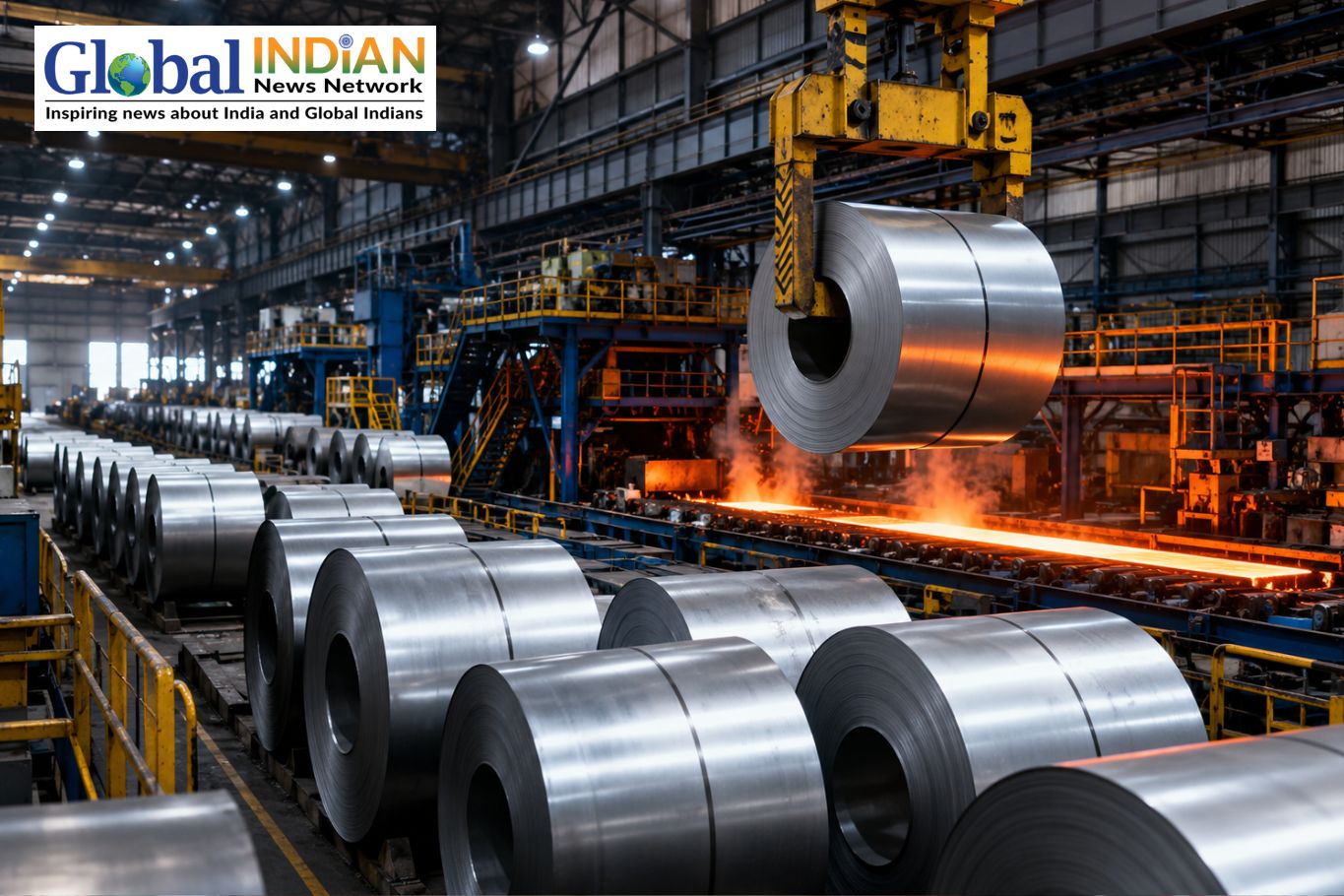
 India’s steel industry maintained strong growth momentum in May 2026, supported by consistent demand from infrastructure development, construction activities, and the manufacturing sector. The overall performance reflects continued economic expansion and steady industrial activity across the country.
According to data from the Ministry of Steel, crude steel production reached 14.21 million tonnes during May, reflecting a year-on-year increase of 2.9%. Finished steel output also showed stronger growth, rising 7.7% to 13.94 million tonnes. At the same time, domestic steel consumption climbed 9% to 14.33 million tonnes, highlighting robust demand conditions in the local market.
Other segments of production also recorded modest growth. Hot metal output increased by 2%, while pig iron production rose 1.1% to 0.77 million tonnes during the month. For the first two months of FY27, the sector continued its upward trajectory, with crude steel production reaching 28.04 million tonnes, up 2.7% year-on-year. Finished steel production and consumption also expanded by 6.4% and 8.7% respectively, indicating sustained momentum across the value chain.
Trade patterns, however, showed a mixed picture. Steel imports surged sharply by 62.5% year-on-year to 0.69 million tonnes in May, while exports increased by 29.9% to 0.51 million tonnes. This resulted in India becoming a net steel importer during April–May 2026, reflecting changing global supply dynamics and domestic demand pressures.
The Ministry noted that India’s crude steel production capacity has now reached approximately 220 million tonnes per annum in FY26. This positions the industry on track to achieve the National Steel Policy target of 300 million tonnes per annum by 2030, supported by ongoing capacity expansion projects and policy-driven growth initiatives.
Several major developments are contributing to this expansion. Steel Authority of India Limited (SAIL) has approved a major expansion plan for its Bhilai Steel Plant, increasing capacity from 6.8 million tonnes per annum to 10.2 million tonnes per annum. Meanwhile, JSW Steel has begun construction of a large integrated steel facility in Odisha with a planned capacity of 13.2 million tonnes per annum, marking one of the sector’s significant long-term investments.
Sustainability efforts are also gaining traction through the Green Steel Initiative. Around 94 steel producers across 15 states have already received green steel certification, signaling a gradual shift toward cleaner and more environmentally responsible production practices. These developments collectively highlight a sector that is not only expanding in scale but also evolving toward more sustainable and future-ready industrial practices.